
PHOTO
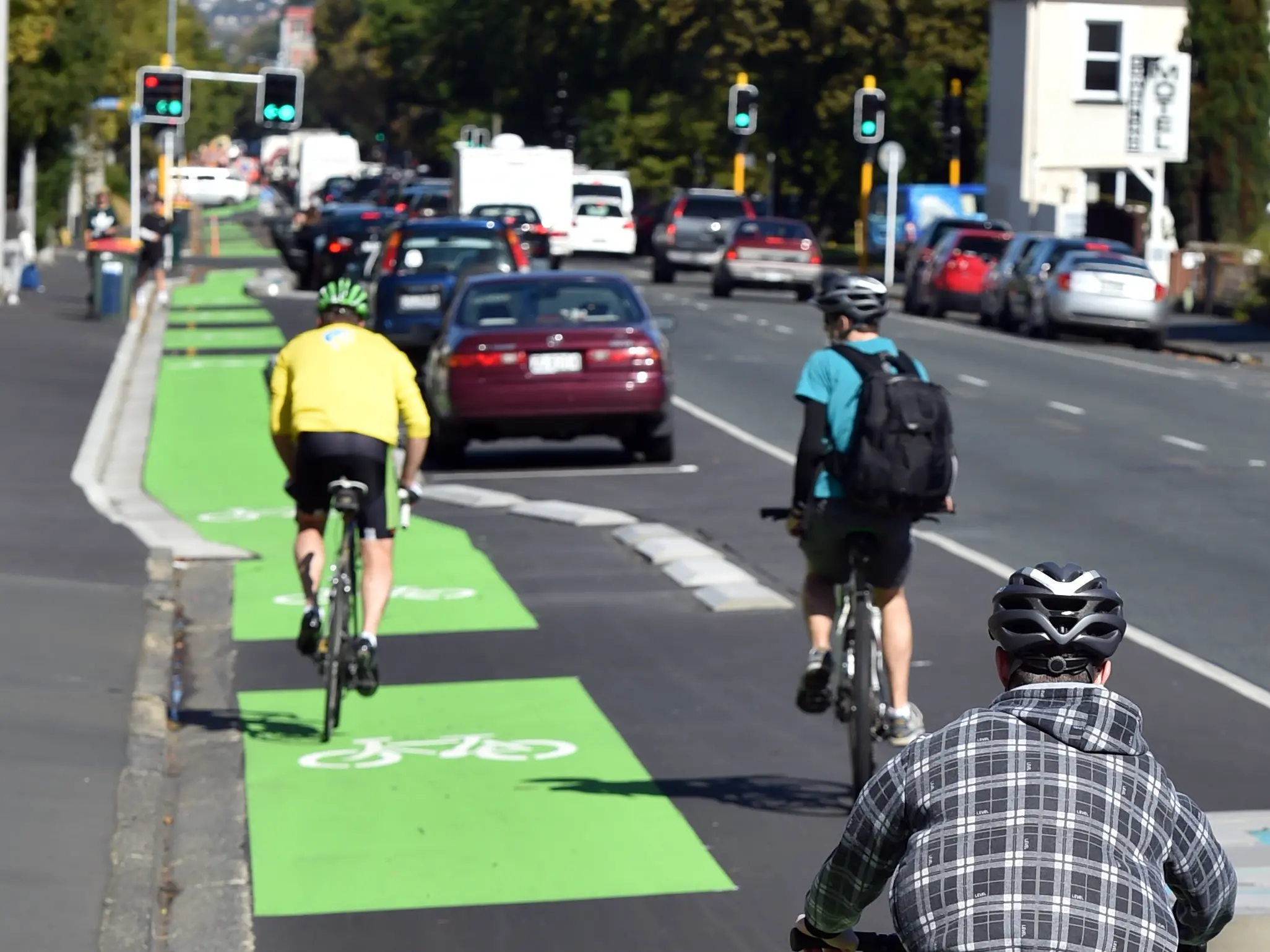
New research has shown that investing in cycle lanes and walkways encourages people to drive less and cuts carbon emissions.
The research, from the University of Otago, Wellington and Victoria University, studied the impact of new cycling and walking paths built in New Plymouth and Hastings in 2011.
In the three years after the development of the new infrastructure, it was found there was a reduction of 1.6% in vehicle kilometres travelled and an associated 1% drop in carbon emissions.
It is the first study internationally to demonstrate that investing in cycle paths and walkways leads to a reduction in emissions.
"This is good news for our agenda to reduce carbon emissions, which is essential to meet our international targets and of course to contribute to stabilising the climate," lead author Associate Professor Michael Keall said.
Bike Auckland chairwoman Barb Cuthbert said she welcome the research results "as more compelling evidence why building safe and attractive walking and cycling routes is productive and valuable in major centres across NZ".
Co-author Dr Caroline Shaw, said the 1% reduction in carbon emissions is likely to be a conservative estimate, as shorter car trips - those most likely to be replaced by walking or cycling - typically had higher per kilometre emissions.
"It is also important to note that we would expect the more extensive networks of cycle lanes which some councils are now putting in, to have an even bigger response," she said.
If the same level of investment was made nationwide, it could reduce the country's carbon dioxide emissions by at least 0.23 million tonnes over three years, the researchers said.
Building new cycle paths and walkways also appeared to reduce car ownership in the two cities.
The researchers used a variety of methods to collect information on car usage, conducting face-to-face interviews with householders, analysing odometer readings from licensing data and reviewing details on car ownership from the New Zealand Household Travel Survey.
The data from New Plymouth and Hastings were compared with information from Whanganui and Masterton - two cities which received no additional government funding for cycle ways or walking paths.
Dr Shaw said the research clearly demonstrates that people are prepared to substitute cycling and walking for car journeys.
"We already know that putting in cycling and walking infrastructure reduces congestion and makes cities nicer places to live, as well as being highly cost effective. We now also know that it reduces carbon emissions."