
PHOTO
Nine new confirmed cases of Covid-19 were reported today, all from the Auckland cluster.
Seven of them are linked to the cluster. Four are still under investigation, including two of the new ones announced today. They are all believed to be linked to the cluster, however.
Eighty-six people linked to the cluster, including 36 positive cases, have been moved into quarantine.

- Coolstore focus in search for outbreak source
- Deadliest day in Victoria
- Auckland pair leave city to gamble
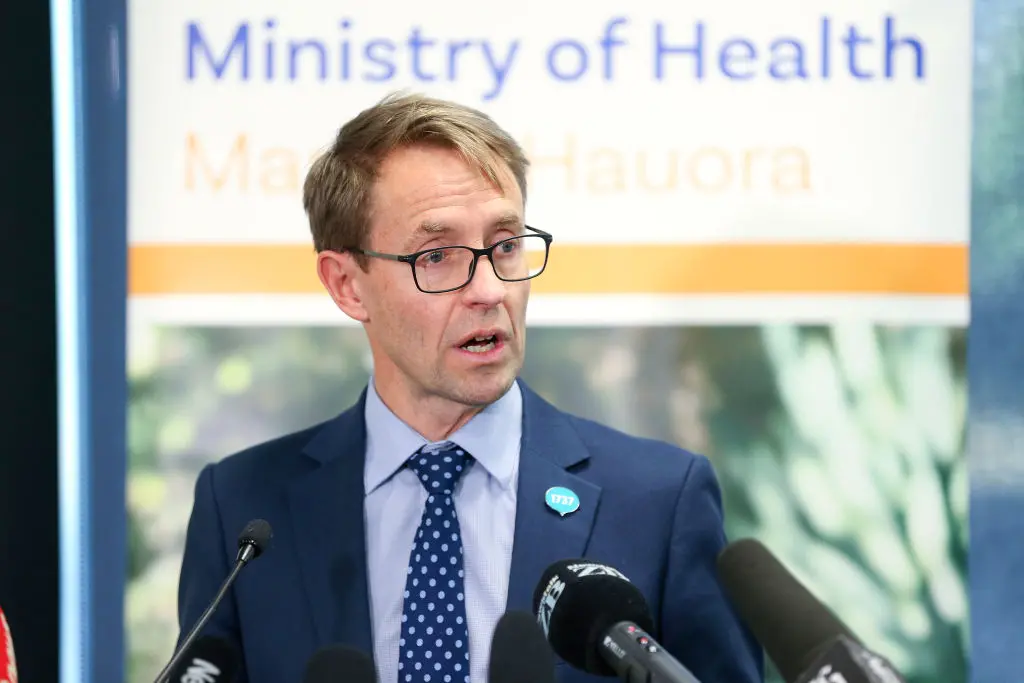
Director-general of health Ashley Bloomfield said people were being encouraged to move into a quarantine facility where that was helpful, such as families where some had tested positive while others had not.
There are five people receiving hospital-level care. Two are in Auckland City Hospital, and three are in Middlemore.
He said he understood the five people in hospital were stable.
The total number of active cases is 78. Of those, 58 are in the cluster and 20 are overseas arrivals contained in quarantine.
There were 26,014 tests processed yesterday. Almost 100,000 tests were completed in the last week.
Testing rates
Dr Bloomfield said the high demands for testing had caused some delays in the testing processing times.
For border-facing workers, he said a team was in place at the Auckland port, a new team was being set up at Tauranga Port, and all Government frontline staff at the Auckland border were being tested.
Testing port workers was initially meant to have been completed by tonight, but that has been extended to the end of the week due to the sheer number of the 12,000 port workers.
"No-one is going to be penalised if no-one has had their test by later tonight."
Ports chief executives' group spokesman Charles Finny said as recently as two weeks ago the maritime sector had been urging health authorities to test at ports, without success.
Dr Bloomfield said he "had a different view".
Staff at quarantine and managed isolation facilities outside Auckland were also being tested, he said.
He didn't know when testing of workers at the Jet Park had started, but it was in the process of being moved to weekly testing.
He said there was no plan at this stage to prevent international aircrew from flying home domestically to self-isolate after coming back to New Zealand.
Cluster's origins still unknown
Asked if the current cluster had come from a breach at the quarantine facility, Dr Bloomfield said: "We simply don't know."
He said the testing was only one line of defence in the efforts to contain Covid-19.
He said the criteria for businesses to be open were the same as the last time level 3 was in place.
Programmes to address anxiety in Māori and Pasifika communities were being addressed, Dr Bloomfield said, but he didn't have any details.
"I can also say the 1737 mental health line has people who speak a range of languages."
Casual contacts
He said the risk was low for people identified as casual contacts, but he identified other locations that positive cases had been including:
• The Botany Mall from 11am to 2pm on August 11;
• A fitness class in Kingsland;
• The Eden Junior Rugby club from 5.30pm-6.30pm on August 11;
• And a guinea pig show on August 8 from 10am to 2pm.
The environmental testing at the Americold facility in Mt Wellington had been flown to Wellington to be tested, he said.
"We need all those tests to be completed to get a full picture, and they are expected to come back at the end of the week."
Supermarkets have said that some customers were concerned about contact with frozen foods, but Dr Bloomfield said there was no evidence that people could catch Covid-19 from food or food packaging.
He repeated that the virus was tricky, and the virus was the problem, not people. He was heartened by the number of people coming forward to be tested.
Testing of border-facing workers
Asked about the failure to have regular testing of border-facing workers, Dr Bloomfield said no one had been misled and that testing was being rolled out for staff at managed isolation and quarantine facilities.
"We were increasing the frequency of that testing."
He said the ministry was working closely with DHBs to ramp up testing.
Asked about people waiting up to five days for test results, Dr Bloomfield said that tests were prioritised if they were more likely to be positive, and people were told about positive results "very quickly".
When quizzed about reports of conflicting advice for testing Tauranga port workers, he said some of the workers would be deemed as higher risk than those, for example, simply driving truck drivers in and out of the port.
Dr Bloomfield said he was giving the Health Minister and the Cabinet "very regular updates" about testing border-facing workers.
"I was checking every single day. There was clearly a dissonance between what the Prime Minister thought was happening and what was happening on the ground."
He said there may have been some miscommunication.
"We were under alert level 1 and we were going through a process of scaling up testing availability."
Asked if the Government's testing strategy - from June 23 - was for regular testing of asymptomatic border-facing workers, Dr Bloomfield said: "We couldn't just flick a switch and do that overnight."
He said there had been no failure of testing of frontline border-facing workers, even though Health Minister Chris Hipkins has said that it wasn't happening as Cabinet expected, and Hipkins has taken responsibility for that.
Dr Bloomfield said no one had misled anyone, and that in his communications with ministers it was clear that Cabinet wanted regular testing of border-facing workers - which was being rolled out.
On elimination
He said the elimination approach "has served us very well, and most commentators, not just her but many abroad, support us maintaining that".
On extending alert level 2, Bloomfield said he had been working hard on seeing into the future. But the current settings would give Kiwis "pause for thought" about what level 1 will look like, including there should be more physical distancing and the possible use of masks in some settings.
"All New Zealanders would prefer that we stayed in alert level 1, and perhaps modify (those settings as they currently are)."
Not all of the positive cases in New Zealand from overseas travelers have been sequenced, meaning that the current cluster being connected to an overseas case cannot be ruled out.