

For HeliOtago critical care paramedics, it provides a novel way to practise their winch technique for complicated rescues.
HeliOtago operations manager Doug Flett said the helicopter was bought for the express purpose of drastically increasing the amount of training staff would have.
‘‘It doesn’t eliminate flying training — we often go out and we’ll do night winching and day winching — but what this allows us to do is actually train, do drills.
‘‘We just drill, drill, drill until we’ve got all the paramedics really well ... drilled.’’

It was mounted on the wall of the hangar earlier this month.
While training was not done from the height paramedics usually would be operating in, it allowed everyone to brush up on the mechanics of the job, Mr Flett said.
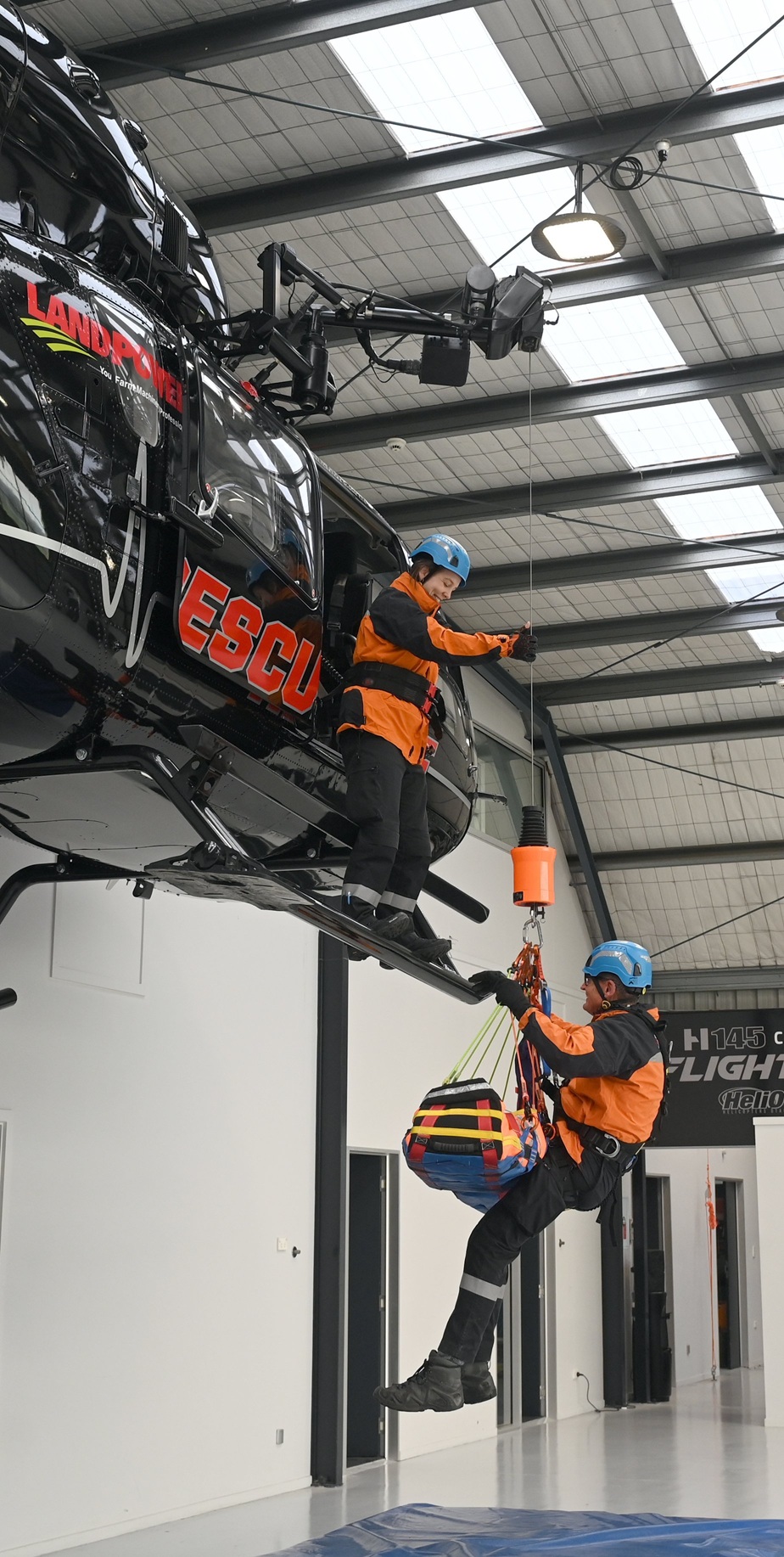
‘‘We’ll do real-life emergency simulations — and they can problem solve in an environment, which they’re used to.’’
Mr Flett said the important parts were the entering and exiting the helicopter, using the winch and hooking up the patient — in this case a mannequin.
‘‘We’re limited with the roof height ... we regularly do winches that are anywhere between 15 to 150 feet [5m-50m], occasionally higher — but the winching up, the getting in and the getting out of the helicopter is the essential part.’’


