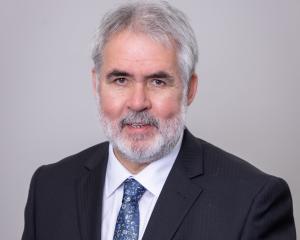
Melissa Vining established the charity hospital in Southland after the grief of her late husband’s cancer journey.
She said she had been following the government’s health announcements closely, and felt the lowering of the free bowel screening age to 56 was breaking a promise.
During the 2023 election campaign, then-National Party leader Christopher Luxon promised to lower the age to 45, putting it on a par with Australia.
Ms Vining hoped he had not forgotten this now he was prime minister.
‘‘We're seeing increasing rise in young people with colorectal cancer, and so that screening is super important from a human factor, but also it actually costs a lot more money when colorectal cancer is diagnosed later.
‘‘So it is just absolutely ridiculous that they haven't done more, and lowering it to 58, and now 56, is miles off 45, and the number of young people affected by bowel cancer is on the rise, and that's research scientifically proven.’’
Ms Vining said following Australia’s lead on bowel screening was not only the right thing to do for the country and our people, but the ‘‘financially responsible thing to do’’.
‘‘I'd like to see both major political parties stop using health as a political football and get a long-term workforce plan and fund the health system properly.’’
When the Otago Daily Times approached Health Minister Simeon Brown’s office about the matter, a spokeswoman directed it to a press statement issued immediately after the Budget.
‘‘We are committed to continuing to lower the bowel screening age to match Australia, but we need to ensure the health system has the capacity to deliver timely follow-up care and treatment,’’ Mr Brown said in the statement.
“That’s why we are taking a phased approach — expanding access step-by-step while building the workforce and infrastructure needed to support the programme safely and sustainably.
“Reducing the starting age to 56 is the next milestone in that commitment, and we will continue working towards lowering the age further as quickly as possible and as capacity grows.”
University of Otago in Christchurch bowel cancer researcher Prof Frank Frizelle said it was good the government acknowledged the issue.
While bringing the age down to 45 had to be a priority, it would need to be staged, because of the comparatively limited resources and limited budget of New Zealand, Prof Frizelle said.
‘‘The economics of it is that if we push it down, we'll get there. But there is a long lag between scoping people and showing a financial benefit, and that's where the government will be struggling.’’
Australia was able to lower the age more quickly because of the higher population density, bigger medical workforce and larger economy, he said.
‘‘It would be nice to see the New Zealand government go further, but I think its pace is completely understandable, given the competing resources — building a new hospital in Dunedin and all that sort of stuff.’’
It was ‘‘good to see some acknowledgement at least that this is an issue that needs to be addressed’’.