


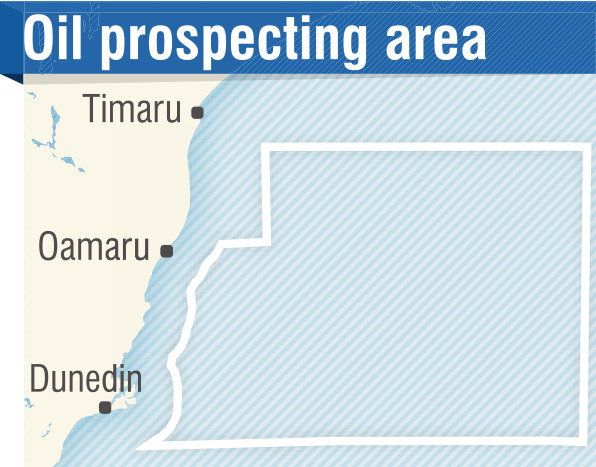
Resources Minister Shane Jones said yesterday the Canterbury Basin, much of which was situated off the Otago coast, had been viewed as a promising but largely untapped opportunity.
He said further prospecting and exploration there could unlock new domestic resources, strengthening New Zealand’s long-term energy resilience and creating valuable economic opportunities.
NZ Petroleum and Minerals yesterday opened a three-month competitive process for an application, initially submitted by CBX Energy Limited.
The proposal outlines a programme of technical and economic studies, including work on a comprehensive Canterbury Basin development strategy.
Applications close on June 24 for a petroleum prospect permit, described yesterday as an early-stage, low-impact permit that allowed a company to search for evidence of petroleum/oil and gas.
The process was banned by the Labour-led government in 2018, but was overturned last year.
Since the reinstatement of exploration, two permit applications have progressed through the competitive process and are now under assessment, with decisions expected later this year.
Professor Barry Barton of University of Waikato’s law school, who had a background in the energy industry, said the exploration permit process could be a reaction to the soaring oil price.
"But obviously, even if everything worked perfectly from a company's point of view, it would be years away before anything that they found came into production.
"Especially at the early stages, companies are engaged in a very high-risk speculative activity," he said.
For the past 20 years petroleum companies had been focusing on the Taranaki area, he said.
There was some exploration done in the Canterbury Basin more than 20 years ago, but nothing came of it.
"It's high risk in the sense that you can spend a lot of money doing geophysical work and then actually drilling a well offshore and not find anything.
"The cost of bringing a drilling rig to New Zealand is stupendous. A million dollars a day just to have it here."
In New Zealand there was a high chance any find would be gas, which would necessitate a gas reticulation network, he said.
"You'd be talking about billions rather than hundreds of millions."
A prospecting permit was different than exploration, involving analysis of data and putting together a work programme, he said.
A drilling ship may come further down the line as a geophysical exploration could involve drilling holes, but it would be costly.
Prof Barton said there was no desperate shortage of oil worldwide.
Prices would come down — not as quick for many people — but long-term, the demand was not increasing for it.
CBX Energy Ltd, which was incorporated as a company in January, has applied to prospect in the offshore Canterbury Basin.
The company is jointly owned by Wellington-based Craig Barry and a company based in the United Arab Emirates.
Green list MP Scott Willis said the permit process was simply Mr Jones demonstrating his mini-Maga-credentials by resurrecting a zombie offshore oil project off the Otago coast.
"We know there's no future in fossils and opening up the Canterbury Basin to oil and gas isn't going to lower power bills.
"It's certainly not going to keep us safe from extreme weather events," he said.
He said the government was undoing all the progress made under the previous government, simply for corporate profit.


