
PHOTO
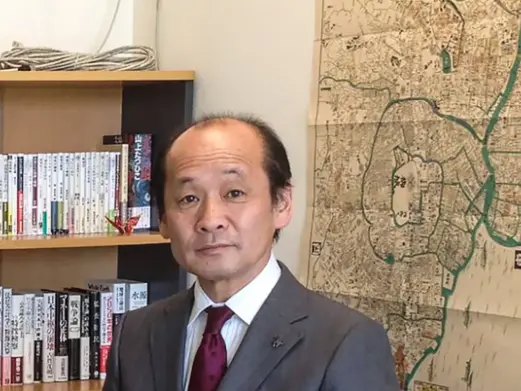
A former finance manager has been found guilty of multiple charges in relation to a collapsed $43 million Ponzi scheme which fleeced hundreds of investors.
The giant East Wind Ponzi scheme targeted members of the Japanese community in New Zealand, most of whom are unlikely to get more than a fraction of their investments back.

The deception came to light in 2019 when Auckland-based businessman Masatomo Ashikaga, 60, died, leaving investors in the lurch.
Suspicions from his clients as to what had happened to their money led some to attend the funeral and inspect his body to ensure Ashikaga, also known as Tom Tanaka, had not faked his own death.
Yuko Hanyu was the manager of the company’s finance department from 2004 to December 2017.
Jury finds multiple charges proven
On Monday, she was found guilty by a jury in the Auckland District Court on multiple charges relating to her role in East Wind.
They included four representative charges of making a false statement, two representative charges of obtaining by deception and one charge of theft by a person in a special relationship.
She was also found guilty of three representative charges of theft for stealing more than $800,000 from East Wind.
East Wind Company Ltd was part of the East Wind Group, which offered financial services and immigration support to New Zealand’s Japanese community.
The group collapsed and was placed in liquidation in February 2019.
Financial products offered by the company - the Group Term Deposit, Waterloo Fund - operated as Ponzi schemes, the Serious Fraud Office said.
The charges Hanyu was found guilty of related to more than $6.5m of new investments in the Group Term Deposit product, and more than $12.5m of reinvestments.
Hanyu was also found guilty of using $1m that should have been invested in the Restaurant Fund, a different investment scheme offered by the company, but instead was used to repay one of the Waterloo Fund investors.
Finally, Hanyu was found guilty of three representative charges of theft.
Two of these were for transferring approximately $430,000 from East Wind’s company accounts to her personal credit card.
The remaining charge related to more than $400,000 that she arranged to be paid into an account associated with her to repay her mortgage.
Hanyu worked together with Ashikaga to obtain funds from investors, making false statements about their financial products and promised returns.
In reality there were no legitimate investments. The incoming funds were being used to make repayments to other investors.
"This was an incredibly complex case involving the analysis of substantial detailed financial records, many of which were in Japanese, and a large number of mostly overseas-based investors," SFO director Karen Chang said.
"The decisive jury verdicts reflect the quality of the investigation and the strength of the Crown case," she said.
"Ms Hanyu and Mr Ashikaga exploited their connections to the Japanese community to deceive investors out of millions of dollars. Many of the investors did not get their money back."
Hanyu will be sentenced on July 3.
Creditors owed more than $43m
In their final report, liquidators Stephanie Jeffreys and Malcom Moore of Grant Thornton said six East Wind companies owed a total of 171 creditors $43.3m.
Two of the smaller entities – owing 10 creditors less than $20,000 – paid out between 69 and 83 cents in the dollar.
But it was bad news for the remaining vast majority of creditors who account for more than 99% of the outstanding total, the report said.
"There are insufficient funds to distribute to unsecured creditors of any of the other companies," the report said.
A Ponzi scheme is a fraudulent scam in which investors are paid out of money contributed by newer investors, and not from legitimate returns. It is named after Charles Ponzi, who ran an early such scheme in the United States in the 1920s.
- Ric Stevens, Open Justice reporter