

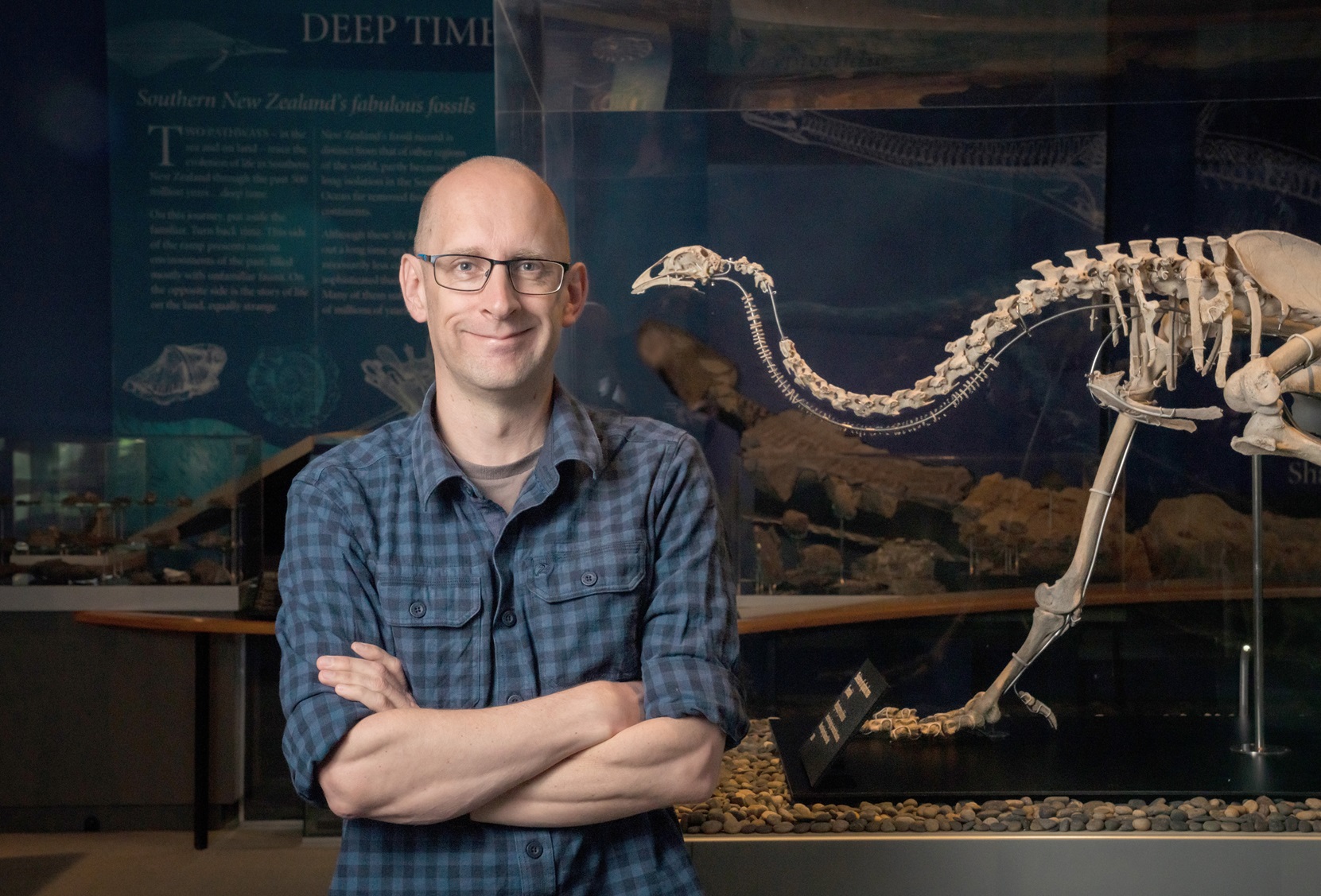
University of Otago Palaeogenetics Laboratory director Associate Prof Nic Rawlence said the new species of goose was discovered after he and a team of researchers from the Museum of New Zealand Te Papa Tongarewa and the University of Cambridge (United Kingdom) analysed a large collection of waterfowl bones found in the old Central Otago lake.
The research team named the St Bathans goose Meterchen luti, in reference to the nursery rhyme Old Mother Goose, where Meterchen means "mother goose" in ancient Greek, and luti is Latin for "of the mud".
Assoc Prof Rawlence said the new species was about the size of an Egyptian goose, which is a medium-sized, stocky waterbird, typically measuring 63cm-73cm in length, 134cm-154cm in wingspan, and generally weighing between 1.5kg and 2.3kg.
"Until we described the Old Mother Goose, there were nine other waterfowl known from St Bathans — some of them are very common and some of them are quite rare.
"Bones of waterfowl have been found at St Bathans over the past 20 years and we’ve known some of them have been what you would call goose-like.
"And so we went back to the museum collections and reassessed all the bones that had been previously thought to be goose-like.
"In that reassessment, we discovered that some of them were goose, and in fact, this goose was a new species."
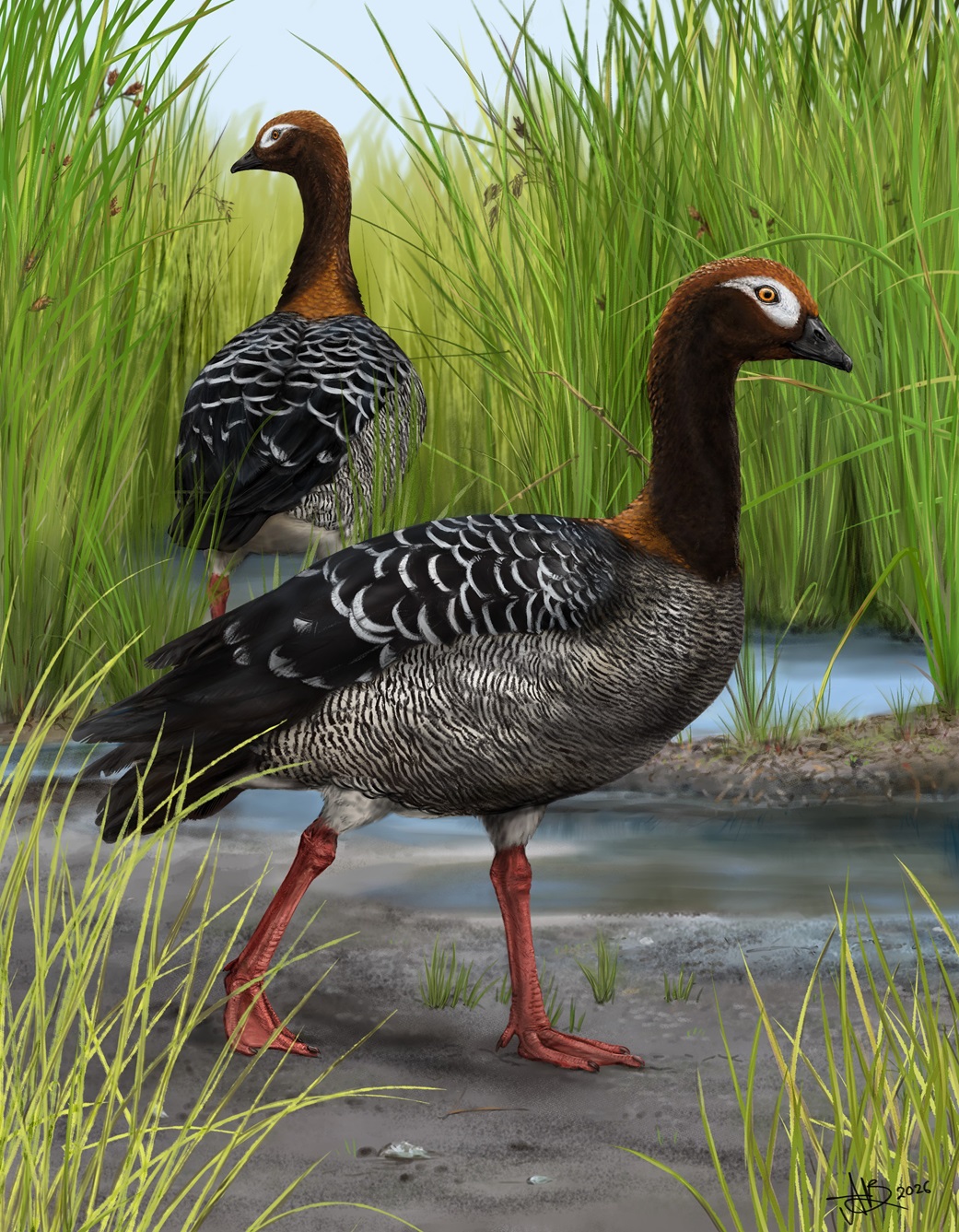
They found the St Bathans goose was not closely related to the recently-extinct giant flightless New Zealand geese (Cnemiornis) or their Australian cousin, the Cape Barren goose.
He said the researchers did not yet know where the species came from.
Further discoveries and further excavations would help researchers to pinpoint where the species originated from.
He said the discovery of the rare fossil goose was "golden" because it showed the evolutionary history of New Zealand birds was much more dynamic than once thought.
"What we do know is that the ancestors of this Old Mother Goose arrived in New Zealand at least 14-19 million years ago, and no descendants survived.
"And then we had another invasion into New Zealand about 7 million years ago which was the ancestors of our recent giant flightless geese."


