
PHOTO
Close contacts of the people caught up in the Auckland Covid-19 outbreak are isolating in the southern region, reinforcing the need for people to comply with the Alert Level 4 lockdown rules, health officials say.
There are 21 new community cases of Covid-19 reported in New Zealand today, bringing the total number of people infected in the Delta cluster to 51.
Eighteen of the new cases are in Auckland, where the first case was confirmed on Tuesday, and three in Wellington. More testing stations in the cities are being opened.
Yesterday the Government extended the snap lockdown it placed New Zealand in on Tuesday night for a further four days, until 11.59pm on Tuesday.
However, Prime Minister Jacinda Ardern warned that Cabinet might well extend Alert Level 4 after it meets again on Monday, as three community transmission cases were detected in Wellington yesterday and cases could well be elsewhere in the country.
``Outside of Auckland the number of contacts are in the hundreds, keeping in mind the large number of locations of interest,’’ Ms Ardern said.
``But from the heat maps that I have seen, they are dotted throughout the South.’’
Last night Southern District Health Board medical officer of health Susan Jack confirmed that some of those close contacts were in Otago and/or Southland.
``There are close contacts in the southern district, and as locations of interest increase, there may be more,’’ Dr Jack said.
``This underscores the importance of everyone staying in their homes, and observing the requirements of Alert Level 4.’’
The Ministry of Health could not be specific last night as to how many close contacts were in the South Island, but did say 149 close contacts were located outside of Auckland and Waikato.
Ms Ardern said extending the nationwide lockdown was prudent because new cases could be found beyond the initial areas of concern.
``We believe we will be in a better position to make an assessment about all of New Zealand with a full seven days [lockdown], granted that Auckland is looking like having the challenge of being the primary site for this outbreak.’’
Southerners have been quick to rally to the call to be tested if they have Covid-like symptoms. The Southern District Health Board said that on Thursday more than 1800 swabs had been performed in Otago and Southland.
Demand was similarly high yesterday, spurred on by news of more positive cases in Wellington and Auckland.
Ms Ardern said it was crucial testing numbers remained high throughout New Zealand, as decisions to be taken by Cabinet on Monday about possibly relaxing alert levels in places unaffected by Covid-19 would depend on evidence of no community transmission.
``It really is too soon to say and I know that everyone is looking for certainty,’’ she said.
``We are too, but we really need the evidence from the testing, which needs to continue over the coming days, in order for us to know if we have the perimeter of this outbreak ... if cases keep springing up, we haven’t got the perimeter yet, and only time helps with that.
‘‘It would be premature for me to say what that would mean for A, Auckland and B, the rest of the country,’’ Ms Ardern said.
Vaccination rates were also back on track in the South yesterday, after an enforced break while clinics adjusted their layouts to meet Alert Level 4 obligations.
The Meridian clinic in Dunedin had vaccinated more than 120 people before 9am yesterday, which contributed to more than 2000 doses being distributed across the region.
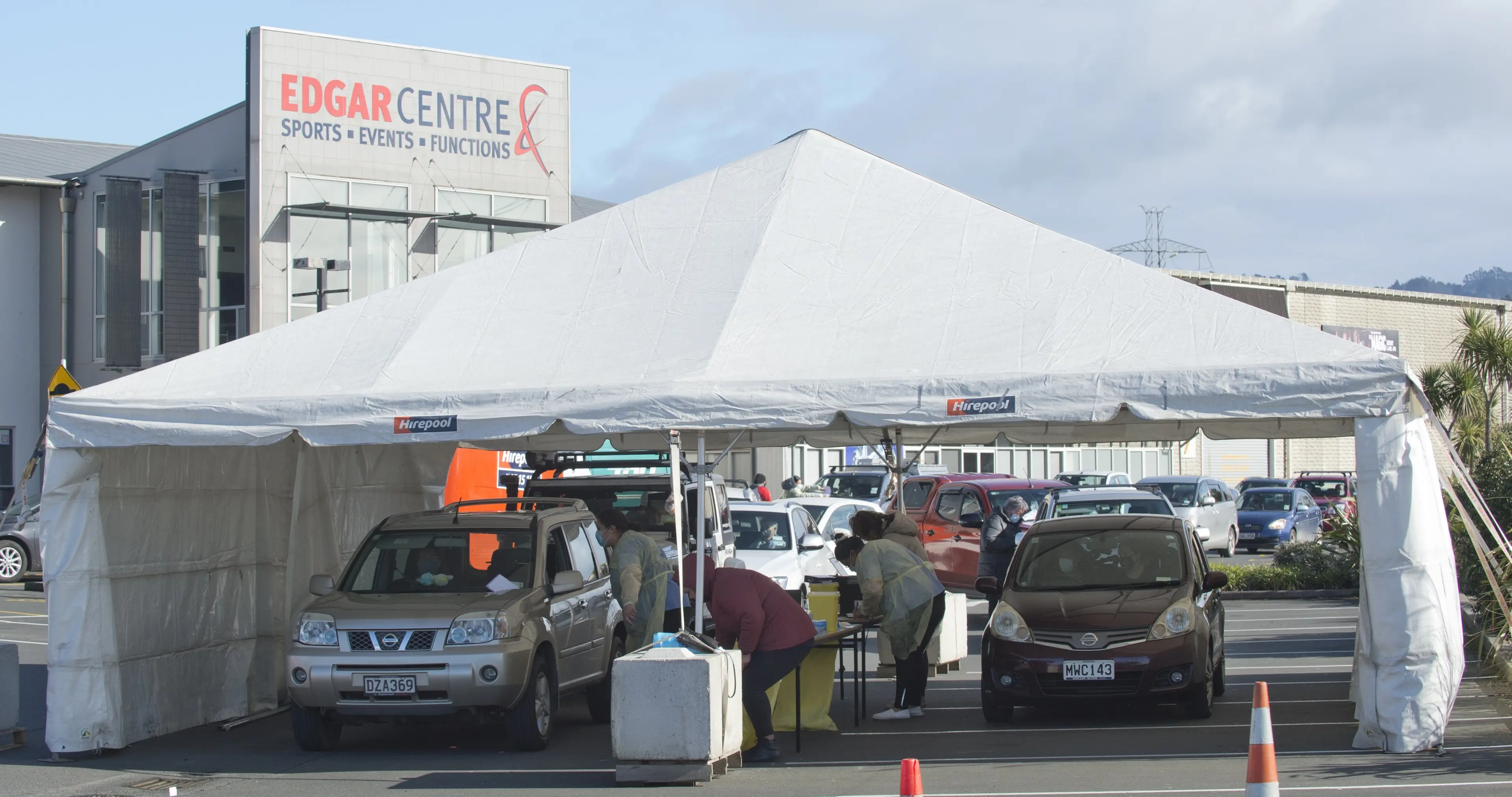
A new car-based clinic offering vaccinations opened at the Edgar Centre, and Tuapeka Community Health finalised plans for a mass vaccination event in Lawrence, to be held on Monday afternoon.
Education
The extension of Alert Level 4 until at least Tuesday night meant schools and tertiary institutions began planning for a return to online classes.
Otago Primary Principals’ Association president Gareth Swete said schools were obliged to provide distance learning and most would have some preparations in place beginning next week to make the transition.
The initial three-day period had worked well to prepare teachers for new working conditions and to allow families to adapt to lockdown life.
Most schools would be well prepared to transition to online learning after the 2020 lockdown period, he said.
Otago Secondary Principals’ Association president Lindy Cavanagh-Monaghan said schools were allowed to distribute devices to pupils who needed support for online learning.
One of the challenges would be with practical subjects, such as woodwork.
Pupils taking those subjects would focus on theory and make up the practical work later in the year if lockdown conditions lifted.
A University of Otago spokeswoman said its classes would remain as online teaching until the end of Friday August 27, after which the week-long mid-semester break began.
‘‘This is to ensure continuity for all staff and students during this unsettling time.
The university will make a further decision on teaching and learning after the Government’s announcement about alert level changes next week.’’
Otago Polytechnic will also be teaching online next week.
“Our academic staff are well prepared for this scenario and have been working hard on a comprehensive suite of resources to deliver online/remotely,” chief executive Megan Gibbons said.
“We have been communicating with our learners every day to ensure they are supported and understand how their learning will be delivered through this Covid 19 outbreak.’’
Council services
Dunedin Mayor Aaron Hawkins said extending the Alert Level 4 lockdown into next week was a tough call, but the right one, and the city was well placed to cope.
‘‘Lockdown is tough, especially for families and our business community, but those challenges need to be met to avoid the greater suffering [resulting from] the virus going unchecked.’’
Public facilities such as libraries remain closed, but parks are open. The kerbside rubbish and recycling collection is continuing, except for glass.
An Otago Regional Council spokesman said public transport in Dunedin and Queenstown would continue to operate as it had since lockdown took effect.
That meant, in Dunedin, all routes would run a Saturday service during the week, with the exception of two services, route 1 and 80/81, which were operating normal timetables.
Normal services were operating in Queenstown.
Buses in both networks were for essential travel only under Level 4.
“We’re asking bus users to tag on and off at the rear door, scan on to the bus with the QR codes provided, and wear their own mask. Standard bus fares apply.”
All council customer service points would remain closed, but people could contact the council via phone or email.
- Additional reporting Wyatt Ryder, Grant Miller, Molly Houseman