
PHOTO
Bespoke paving, a cultural narrative and space for people to dine and trade have emerged as prominent themes in the planned makeover of Dunedin's main shopping street.
The Dunedin City Council has unveiled detailed designs for its revamp of George St and nearby streets in the central city.
Central city project plan director Dr Glen Hazelton said the streetscape would reflect the uniqueness of Otepoti, its history and diverse cultural elements.
Part of the thinking was to create spaces where, post-Covid-19, people would feel comfortable coming together again.
Just over $28 million is being spent on the upgrade.
It is hoped the environment will be welcoming and inclusive for residents and visitors and positive for businesses.
"I think it will bring people back," Dr Hazelton said.
Recognition of mana whenua is a feature.
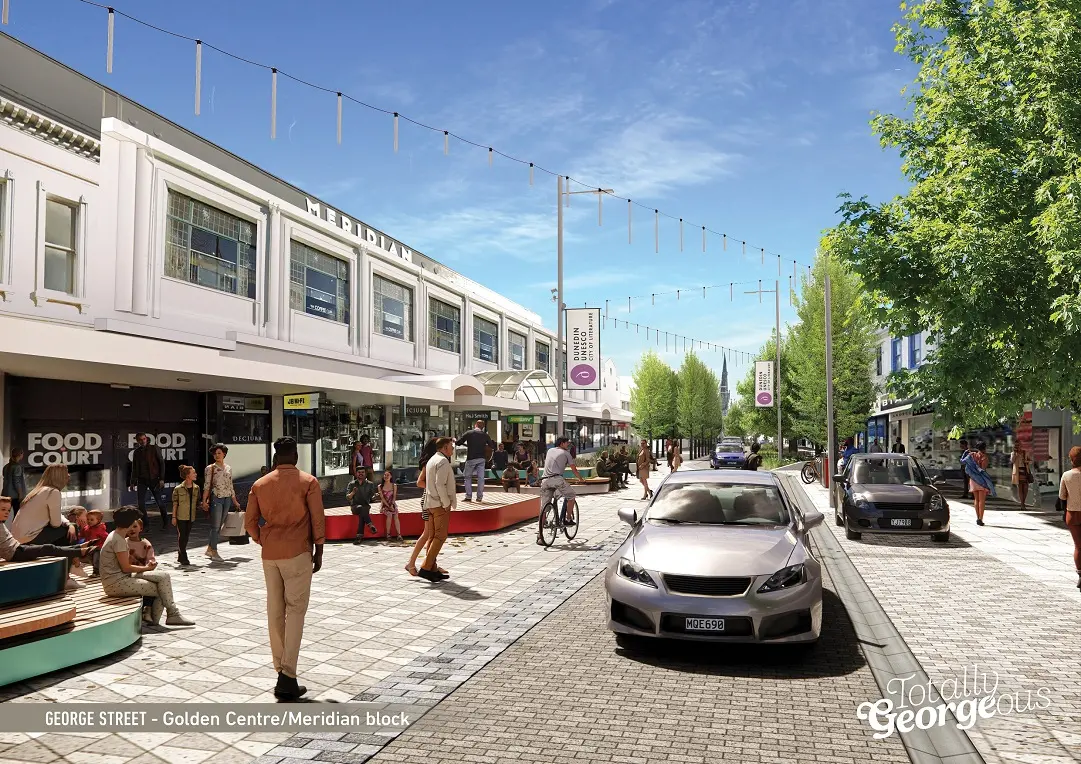
The shape of paving units will be based on the definition of Otepoti and traditional patterns on the windows of Otakou marae will also be referenced.
There is to be a nod to Dunedin's status as a Unesco City of Literature with phrases from writers such as Janet Frame and Hone Tuwhare.
The council said the redesign of George St would seek to showcase Dunedin's colonial heritage.
This would be developed through creating space where people could get a better view of architectural facades.
"Put together, the different elements outlined in the developed designs will improve the safety, accessibility and amenity of the area, and help to create a vibrant, compelling destination where people will want to spend time and money," Dr Hazelton said.
Three blocks in the upgrade will each have their own themes.
Public art could be prevalent in the Farmers block.
Outdoor entertainment could be catered for in the Golden Centre block and people could get their "golden Instagram moment" there, Dr Hazelton said.
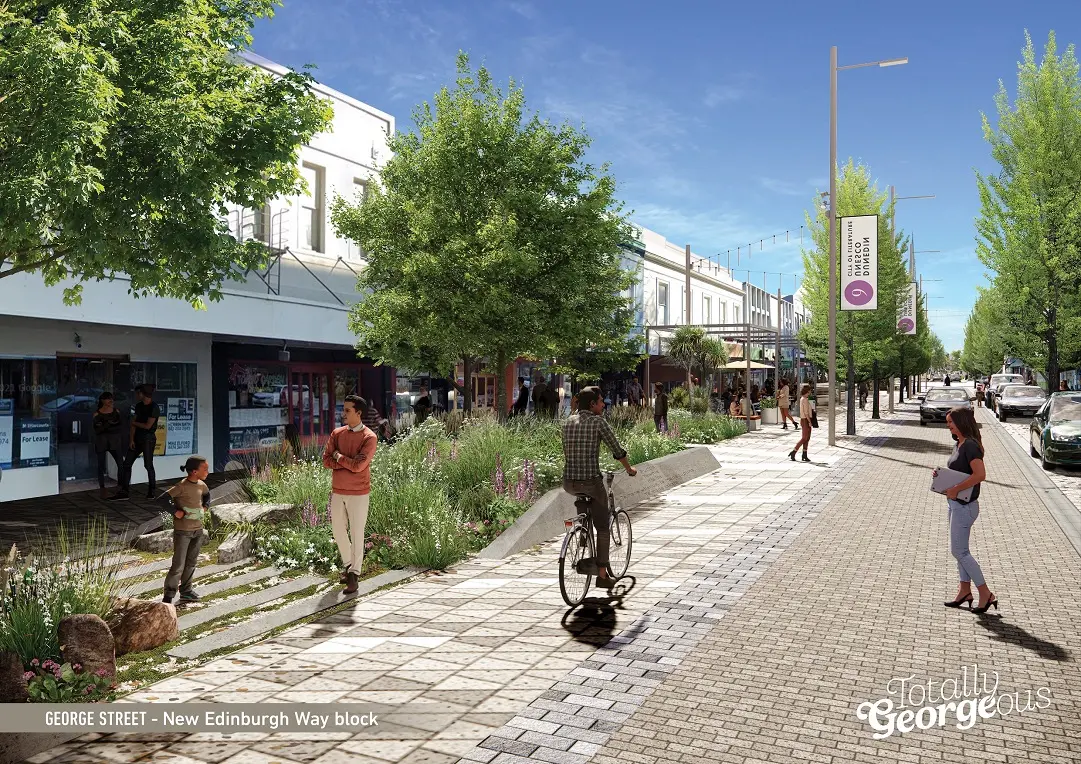
He described the New Edinburgh Way block as like an urban lounge for trade, exchange and kai.
Consulting firm Aukaha was contracted to work on behalf of mana whenua through the George St capital works project, incorporating a Ngai Tahu narrative through the design.
Aukaha mana whenua advisory panel member Megan Potiki said it was paramount for Maori to recognise themselves and feel welcome in Dunedin's city centre.
It was also an opportunity for people less familiar with Ngai Tahu culture to gain more understanding.
"This is a chance for the descendants of Kai Tahu to reinstate themselves back in the city and be visible in our community," Mrs Potiki said.
Council chief executive Sandy Graham said the designs reflected a genuine partnership with mana whenua.
They would transform George St into a modern and vibrant environment, she said.
Some works had been carried out since late last year.
The central city upgrade was driven by the need to replace old infrastructure under ground. This also created a chance to adjust the look of the central city above ground.
Construction work is to start in George St after Easter, beginning with the Farmers block.
The central city revamp is due to be completed in 2024.