
PHOTO
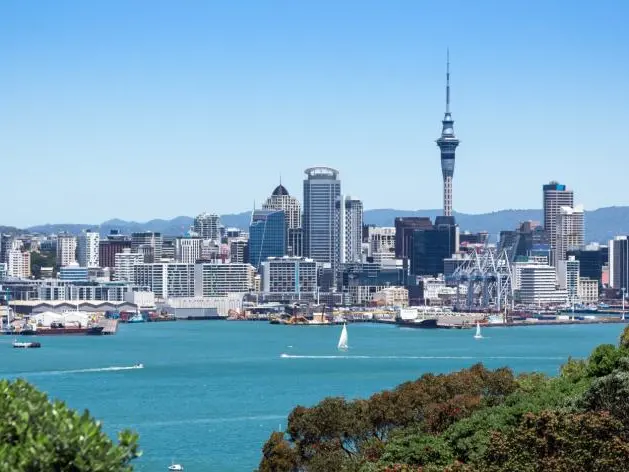
Aucklanders face another four to eight weeks of restrictions, Director-General of Health Ashley Bloomfield has signalled - as the Government's Covid roadmap comes under criticism from business, opposition parties, and several high-profile health experts.
Associate Professor Siouxsie Wiles says she is "kind of gutted", while National leader Judith Collins labelled the plan a "confused collection of gobbledygook" and Auckland business leader Michael Barnett says business has been "absolutely ignored" in the first step of the three-step plan.
Other experts were more optimistic.
The first step in the easing of restrictions starts at 11.59pm tonight but Bloomfield and Prime Minister Jacinda Ardern have emphasised Auckland is still in level 3.
Bloomfield said restrictions would ease in the region over four to eight weeks - meaning Aucklanders could be at level 3, albeit with some more freedoms, until late November.
"I'm sure like everybody, particularly in Auckland, we're looking forward to a summer where we can enjoy freedoms and our ticket to that is vaccination, so the next four to eight weeks into early December is critical to get our vaccination rates up," said Bloomfield.
Auckland University public health expert Collin Tukuitonga told Mike Yardley on Newstalk ZB that he rated the Government's roadmap. But he added that it wasn't particularly coherent. He said it was more like a holding pattern to get vaccination rates up.
As for what was a coherent roadmap, and getting to high vaccinations, they would have a much clearer roadmap that would include dates, he said.
Currently, 79.1 per cent of New Zealanders have received at least their first dose, with 48 per cent fully vaccinated. While the country is now inching towards an 80 per cent vaccination rate - and closer to the 90 per cent mark - there are still communities and age-groups, including those within Māori and Pasifika, with low rates.
The Ministry of Health's latest vaccine data - from a week ago - showed that only 50 per cent of Māori in Auckland aged 12 to 39 had one dose, and only 17 per cent had two doses.
Asked about mass saliva testing, Tukuitonga said he had been saying that for a number of weeks now. They knew the main suburbs to target and suggested door-to-door testing using saliva and also vaccination.
As for why it hadn't happened, he said they had been told they would prioritise Māori since day one and getting Māori providers to deliver that but there was a hesitation from officials to engage them and a lack of trust there.
The three-step roadmap
Aucklanders are set for a taste of freedom from tomorrow as some Covid-19 restrictions lift after nearly 50 days of lockdown.
Ardern yesterday released a three-step "road map" to ease lockdown in Auckland, beginning with step one: Allowing two household bubbles to mix outside in groups of up to 10 people as of midnight tonight.
Aucklanders will also be able to pursue more outdoor recreational pursuits, like hunting, fishing, and exercise classes — provided bubble rules and limits are adhered to.
Settings will be reviewed weekly.
At step two, groups of up to 25 can meet and places like libraries, museums, pools and zoos can open.
At step three, gathering sizes increase to 50, and restaurants, cafes and bars can reopen. The rest of New Zealand in level 2 will stay there for the time being, though the capacity limit of 100 people at hospitality venues will be scrapped.
Aside from Bloomfield's four-eight weeks comment, Ardern gave no timeline for a shift to step two or three. She said the easing would not apply to Waikato areas just put into level 3. They would stay at level 3 for at least five days.
Experts unhappy
The Government's decision for Auckland, seen by many as deviating from its longstanding elimination strategy, was met with confusion, outrage and even optimism from health commentators and parties from across the political spectrum.
Associate Professor Siouxsie Wiles says she is disappointed at yesterday's announcement. "I'm kind of gutted, I guess," Wiles told TVNZ today.
She said she had hoped this next step - learning to manage and suppress the virus - would have happened next year and not this soon.
Wiles said people needed to get used to the idea that level 1 was now out.
She wants to see vaccination mandates in schools. If a teacher is not vaccinated - they should not be working at a school, she said.
University of Auckland professor Des Gorman told The AM Show we don't know how many cases New Zealand could deal with before hospitals were at capacity. He wants to see proof that we can handle 500 people on ventilators.
Gorman said currently we have 330-odd - "we've got plenty of ventilators" - but he wants a definitive plan showing hospitals could handle those numbers.
The Malaghan Institute's Graham Le Gros says the virus will not wait for vaccination rates to go up. Providers are trying to reach the hardest-to-reach people but he wants them to move faster. He also wants antibody therapies to be brought in to help ameliorate the disease for sick people. The Government has already brought in monoclonal antibody therapy.
It was hard to model the virus' spread because "we don't actually know the underground virus".
Professor Shaun Hendy told TVNZ we needed to get used to the idea that the virus would now be in the community. "People have to be cautious."
Hendy said the chances for people to get the virus - if they were not vaccinated - were now higher. So too is the likeliness to be hospitalised if you catch Covid.
Hendy told The AM Show that he expected to see a "slow increase" in cases in the next fortnight to month. The phase change would not cause rapid growth and would help prevent super-spreading events.
Immunologist Dr Dianne Sika-Paotonu said her preference would have been to see restrictions reduced only after vaccination rates were at a higher percentage.
There was still a lot of work to do in terms of getting our most vulnerable communities vaccinated - including Pacific and Māori, she told TVNZ.
Experts acknowledge cases are almost certain to rise, saying community transmission is now the new normal in New Zealand. They also warn the strategy could mean places outside of Auckland shifting back up the alert level scale, as cases spread.
But one epidemiologist suggested that New Zealand could re-eliminate Covid-19, when new vaccines are developed in the coming years.