

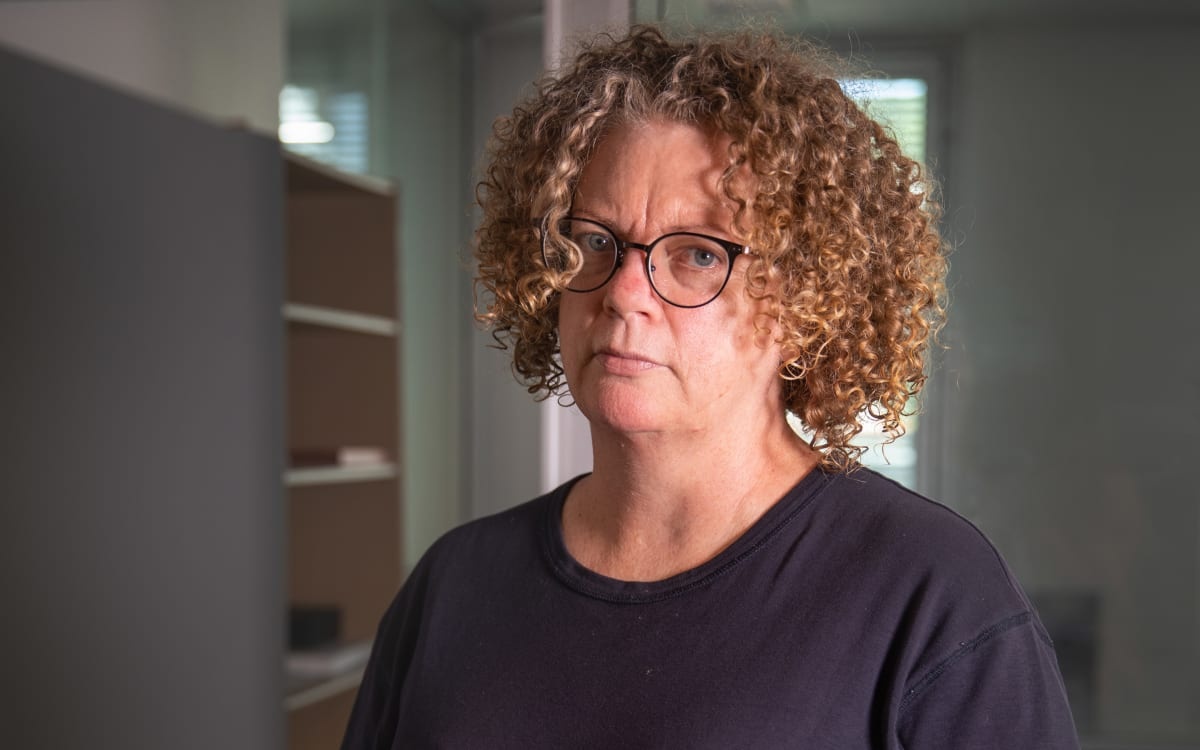
A disability advocate says a bill to clarify the purpose of Disability Support Services is the worst piece of legislation she's ever seen.
The government introduced the Disability Support Services Bill yesterday aimed at "providing clarity and stability" to the system supporting disabled New Zealanders. lt includes details clarifying that the Crown is not the employer of family carers.
The move comes after the Supreme Court ruled last year that two parents who care fulltime for their disabled children should be considered government employees.
The legislation would reduce the Crown's exposure to fiscal and litigation risks following that ruling.
Disability advocate Jane Carrigan said family carers should clearly be considered employees, as they were doing what was recognised as the government's responsibility.
"They're providing disability support services. The government's responsible, notwithstanding it bending over backwards in this legislation to suggest they aren't, for providing disability support services."
There were "40-odd" people with family care-related cases filed with the Employment Relations Authority who should be allowed to have them heard and this bill would pull the rug on their only chance at legal remedy, she said.
"All this, this piece of legislation is doing is limiting remedies for those people with the highest needs."
She likened the bill's proposed changes to "Part 4A" - a law in place from 2013 to 2020 which allowed some people to be paid for caring for their disabled family members, while inhibiting others.
Part 4A also prevented disabled people and their families from taking their complaints to the Human Rights Commission or taking any legal proceedings on the basis of discrimination to their human rights.
"It's cruel and perverse... It has to be the worst piece of legislation I've ever seen."
Carrigan said she was glad the bill had not been entered under urgency, as she would be fighting it throughout the select committee process.
"I'll be making the most of the fact that it's going through a standard committee - and I can tell you there will be a lot more like me."
Family carers had been failed by the system, she believed.
"Family carers are completely isolated. This is not a system that cares about them. This is a system that suddenly worry it might have to pay for the disability support services they're providing."
The bill is set to have its first reading tomorrow and will go to a select committee for public feedback.

'Never the intention'
Upston said there had "never been an expectation" that the Ministry of Social Development (MSD) would employ family member support workers.
The bill would not affect the two already successful claims, but there were better ways to support family carers, she believed.
"I have commissioned further work in this space and will be consulting on a package for carers."
She said that work was "clearly overdue", and would like to have that package by the end of the year.
"We do need to make sure that it's fair, transparent and sustainable."
At present, the disabled person themselves could be considered to be employing their family member as a support worker, Upston said.
"When somebody doesn't have the means to be able to do that as a disabled person, we need to look at how do we better legally protect them."
In some cases, a third party called an "agent" was considered to be the employer.
The bill clarified that Disability Support Services funding was a "contribution" toward disabled people being able to live an everyday life, the Minister said.
"It makes clear that families and whānau have responsibility for the wellbeing of their members in the first instance and where appropriate. This reflects the way that DSS already works. It doesn't mean that DSS won't help where disabled people's families support them."
The bill said it was never the policy intent for the Crown to be the employer of carers, and it would reaffirm that it was the Crown that made funding decisions.
"This provides certainty regarding the relationship between disabled people and paid family carers following the Supreme Court case. If a disabled person uses DSS-funded disability support services to employ another person, the employment relationship is solely between the disabled person and the carer," it said.
Upston said DSS had been operating without a clear legislative function, which had made it harder for people to understand what support was available, who qualified and how decisions were made.
"This bill establishes foundations and sets a clear framework for how DSS operates. It sets out what the disability support system does, its purpose and how public funding can be used," she said.
There would be no changes to current supports for disabled people, whānau and carers. There would also be no changes to current funding allocations, or who could get disability support services.
A Regulatory Impact Statement (RIS) from the MSD said in the absence of a legislative framework, policy settings were increasingly being made through court judgments.
"If the DSS Bill is not introduced, then MSD will have to manage fiscal costs through operational policy changes, for example, restricting eligibility, access to Flexible Funding, and/or level of DSS provided for disabled people and family carers," officials said.
"The government has a priority of fiscal responsibility, and any increases in appropriated funding would ordinarily be prioritised to address cost pressures. Increasing payment to family carers to meet historic claims and/or ongoing wage costs will not result in an increased level of care and support for disabled people compared with the status quo."
The RIS noted there had been no community of prior agency consultation on the specific legislative proposals, given the urgency and confidential nature of the options.

"It reinforces a long-standing assumption that families will step in where government support falls short. Officials often soften this language by referring to 'natural supports,' as though unpaid care simply happens without cost," she said.
"But there is nothing natural about a parent leaving paid employment to provide full-time care. There is nothing natural about elderly spouses physically lifting partners without proper support. There is nothing natural about siblings restructuring their own futures because the State has stepped back. That is not natural support, that is policy design and increasingly, it feels like policy design built around withdrawal."
Hickey said rather than the government using the Supreme Court's decision as an opportunity to better recognise carers, it was moving quickly "to ensure broader obligations do not flow from that ruling".


