

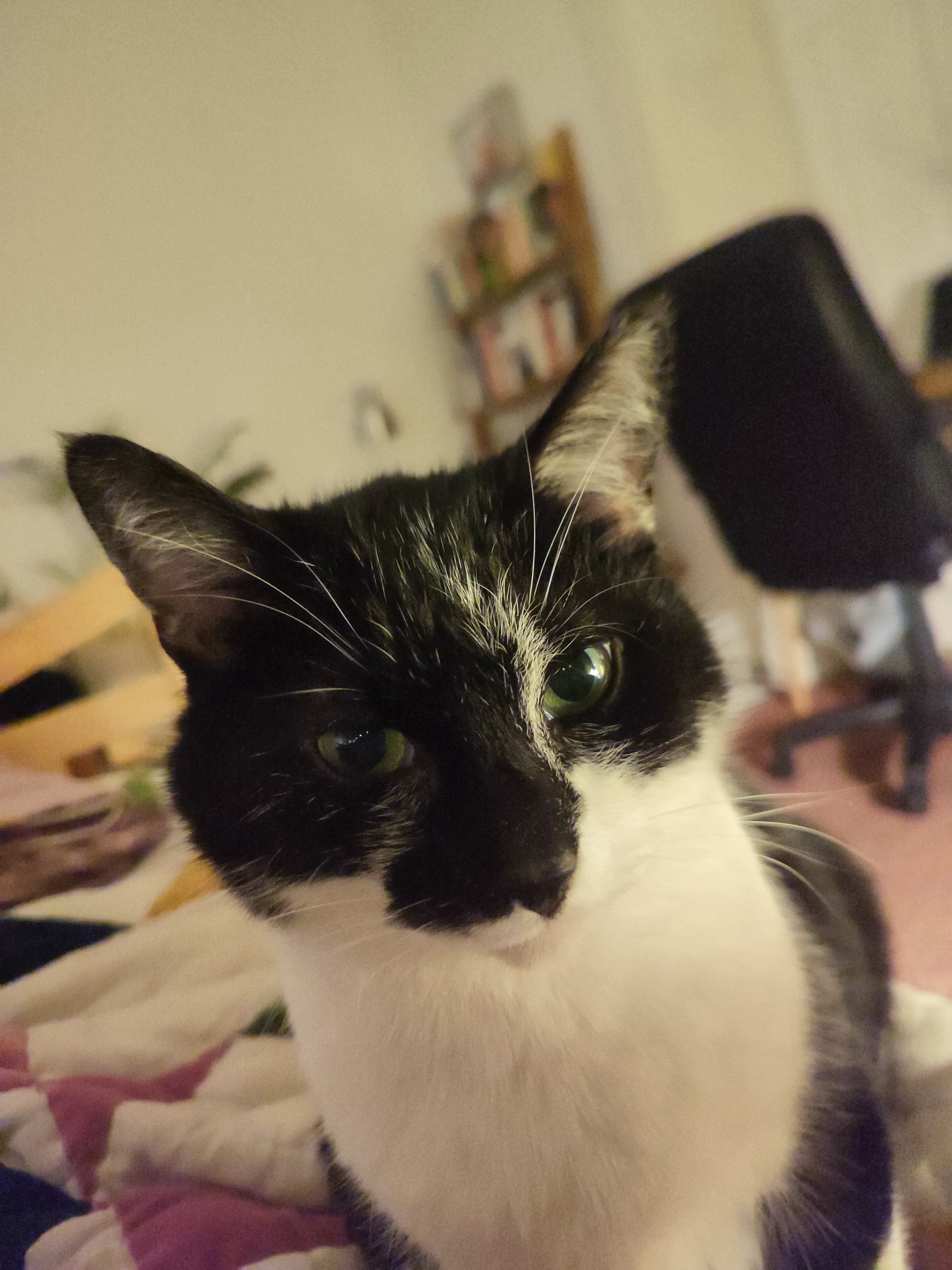
The very last thing I do before I jump into bed is barricade my door with a heavy laundry basket.
I do this not to keep out burglars or suitors but to hold back Jack: a plump black-and-white tomcat of middling intelligence and excessive clinginess, who spends his nights wailing like a siren and battering at my bedroom door as if trying to reclaim lost territory.
Jack is my flatmate’s cat but he has, in the manner of all bad boyfriends, decided that I am both the centre of his universe and the custodian of his every mood swing.
Jack has a special penchant for women, despises his rival Pablo (a handsome Siberian cat belonging to the neighbour), and, when not vomiting in the most inconvenient spaces (he has a sensitive stomach but likes to eat pot plants), dedicates himself to the noble art of being exactly where he is least wanted.
Jack frustrates me and delights me in equal measures; in short, I adore him.
I must admit I never quite understood people’s attachments to their cats. I never had a "typical" pet growing up, on account of my father’s severe allergies.
In lieu of the typical cat, dog, or rabbit, my family collected creatures better suited to a Victorian naturalist’s menagerie: axolotls, lambs, calves, chickens and parakeets. But none of these creatures, save perhaps for Frisky the lamb, really captured a place in my heart the way that my friend’s cats captured theirs. This has all changed now.
With my ME/CFS diagnosis, much of my life is horizontal: sleeping, reading or just simply lying with my eyes closed, trying to ward off the waves of fatigue that overwhelm me.
Jack provides companionship — whether I want it or not — for these long days spent in bed; he listens patiently to audio books, snores through my reading, and reminds me to feed and cuddle him by gently patting me on the face and staring pointedly at his food bowl.
Having this small responsibility, as absurd as it may seem, feels like something important I can do for another creature, another life besides mine. Jack’s also very entertaining at times — he’s stroppy, demanding and petulant, like a furry little toddler.
He jumps up on the table when I am playing board games with my flatmates and swipes the pieces off the table, as if outraged to be left out of human social activities. He ricochets around my room at odd times and has an unnerving enthusiasm for armpits, which can make guests feel rather uncomfortable. And yet, somehow, I adore him.
I have no doubt that this column risks confirming my eligibility for the title of "crazy cat lady" — after all, I am 30, single, childless and a proud feminist to boot.
But the absence of a husband and a brood of children does not mean I am destined for a future spent in isolation, surrounded by kitty-litter and feline hordes. In reality, I just happen to share a flat with a neurotic tomcat who is obsessed with me.
The trope of the crazy cat lady has haunted Western culture for centuries. Part witch, part spinster, part eccentric neighbour who smells faintly of tuna, the cat lady is something to be both feared and pitied.
In medieval times, I might have been burnt at the stake for associating with my furry "satanic familiar" — admittedly, there is something rather demonic about Jack at times.
In the Victorian age, I would have been an "old maid" with my purring consolation prize. You see, feline companionship has long been weaponised as shorthand for female deviance.
There’s something vaguely threatening about a woman who cherishes her independence and prefers a cat to a child. But no-one calls a man who loves his dog a "crazy dog guy" — instead, he gets to be outdoorsy, salt-of-the-earth, perhaps even prime minister material.
At base, the "crazy cat lady" trope isn’t really about cats at all. It’s about policing women. "Crazy cat lady" is a convenient label for ridiculing women who step outside prescribed roles — women who live alone, reject marriage, or simply refuse to be easily managed.
And so I’m happy to be called a crazy cat lady. It’s no insult to me.
Moreover, for all their fastidiousness, vanity, and inexplicable vendettas with neighbourhood rivals, cats turn out to be rather good for you. Stroking a cat, for example, can lower one’s blood pressure. Their purring can lull insomniacs to sleep — although Jack’s snoring is more of an impediment in my case — and one long-term study even suggests that cat owners are 30% less likely to die of a heart attack.
As I write this, Jack is curled up beside me, snoring peacefully. In a moment I’ll have to evict him — it’s nearly bedtime, and he’s barred from overnight stays on account of his midnight "zoomies".
I know that when I gently wake him, he’ll have left a patch of dribble on my sheets. But such is life with a cat: our relationship is a steady trade of inconvenience for companionship.
Jack’s tantrums, his digestive melodramas, his insistence on making himself both indispensable and intolerable — it’s all worth it for the love, company and endless entertainment he provides.
■ Jean Balchin is an ODT columnist who has started a new life in Edinburgh.


