

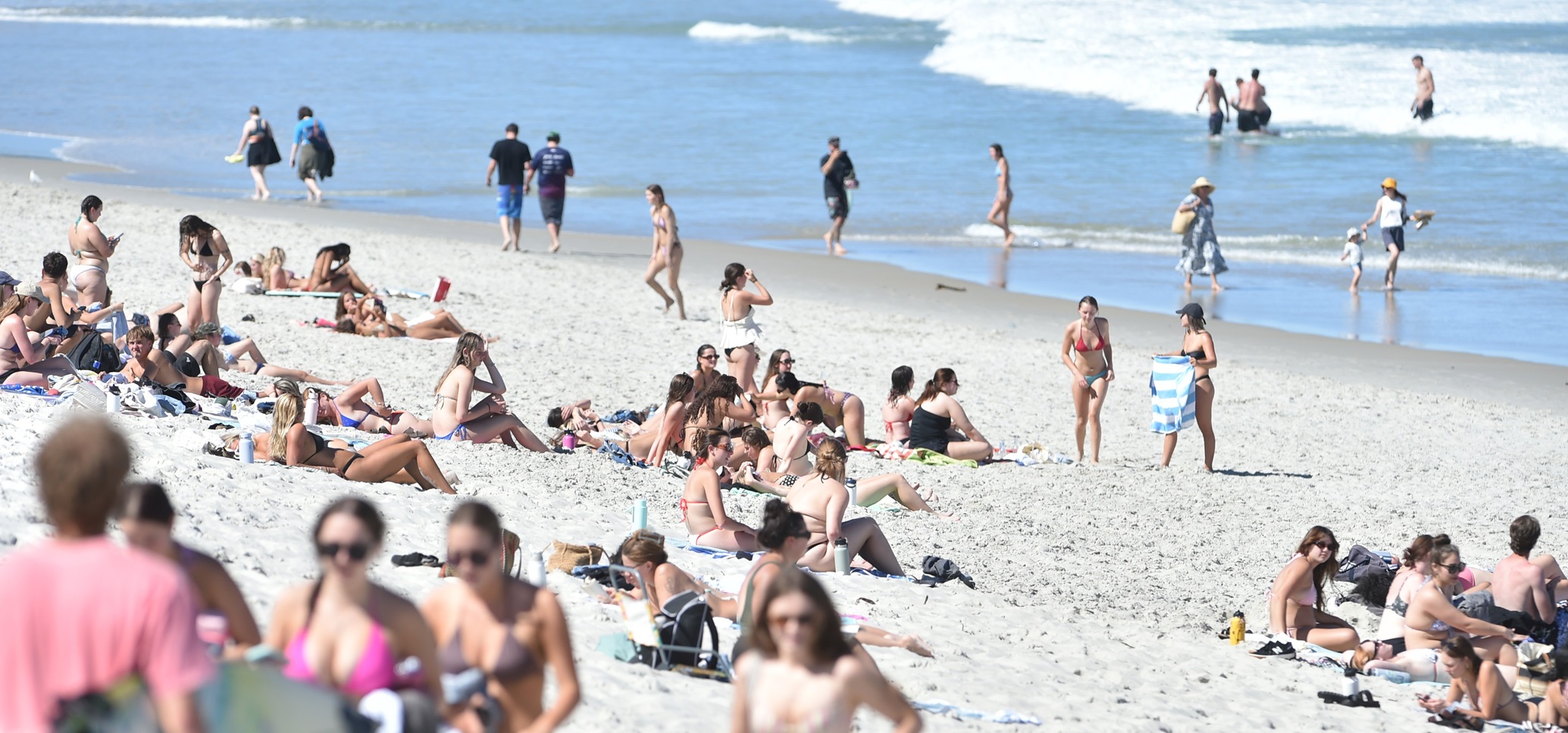
It was the sun-smart message we grew up with, "Slip, Slop, Slap and Wrap".
Accompanying it was the less subtle warning that more New Zealanders per capita die from melanoma than anywhere else in the world.
No wonder it jars seeing young people chasing a tan by choosing to fry their skin under the most extreme ultraviolet (UV) rays of the day. It’s a bit like discovering someone taking up smoking cigarettes because they think the decades-old posters made it look glamorous.
What’s driving this desire to play chicken with UV levels? What’s going wrong with traditional messaging around being sun smart?
We’ve all done it — taken shortcuts with the sunsmart advice only for the mirror to reveal your face has turned an alarming pinky-red. And that’s after decades of warnings about how quickly the New Zealand sun can sizzle.
But some younger Kiwis are either ignoring or unaware of the importance of being sun smart. Instead, they are following overseas social media trends inciting young people to head out when the UV levels are at their highest. Many such TikTok messages are from northern hemisphere countries, where it can still take hours to burn at peak UV, not minutes like here.
Skin-cancer specialists, researchers and advocacy groups in New Zealand are particularly concerned at the rise in hazardous sunbathing and why messages from previously successful safety campaigns are now falling on deaf ears, when more than 350 people die from melanoma every year.
They say it’s possible those under 24 know about melanoma and other life-threatening, unpredictable and aggressive skin cancers but think any risk of those developing is so far distant in time it’s not worth worrying about.
Among those troubled by the trend is University of Otago senior research fellow Dr Bronwen McNoe, who specialises in reducing population exposure to UV radiation, particularly among young people.
"If their friends think that tanning is a good idea, or if appearance is important to them, then they’re more likely to tan themselves," she says.
McNoe is co-director of the Social and Behavioural Research Unit in the Department of Preventive and Social Medicine, and works with Cancer Society NZ and other skin-cancer researchers.
"We’re spending $400,000 a year on preventing something that costs about $450 million to treat, and that’s for a disease that’s 90% preventable. And what’s more than that, we know how to prevent it.
"A massive amount of work needs to be done in skin-cancer control in New Zealand. We have done very little for quite a long time. One side of the equation is personal protective behaviour, which for skin cancer is really important, because you can’t take the sun out of the environment.
"When you’re talking about Smokefree, for example, you can take away cigarettes, so that’s an effective approach, but because we can’t remove the sun we have to worry about behaviour.
"We have an outdoor lifestyle. We have relatively high UV. If you’re in Australia, you know it’s hot, so you go inside. In New Zealand, we don’t often have that same heat mechanism to warn us."
Although we’re into early autumn, with daylight hours reducing, temperatures falling and the sun not as elevated in the sky, the UV risk can be still very high on a day with few clouds.
Earth Sciences New Zealand atmospheric physicist Dr Ben Liley, based at Lauder, says our predominantly temperate climate tends to hide the extreme UV danger.
"We’ve got measurements from Invercargill on a sunny summer day in which the UV index was over 12 and it was 18°. If you were out in that, you don’t realise the danger. You can get sunburnt with pale skin in a few minutes."
The end of summer is not a time to start ignoring sun-smart behaviours, he says. Even if temperatures are slowly falling, the protective layers of ozone above New Zealand are at their minimum levels in autumn, allowing the UV radiation an easier path through Earth’s defences and into our skin.
McNoe recently ran a webinar, "Sunsmart or Sunslack? A closer look at UV protection in Aotearoa New Zealand", with Cancer Society NZ’s head of marketing and communications Gemma Bevan.
It was based on a Health New Zealand-funded survey of 2198 adults aged 18 and over. Many of its findings were alarming, showing tanning in young people is still normalised. The findings included:
• 81% of those aged 18-24 reported being sunburnt in the 2024-25 summer, 50% of them with severe sunburn lasting two or more days with blistering.
• About half of young people reported deliberately trying to get a suntan in the last 12 months — 58% females, 35% males.
• Two out of three adults reported being sunburnt last summer, one in five reporting three or more sunburns.
• 40% of adult New Zealanders do not own a sun-protective hat and 33% believe a cap is adequate.
• Only 38% of Kiwis and 36% of young people (18-24) "always" or "often" use sun protection in the summer.
• For 54%, "sunny day" is the trigger point for using sun protection, followed by temperature for 47%, UV levels for 36% and "clear sky" for 34%.
Nearly half of respondents said having a tan made them feel better about themselves and/or more attractive to others. That was more likely if they had friends or close family members who thought having a tan was a good idea and that a tan signalled good health.
"So tanning isn’t just an individual choice," McNoe said in the webinar, "it’s strongly reinforced socially. What we are seeing here is high exposure, high harm and strong social reinforcement."
Some social media messaging was "actively undermining" the UV Index, one of the core prevention tools. The trend started overseas but had been picked up on here.
She used a TikTok example of young people planning sun exposure around peak UV conditions — "Nothing beats a NZ beach +UV 11", it said.
"This directly contradicts the purpose of the UV Index and, given some of the UV levels here are extreme, it is frankly really alarming."
Only 4% of the population knew the UV level at which sun protection was required (moderate, UV Index 3 and above).
"That’s really concerning to us, given how central the UV Index is to all of our messaging. For most New Zealanders this is not an occasional risk, it is a daily one for much of the summer."
McNoe told The Weekend Mix nothing is new in sun protection and damage prevention.
"It’s exactly the same message we were given last year, the year before that and 30 years ago. The challenge isn’t the message, it’s finding new ways to make that very familiar message resonate, particularly for young people who are constantly exposed to new and competing messages online."
Skin Cancer New Zealand chief executive Katrina Patterson says while melanoma remains the deadliest form of skin cancer, non-melanoma skin cancers are far more common, their numbers are rising rapidly, and they place a "huge burden" on people and the health system.
"At the moment New Zealand isn’t doing enough. We have some of the highest skin cancer incidence and mortality rates in the world, and these numbers will continue to rise. Yet up to 90% of skin cancers are preventable and, if caught early, nearly all are curable."
It is estimated that increasing investment in a skin cancer prevention programme from about $400,000 a year to $5.5million per year, or $1.05 per person, over the next 25 years will prevent more than 400,000 skin cancers, save 1940 lives and free up about $700million in expected healthcare costs.
"That works out to be an $11.90 return on every dollar we spend," Patterson says.
"We already have a dedicated health workforce, committed NGOs, a national prevention strategy, and clear, best-practice clinical guidelines — all the tools to prevent and manage skin cancer effectively. Government support and a co-ordinated system will help put these tools into action.
"Countries like Australia have invested significant funding into co-ordinated skin-cancer prevention and early detection programmes and they are starting to see their skin cancer rates come down. We can and have learnt a lot from their approaches," she says.
The Cancer Society NZ’s head of advocacy and public affairs, Rachael Neumann, agrees we need investment to match the scale of the problem — about 100,000 New Zealanders diagnosed each year with a skin cancer, 7000 of which are melanoma.
"Skin cancer is the cancer almost all of us will face — but also the one we can most easily prevent. Right now, New Zealand spends 1600 times more on treating skin cancer than preventing it.
"This imbalance is not just inefficient — it’s indefensible. You don’t watch a house burn down and spend all your money on fire hoses. You invest in fire alarms."
Scientists are still debating the exact reasons why New Zealand’s summer sunshine is much stronger than at the same latitudes in the northern hemisphere.
Liley says the consensus is peak UV levels here are some 40% higher than in Europe and North America.
About half of the difference can be accounted for by the Earth’s orbital eccentricity, which puts the southern hemisphere about 3% closer to the sun in its summer than the northern hemisphere gets, as well as lower ozone levels in the lowest layer of the atmosphere here and cleaner air. The jury is still out on what explains the rest, though a lack of cloud and aerosols may play a part.
New Zealanders with pale skin are wholly unsuited to cope with the intensity of our UV levels, he says. At much the same latitudes in the northern hemisphere, southern Europeans have evolved an olive skin to cope with higher UV levels, even though they are lower than here.
There are several types of UV light. UV-A and UV-B rays with their shorter wavelengths have more damaging photons, which cause skin damage and skin cancers. UV light also scatters more than visible light, so even when the sun is behind a cloud the UV can reach you from other directions.
Liley recommends downloading the UVNZ app, supported by the Cancer Society, which provides Earth Sciences NZ graphics of UV levels for anywhere across the country and skin-damage times.
"When we say UV index above 10 is ‘extreme’, we mean it. It offers serious damage to your skin, risk of melanoma, premature skin ageing, eye cataracts, all the other things that can go wrong."
Climate change could lead to perverse regional outcomes over exposure to UV. Northern New Zealand could get hotter and that might change people’s behaviour and reduce UV exposure there, while southern New Zealand might get higher UV but the temperatures may not rise enough for people to be aware and stay out of the sun, Liley says.
Bevan, from the Cancer Society, is hopeful this summer’s youth campaign has raised awareness of the dangers and moved people away from peer pressure to seek out high UV levels for tanning.
"The ‘Slip, Slop, Slap and Wrap’ was highly effective in its time. But we are relying heavily on legacy messaging that has not evolved at the pace required to remain effective in today’s cultural and digital environment."
The $300,000 campaign was built for platforms young people used and featured humour to cut through, she says.
"Peer influence carries more weight than institutional instruction. Prevention does not shift in one summer. It requires sustained presence and the ability to respond quickly to emerging global trends. If prevention messaging doesn’t evolve with culture, it stops working."
McNoe says you don’t have to get sunburnt to get the look.
"If you want to have a brown or tanned look, use fake tan. It’s a safer alternative than trying to go out into the sun. And definitely not sunbeds.
"People like to be outside in the sun. I like to be outside in the sun, too. We just need to be well protected while we’re doing it."
The art of smart
Not all young people are blind to the dangers of skin damage from the sun.
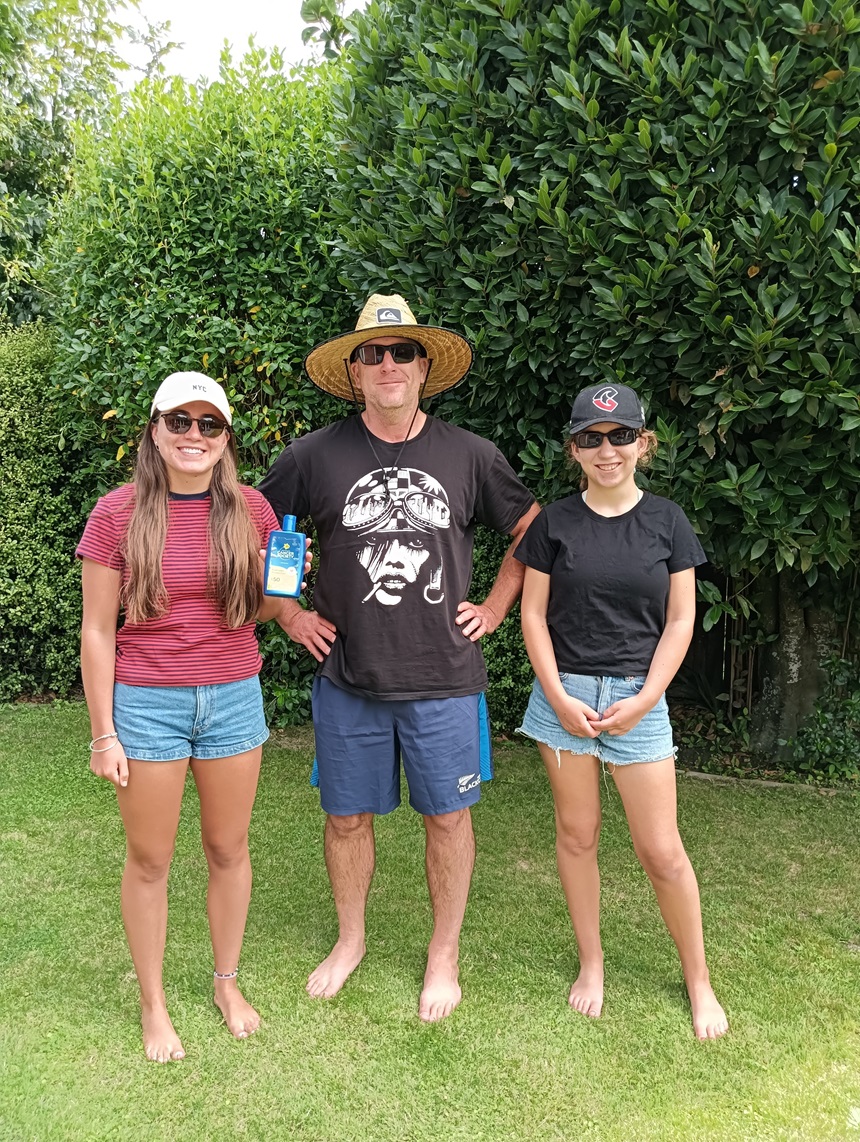
Kaiapoi sisters Paige, 16, and Ashleigh, 18, Clarke are well aware of the need to be sun smart, given a family history of skin cancer.
Paige says she tries to sit in the shade and puts sunscreen on her face every day, reapplying it if she is outside for a long time.
But only some of her friends at school are as careful as her.
"People lie in the sun at lunch trying to tan and then complain when they’re burnt.
"I think TikTok and stuff definitely makes tanning look aesthetic and ‘glowy’, so people copy it. Sometimes I tell them they should wear sunscreen, especially if they are already red. A few listen but most just laugh it off.
"They think being tanned looks prettier or more summery, because that’s what social media pushes."
Ashleigh says they were brought up by parents who always told them to use sunscreen and wear hats.
"Most of the people I am around are pretty sun smart, and know when they need to reapply sunscreen."
However, she too can see the influences teenage girls are subject to.
"Having a tan isn’t important as such, but it is something that can increase confidence and make people feel better about themselves, which is especially common in teenage girls."
Their grandfather, former stock and station agent Peter Clarke, 74, of Ashburton has just finished 20 days’ radiation treatment, his fourth round.
He knows only too well how sun damage accumulates after a lifetime working outdoors.
"I worked for PGG and had 10 years as a grain agent in Blenheim. Prior to that I did farm work and spent a lot of time outdoors. Some of my colleagues used to wear caps, the odd one had a wide-brim hat, but I don’t remember any using sunscreen. You got burnt to buggery. You’d spend five to eight hours a day outside most days in the season."
His latest bout of skin cancer began on his right ear about two years ago and spread to his neck. As a redhead child and adult, he frequently had sunburnt ears.
In the past year he had had two major surgeries, including urgent neck surgery in December.
Paige and Ashleigh’s dad Colin, Peter’s son, has had two melanomas removed. He now has an annual skin check.
"They’re very aware of what their grandad’s been through, with different bits being chopped out, radiation and everything else," he says.
Busting the myths
Myth 1: "SPF50 sunscreen does not need to be reapplied as often as SPF30" — believed by 36% of the population.
Reality: SPF value does not affect reapplication time — all sunscreen needs reapplying every two hours or more frequently if swimming, sweating or towelling dry.
Myth 2: "Wearing a cap provides adequate sun protection to the face and neck" — believed by 33%.
Reality: A cap shades the eyes and forehead, but it doesn’t protect the neck, ears or sides of the face.
Myth 3: "Ingredients in sunscreen are bad for your health if used regularly" — believed by 23%.
Reality: The proven harms of UV exposure and sunburn are far greater than any very small potential risks from sunscreen use.
Myth 4: "People who use sunscreen regularly don’t get enough vitamin D" — believed by 18%.
Reality: Regular sunscreen use does not cause vitamin D deficiency.
Study
A new study interviewing adolescents (aged 13-17) and young adults (18-24) who were sunburnt over the summer about sun protection, social media influences and safety campaigns is being funded by the Dunedin School of Medicine Dean’s Bequest. The intention is to carry out 45-minute-long interviews. Participants will receive a voucher. (Email marty.pritchard@otago.ac.nz, 13-16-year-olds will need parental consent.)


