

The report explained widespread nitrate in Southland’s groundwater — accessed for drinking water — with worsening levels at most sites monitored.
It pointed the finger at intensive farming, notably dairying and winter grazing of dairy cattle.
Southland dairy cow numbers rose from 37,772 in 1990 to 637,222 last year, according to Stats NZ, and shallow groundwater meant 95% of nitrate leached would enter groundwater within five years, the report said.
The council issued a press release about the report ‘‘Nitrate Contamination in Southland Groundwater’’ on February 24.
However, internal Environment Southland (ES) documents — released to the Otago Daily Times using the Local Government Official Information and Meetings Act — reveal the dairy industry was informed about the report and given it in advance of the release, which was issued in response to media questioning.
The ODT had found the report in an online portal and asked ES why no release had been issued.
The documents also reveal that, after the release, ES staff struggled to inform Health New Zealand Te Whatu Ora (HNZ) or WellSouth because they did not have any contacts.
A briefing for health officials happened six weeks after the report was first flagged to the dairy industry.
Ethics experts at two institutes raised concerns about the chain of events.
Greenpeace freshwater campaigner Will Appelbe branded the revelations ‘‘corporate collusion’’.
ES had been ‘‘captured’’ by the industry it was meant to be regulating.
He called for an auditor-general inquiry into ‘‘conflicts at Environment Southland’’.
The ES document stash included a ‘‘review’’ of what happened in the run up to the report’s release.
The review was requested that day by then-chief executive Rob Philips and drafted by ES general science manager Karen Wilson the next morning.
It said ES’ 12 elected councillors had been briefed about the report late January and agreed a communication plan should be prepared.
The report was ‘‘discoverable’’ from then.
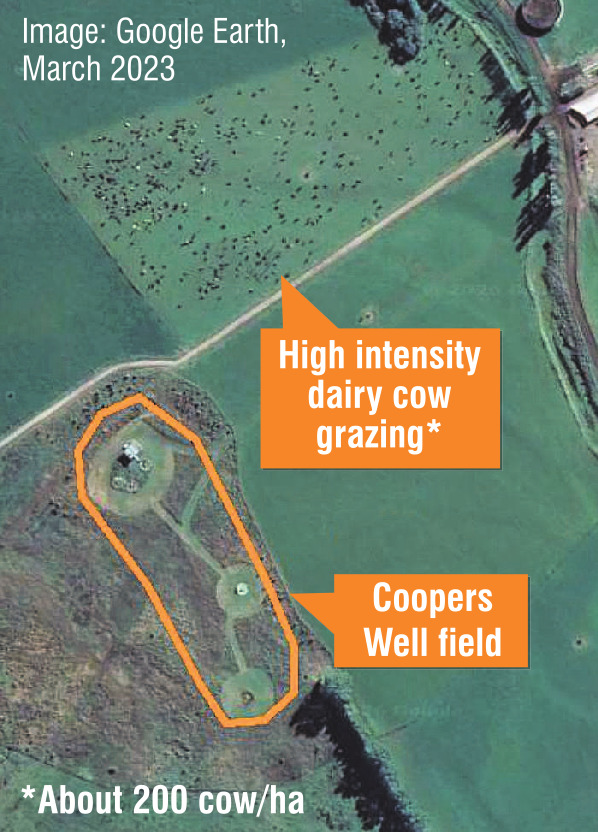
Dairy NZ principal policy adviser David Cooper requested the report from ES on February 20 and the report was put in an online science portal that day — but no press release issued.
On the next working day, February 23, ES ‘‘notified Dairy NZ, Thriving Southland as per councillors [sic] request’’.
On February 24, ‘‘media questions came in. Media release went out’’, the review said.
However, the review indicated the release was unplanned — and more briefings for dairy interests, not health agencies, were a continued priority.
Addressing ‘‘lessons learned’’, Ms Wilson wrote future communication planning would consider ‘‘what if this is a media issue ahead of when anticipated’’.
The chief executive would receive more updates on ‘‘critical and high risk issues’’ and dairy briefings were continuing: ‘‘additional briefings to industry (Dairy NZ, Milk Processors and Fertiliser Companies — this is under way)’’.
No briefings were mentioned for anyone else externally apart from ‘‘additional’’ MP briefings.
The document stash also included ES internal emails and multiple versions of an ES communication plan for the nitrate report.
One email exchange revealed that, on February 24, an ES communications officer sent ES strategic regulatory adviser Bruce Halligan a copy of the press release, in advance of its issue to media later that afternoon.
Within minutes, Mr Halligan forwarded the release, and the nitrate report, to four Fonterra contacts.
A version of the communication plan was revised and circulated on February 25 by general manager for community engagement Sam Rossiter-Stead.
‘‘Media questions [had] prompt[ed] media release’’ the day before, it said.
Conversely, the ODT had been told, on February 24, the release had been ‘‘due’’ that day.
The revised plan said ‘‘stakeholders’’ were local authorities, iwi, rural water scheme operators, public health agencies, Dairy NZ, Thriving Southland, Fonterra and another dairy giant Open Country, which recently bought the Mataura Valley Milk processing plant.
The revised plan tasked general manager of science Karen Wilson to communicate with HNZ and WellSouth immediately — but internal emails indicate neither Ms Wilson, nor Mr Halligan, had existing connections with health officials.
The report was sent to generic customer service and media email addresses at the two health agencies.
A briefing was run for HNZ officials on March 24, another document revealed — six weeks after Dairy NZ had been told about the report.
When the ODT asked ES why the report was pre-released to the dairy industry before others, Ms Wilson indicated the council had followed its communication plan, which included ‘‘stakeholder briefings’’.
The ODT checked earlier versions of the plan, produced before February 25, to see if they listed dairy firms and dairy lobby groups among stakeholders, or contained any instructions to contact the industry before the report’s launch.
There was no mention of contacting dairy firms or dairy lobby groups in the earlier versions.
Southland councils, iwi, rural water scheme operators and public health agencies were listed — and there were actions to contact councils and iwi pre-launch.
Mr Appelbe said the inquiry he proposed should ‘‘take into account councillors with interests in dairying and fertiliser companies and how those conflicts are managed’’.
Some councillors, including ES chairman Jeremy McPhail, had financial interests in agriculture, including dairy, listed on the council’s register of pecuniary interests.
Cr Morrison denied he intended the nitrate report to be shared pre-release with dairy interests.
Cr McPhail deflected responsibility from the council’s 12 councillors.
‘‘The release of science reports is an operational matter, not a governance function.’’

‘‘Public servants should reach the highest standards of ethics and this kind of behaviour raises concern.’’
Transparency International New Zealand executive director Julie Haggie said the public expected public agencies to act within both the ‘‘letter and intent of the law’’ to prevent trust being undermined.
‘‘Whilst we can’t comment on specific details of this case, any instances where a decision is made by a local authority to selectively disclose would raise concerns about that authority’s role under the Local Government Act, which includes to conduct its business in an open, transparent and democratically accountable manner.’’
When asked to respond to Greenpeace’s claim of collusion, DairyNZ’s policy and government relations manager Roger Lincoln said his organisation ‘‘routinely requests and reviews relevant reports’’.


