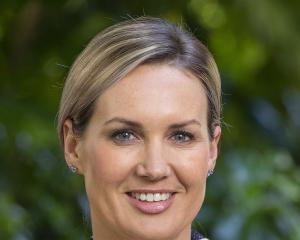
Regardless of other factors at work, Ms Curran must bear some of the responsibility. That comes with the territory. As with the Labour Party as a whole - which scored its lowest support in the polls since 1928 - it is an overt signal from the public that either its core messages are not being heard or it has not had the strategies and policies with which to inspire both its traditional base or win over others.
The extent to which personal style enters into this is a matter for the party. How Labour and Ms Curran respond to the reverses of the weekend will be the real test of their respective futures in the electorate.
For the record, the Labour MP won the ballot with a 3867 majority, down from 6449 in 2008. The party result saw Labour's majority of 4666 over National in 2008 turn into a National majority of 1761, a swing of 6427 votes, in 2011. These are very poor results for Labour. But there is a context for them.
Some of that lies in the historically low turn-out. In the 2008 election, the total number of candidate votes cast was 36,717. In 2011 it was (not including specials) 32,121. That is a difference of 4591.
Ms Curran won 3440 fewer votes than she did in 2008 and National's candidate, debutante Joanne Hayes, captured 858 fewer than her immediate predecessor in the electorate, Conway Powell. Together, their reduced personal mandates come to 4298 and both can reasonably claim that their personal results to an extent reflect the poor turnout.
In the party stakes, the drop this time for Labour was 5979 with an increase for National of 448. Some of this will have been accounted for by the high number of non-voters, but also by vote splitting which evidently saw some people remain loyal to their preferred candidate - in this case Ms Curran - but switching their party vote to National; and by the 6700 or so voters who gave their party votes to the Greens and New Zealand First.
Demographic factors also come into play. The social profile of the Dunedin South electorate has changed. It was created in 1996, as one of the original MMP electorates, out of a merger between St Kilda and a large part of Dunedin West. At the 2008 election it was enlarged to include Middlemarch. It also takes in the Otago Peninsula.
A glance at the polling booth returns points to a shifting balance of allegiance by area. South Dunedin, Corstorphine, Caversham and Concord remained staunchly Labour while National dominated in the increasingly upmarket St Clair, captured Mosgiel comfortably, and won the rural suburbs of Fairfield and Wingatui and the towns of Outram and Middlemarch; likewise Andersons Bay and the increasingly well-to-do Waverley were blue, and National also narrowly took the Portobello booth.
The spread of lifestyle properties on the Taieri, higher-cost housing in Fairfield, the accrual of new executive-style homes on parts of the Peninsula - Company Bay and Mission Cove, for example - and the development of St Clair into a sought-after middle-class seaside suburb, complete with a cluster of cafes and bars, is changing the nature of what has always been thought of as a solidly working-class Labour electorate.
The industrial base from which Labour might once have counted many of its votes has diminished inexorably: Fisher and Paykel, meat processing at Burnside, and now the Hillside workshops. While cheaper housing will still attract and retain a blue-collar population in the electorate, a greater proportion may now be self-employed tradesmen and women - and not automatically wedded to a Labour tradition.
None of this alters the fact that the Labour Party has much work to do if it wants to regain front-running status in Dunedin South - and throughout the country. To do so it will need to recapture the imagination of voters across the political spectrum. Renewal and reinvigoration cannot come soon enough - for the party and for Ms Curran.