
PHOTO
They have been called sobering, alarming and even terrifying, and they demonstrate just how much of a hit our communities may face, and may yet be lucky to avoid, as we try to rebuild our economy after lockdown.
Treasury’s latest analysis of how a range of assumed lockdown scenarios will hurt our economy leaves no doubt as to the devastation the local and global response to Covid-19 will leave in its widening wake.
The best case scenario would be the worst case scenario had it been posited in any other year. The worst case scenarios, in which the lockdown lingers and Government assistance dwindles, barely bear thinking about.
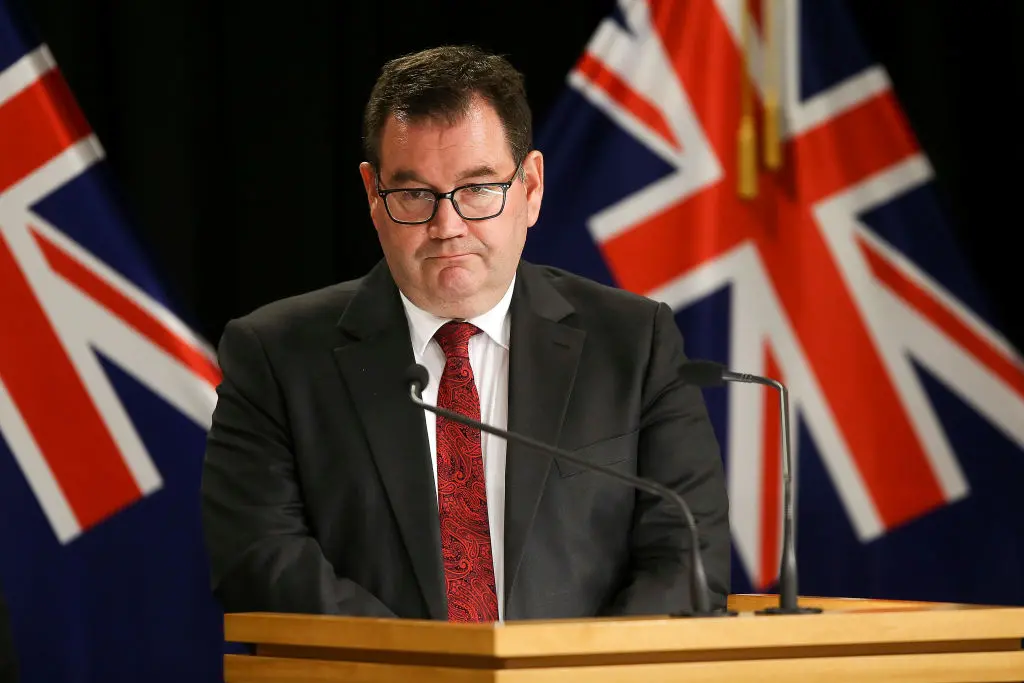
When the scenarios were released, Finance Minister Grant Robertson honed in on the chance unemployment could be kept below 10% and return to 5% in 2021. Unemployment was 4% at the end of last year.
That means the best case scenario, after a four-week lockdown, is that unemployment will more than double. And that depends significantly on the investment the Government — taxpayers — make to ease the worst effects of a global downturn.
Billions of dollars will need to be spent on everything from unemployment assistance to tax breaks, on industry stimulus packages to fast-tracked, shovel-ready infrastructure projects. This may be no time for austerity.
The herculean task ahead is suggested by the scale of the wage subsidy scheme. Some $9.6 billion has already been provided, but Treasury’s best case scenario will require $20 billion more. This is a remarkable sum.
Such sums must be spent even as our open, export-led economy rises or falls on the fortunes of others. Consumers in Australia, China and the European Union will need to buy our goods as their own economies recover.
The Government assures us work to ensure enduring fiscal assistance is well advanced, with more to be added to the $20 billion-or-so already allocated to all manner of business and social support mechanisms.
Small to medium-sized businesses were yesterday supported with a suite of tax changes worth more than $3 billion, in addition to a previously announced $6.25 billion business finance guarantee to encourage bank lending.
There is little doubt substantial additional bank lending will be required to help many businesses trade through what will almost certainly be a protracted recovery period.
Small businesses, especially, will need all the help they can get in an environment where customers will spend only what they need. At 10% unemployment, a significant number of their customers will have little choice.
Many of these businesses will have spent a great deal of the lockdown disappointed they could not trade, despite requests to be treated the same as their much bigger competitors.
Butchers, bakers and small-scale local retailers may have kept the wolf from the door had they been considered as essential as supermarkets and businesses that could send essential items by post.
The same holds true for community newspapers. Parliament’s Epidemic Response Committee yesterday heard weekly newspapers could not be delivered, but the big players’ daily newspapers could.
As a consequence, dozens of small New Zealand-owned community newspapers will struggle. ODT publisher Allied Press’ stable of community newspapers stands ready to make up for lost time.
The extent to which the past four weeks has been significant lost time for many businesses will be realised over the coming weeks and months, as they all seek to fix the fiscal damage.
Treasury suggests the economy can bounce back to be $70 billion larger by 2024 if a combination of government assistance and stimulus, lending freedom and global forces play ball.
If it can, the Government that inherits those books might rightly say that the sacrifice and success backed the Government's decision to "go hard and early" in the fight against Covid-19.
We were told the best way to protect the economy was to fight the virus. A short, sharp shock would help avoid sustained disruption and — crucially — overwhelming illness and death.
Going hard and fast was meant to give us the best chance of a clear run at getting things going again on the other side of the lockdown. The survivors will need ongoing help to make that happen.