
PHOTO
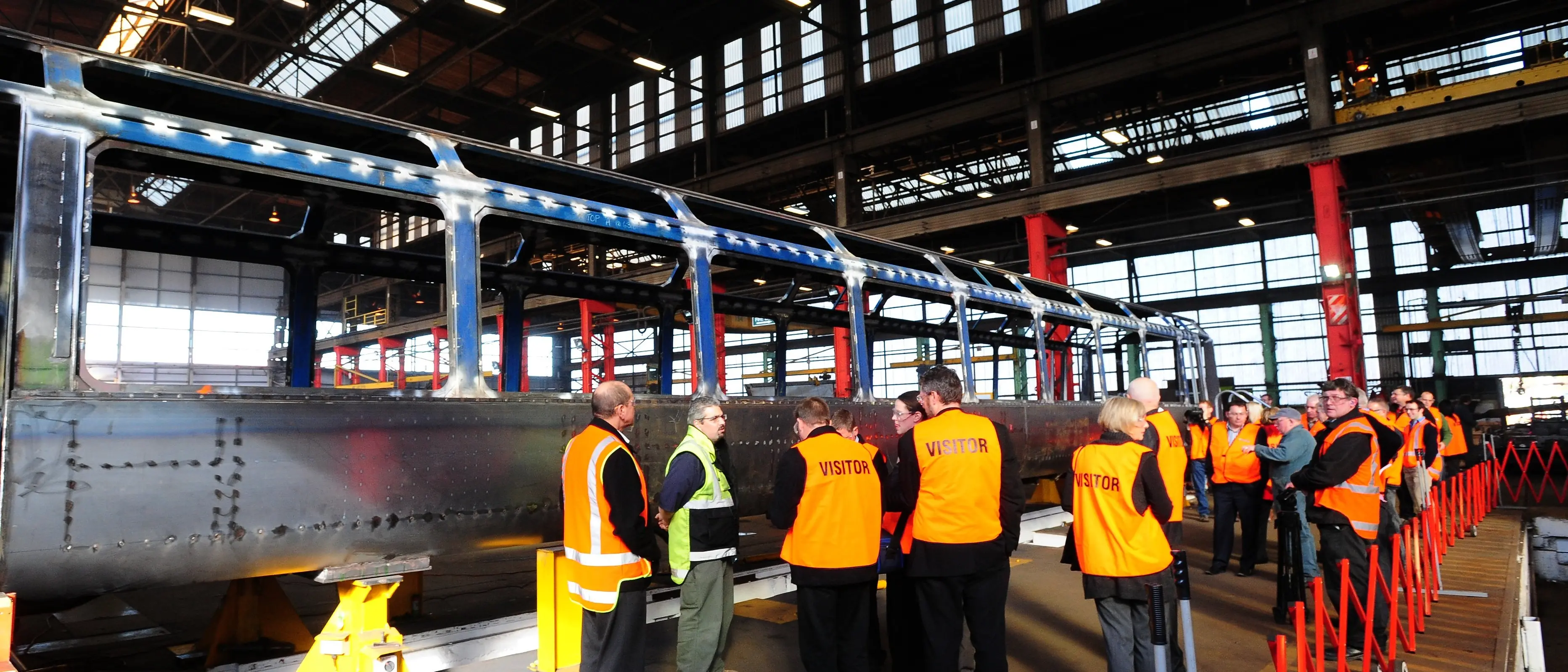
US Senator Daniel Moynihan's famous quote ''Everyone is entitled to his own opinion, but not his own facts'' sprang to mind when I read Dave Kearns' opinion piece on the announcement that the Government will invest $20 million of taxpayer funds rejuvenating KiwiRail's Dunedin engineering workshop at Hillside.
The thrust of his piece was that the previous government was ideologically opposed to public rail and that I questioned why any money should be spent on it.
This is quite wrong. I have never questioned why money should be spent on a public rail network. The previous government invested $1.3 billion in operational and capital funding into KiwiRail as part of its 10-year turnaround plan.
That was before the 2016 Kaikoura earthquake devastated the rail link between Christchurch and Picton. In the face of pressure from some quarters not to rebuild the line, the previous government invested $500 million to rebuild it.
Hardly the actions of a government ''ideologically opposed to a public rail network''.
As for comments from former ministers Gerry Brownlee and Bill English, they need to be considered in their context. Mr Brownlee's comment in 2014 was that KiwiRail ''was a bit of a dead duck when it was announced by the Labour government some years ago'' (that it was buying it back from private owner Toll) and went on to express confidence in the management of KiwiRail to deliver on its $1.3 billion Turnaround Plan.
Mr English was referring to three State-owned Enterprises (KiwiRail, NZ Post and TVNZ). He went on to say that was not a signal the government had any intention of selling them. He was simply expressing concern that these were difficult businesses to run successfully, which is a requirement of the State Owned Enterprises Act 1986, a requirement put in place by a Labour government.
Mr Kearns' criticism stems from his belief that the previous government should have awarded contracts to Hillside for the construction of the 4000 flat-deck wagons KiwiRail needed to meet projected freight demand and electric trains for the Auckland network, saying ''Hillside wasn't failing; the workforce was producing high-quality rolling stock at a marginally higher cost than what could be imported''.
That certainly wasn't the advice I received. My estimate at the time of 25% higher than competing tenders for the flat-deck wagons was conservative; the actual price difference could have been as high as 40-50%. Even at 25% KiwiRail would have had to pay $100 million more for the wagons to be built in Dunedin.
That's assuming Hillside could meet the order in the timeframe required, which was by no means certain. As for the electric trains, KiwiRail made the decision not to even allow Hillside to tender for the work and, despite the cries of government interference, the government played no part in that decision.
And while we're on the subject of tenders for rolling stock, remember the 48 Matangi class electric trains for the Wellington network tendered in 2007? A South Korean consortium won the contract. Where was the outrage? What of the protests, public marches and criticism of the government? There weren't any. The main difference? A Labour-led government was in office at that time.
One interesting feature of the recent announcement to rejuvenate Hillside was the complete absence of any commitment by the Government or KiwiRail to rolling stock construction. The intention is to use Hillside for heavy maintenance and upgrade work. Mr Kearns should be publicly calling on this Government to confirm its intention regarding new-builds.
In the absence of that commitment I expect him to be consistent and diligent in his criticism of this Government, just as he was of the previous government.
Of course I welcome any investment into Dunedin and wish KiwiRail the very best in its rejuvenation plans for Hillside.
However, taxpayers should rightly expect KiwiRail to be careful not to incur further costly subsidies for manufacturing stock as Mr Kearns advocates. It should be competent in what it does, cost-efficient and focused on ensuring best value for the taxpayers' investment in it. In that regard, much as it was in 2012, it will be KiwiRail that Hillside must convince, not the Government. That challenge exists irrespective of whether the government is Labour or National-led.