

As economist Branko Milanovich notes in his recent book on global inequality, "a fine balancing act must be done between three variables: growth rates of poor (and populous) countries, migration and environmental sustainability".
In fact a maze of fine intellectual and moral lines of balance dissects this territory, and "step on a crack and you marry a rat". Step for example on the "economic degrowth" crack, as did all three panellists in a recent public discussion on limits to growth, jointly hosted by wise response.org.nz and Otago University, and you may end up with surprising bedmates.
One panellist, advocating lower human populations and smaller economies, found himself unexpectedly in bed with wall-builder Donald Trump, by ruling out immigration of climate refugees, because it would increase domestic economic growth and hence carbon emissions.
Another suggested we become a prepper nation, by using innovative public debt instruments to provide billions of dollars for investment in strategic caches of food and other essentials to survive the looming global environmental breakdown.
Anybody hoping for a coherent moral defence of degrowth ideas instead got a moral reductio ad absurdum.
Is the case against degrowth closed? Not quite. As economist Daniel Susskind says: "There is ... something fundamentally important that degrowthers get right ... when economists write about growth, they focus on its benefits and ignore its costs".
One of the biggest costs is rampant species extinction and biodiversity loss.
Too many of those enjoying political and economic power assert (sometimes brazenly) moral equivalence between the property rights and freedoms of individual human citizens or corporations, and the right to existence of entire non-human species and ecosystems.
In other words, private property holders are deemed morally justified in driving to extinction any non-human species or ecosystems overlapping their boundaries, in enjoyment of winner-take-all property rights.
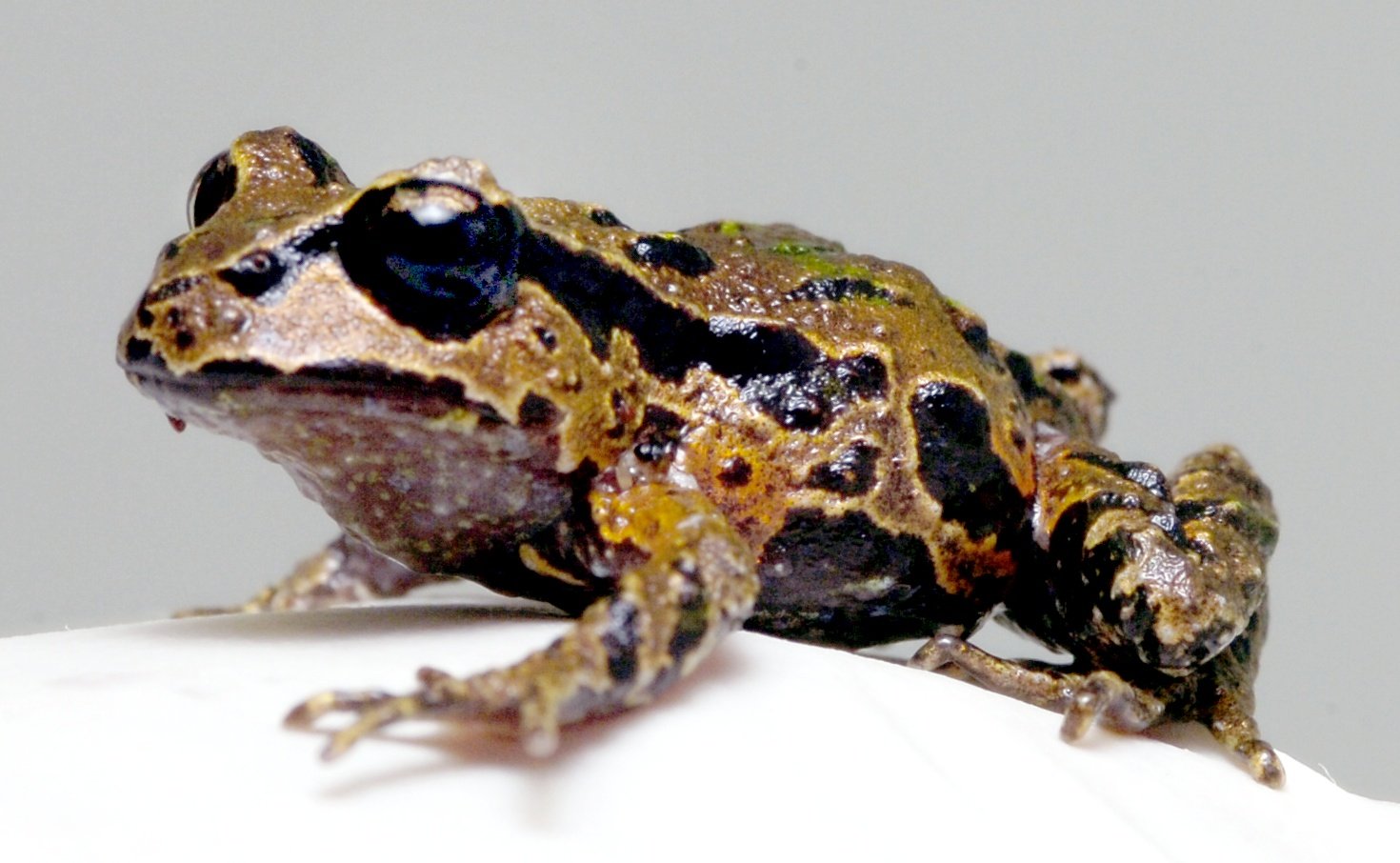
"Bye bye Freddy"
How can non-human species ever be said to have any legal rights to continued existence, they often wink, when almost all those that ever existed have gone extinct, yet nobody is being sued?
Which is like saying no human alive today has any legal right to continued existence, on the basis that almost all people that ever lived have died without anybody being held responsible.
Given the globe’s failure to rein in emissions, we must now firmly rule in the possibility of a world that will be at least 4°C hotter by 2100. High temperatures combined with intense humidity will make a wide equatorial belt across most of tropical Asia, Africa, Australia and the Americas lethal for much of the year.
Uninhabitable zones of desertification will develop to the south and north of the humid zone. About 3.5billion people will need to move to survive. Mostly north, but also south.
Well, humans and many other species have always migrated to survive after all.
At first a trickle, growing steadily to a flood, of migration to New Zealand and Dunedin by climate refugees. Degrowther walls at the border to keep them out will be morally and practically untenable (which is not to say we will not try it).
The Dunedin of 2100 starting to look like the Hong Kong of 2025. High levels of immigration will mean high rates of local economic growth, which will need large investments in ultra-low-carbon energy generation and storage, housing and transport infrastructure and circular-economy innovation. Infrastructure such as fast, clean passenger rail.
Which in turn will need as many creative fiscal instruments to finance capex as we can dream up.
With luck, imagination, leadership and planning, our great-grandchildren could enjoy living in a very much bigger yet more sustainable city, several orders of magnitude more vibrant and interesting than the Dunedin of 2025. It will be a completely different world of course, but what else did we expect ?
But before any of that can safely begin, we must convince both partners in the New Zealand constitution — Maori and the Crown — to enact one simple constitutional pincer move, before it is too late: grant New Zealand citizenship to several hundred thousand non-human native species-residents of our lakes, lands, airs and seas who currently have no rights under the law.
One non-human native species becomes one legal person. That means all of them, including finned, feathered, legged, no-legged, slimy, beautiful, ugly, microscopic and annoying.
If our descendents are to have any kind of future, it must be one in which the rule of law is paramount, and in which that law says individuals and corporations may enjoy their properties as they see fit, up to but not including the extinction of entire species and ecosystems.
Admittedly, on its own even the powerful legal pincer of rights under the law together with the rule of law, may fail to avert our current ongoing mass-murder of species and ecosystems, just as it sometimes fails to avert mass murder of humans.
But constitutional species-citizenship could form the nucleus of a new, strong, cultural and spiritual not merely legal, binding-treaty between humans and the myriad non-human species and ecosystems that sustain us.
■Alan McCulloch is a bioinformatics software engineer.


