
PHOTO
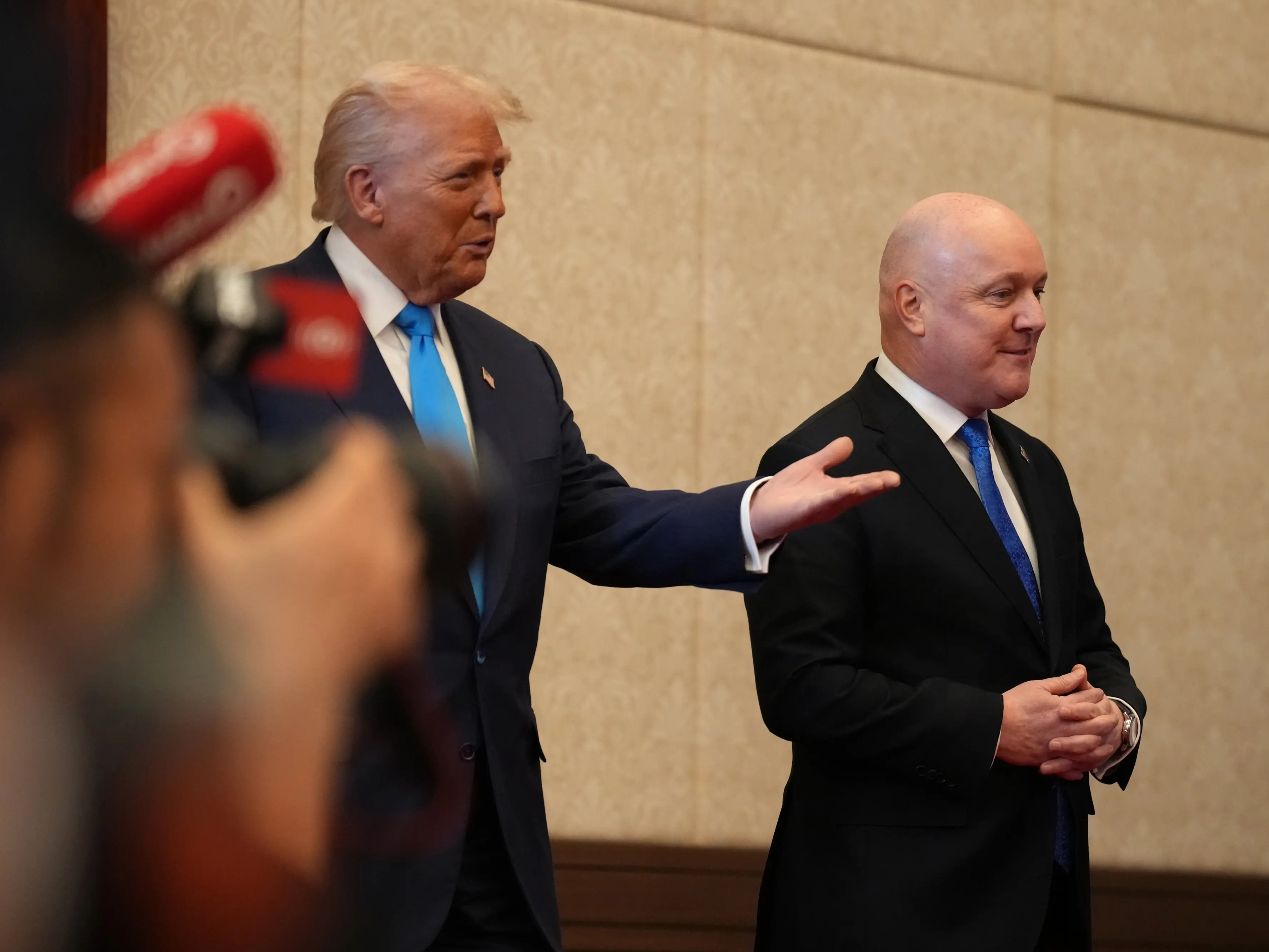
The US-led international rules-based order, as we knew it, no longer exists in the Trump era and there is little indication the New Zealand government has fully come to terms with this reality.
The international rules-based order (sometimes called the liberal international order) refers to an open and rules-oriented system of international relations where states co-operate in areas such as security and trade to make mutual gains.
Such an order is enshrined in institutions such as the United Nations and norms such as multilateralism. It was driven by the United States and allies such as the UK and New Zealand in the immediate aftermath of World War 2.
While the advent of the Cold War served to restrict the scope of an international rules-based order, developments in the 1980s such as globalisation and the demise of the Cold War seemed to offer new possibilities for the expansion of the international rules-based order.
Despite these expectations, the post-9/11 era has been characterised by a steady erosion of an international rules-based order.
Major landmarks in this trend include the US’ illegal invasion of Iraq in 2003, Putin’s annexation of Crimea and subsequent invasion of Ukraine in 2022, the rise of illiberal right-wing populist movements in democratic states, genocidal violence in Gaza following a Hamas terrorist attack on Israel in October 2023 and the growing marginalisation of the UN Security Council.
However, unlike previous US administrations in the post-Cold War era, the second Trump administration does not even pretend to pay lip service to an international rules-based order in what is the biggest shift in US’ global outlook since 1945.
This change was formalised in President Trump’s National Security Strategy statement published in November 2025. Among other things, the document emphasised a sphere-of-influence approach to international affairs with the US increasingly focusing on its Western hemisphere or what the Secretary of War, Pete Hegseth, likes to call a ‘‘Greater North America’’ zone.
More broadly, Trump security strategy has prioritised state sovereignty, rejected multilateral institutions unless they directly advanced US interests, advocated limits on immigration and free trade, and outlined a vision of global order managed by a small concert of great powers: the US, China, Russia, India and Japan.
Trump’s strategy document rationalises a set of positions and instincts that have been plainly evident in US foreign policy throughout President Trump’s second term.
Developments include repeated territorial threats against allied democracies such as Canada and Denmark (in relation to Greenland); consistent backing for a peace settlement in Ukraine that rewards Putin’s invasion; and public support for right-wing populist forces in Europe and condemnation of the EU for an alleged democratic deficit.
At the same time, Trump authorised US special forces to abduct Venezuelan dictator Nicolas Maduro in a covert raid in Caracas; and then, for the second time in 12 months, broke off negotiations with the Iranian leadership to join with Israel in launching a premeditated, illegal and surprise aerial bombardment of Iran.
These reckless air strikes predictably triggered devastating Iranian retaliation against Gulf states allied to the US and enabled Tehran to establish a stranglehold over the Strait of Hormuz, threatening the global economy.
On the face of it, the gap between the world view of the Trump administration and that of New Zealand could not be greater.
Since 1945, all governments in New Zealand — including the current one — have embraced the notion of firmly supporting an international rules-based order.
However, the current National-led coalition government also pledged in 2023 to tighten relations with traditional allies such as Australia and the US, and this policy has bumped up against the awkward reality that the Trump leadership is unlike previous post-war US administrations.
Nevertheless, the current coalition government, like many other liberal democracies, has tried to maintain the fiction that it is business as usual in Washington and adopted a ‘‘softly-softly’’ approach to the second Trump administration.
Such a stance has involved a determined effort to stay off the radar and show restraint when the Trump administration acts in ways that show little respect for New Zealand’s national interests. As a result, the New Zealand government has declined to publicly support allies and partners such as Canada and Denmark .
It also has had little to say about the trashing of international law by the US and Israel in Gaza, remained tight-lipped about the trade protectionism of the Trump administration, and with regard to the US-Israeli attacks on Iran the New Zealand government largely assigned responsibility to Iran for a crisis, which, according to Prime Minister Christopher Luxon, means ‘‘there will be a hit to inflation and economic growth’’ in New Zealand.
Meanwhile, Foreign Minister Winston Peters declared after a visit to Washington in early April New Zealand’s relations with the Trump administration were ‘‘excellent’’ and Wellington has continued to deepen military co-operation with Trump’s America.
However, it is now time for the National-led government to face an inconvenient truth.
The softly-softly approach towards the Trump administration has fallen short on multiple fronts.
First, it has deprived New Zealand of moral and legal clarity on some key international issues and has risked normalising Trump’s policies.
Second, and not unrelated, quiet diplomacy has not moderated Trump’s relentless assault on the international rules-based order on which New Zealand — and most small and middle powers — depend.
Third, New Zealand’s policy of restraint towards the Trump administration has delivered few national benefits and did not prevent a 15% tariff being applied to our exports, despite US imports facing average tariffs of just 0.3%, with few restrictions.
Fourth, given that alliances are constructed to safeguard shared values and interests, it is difficult to justify a closer military relationship with the Trump administration when such ingredients are missing.
The Trump administration does not act as if it is an ally of New Zealand. It has spent the last 16 months actively opposing core principles of New Zealand’s independent foreign policy such as respect for international law and multilateral institutions whether they be the UN, WTO or Nato.
In short, it is necessary for the current National-led coalition government to wake up to the reality that the Trump administration is not a traditional ally of New Zealand and that a US-led rules-based order is no longer available.
But New Zealand is not powerless in this global context. It can realign its foreign policy to intensify co-operation with other small and middle powers that actually wish to strengthen the international rules-based order, with reform of the UN Security Council being a top priority.
• Robert G. Patman is an Inaugural Sesquicentennial Distinguished Chair and a specialist in international relations.