
PHOTO
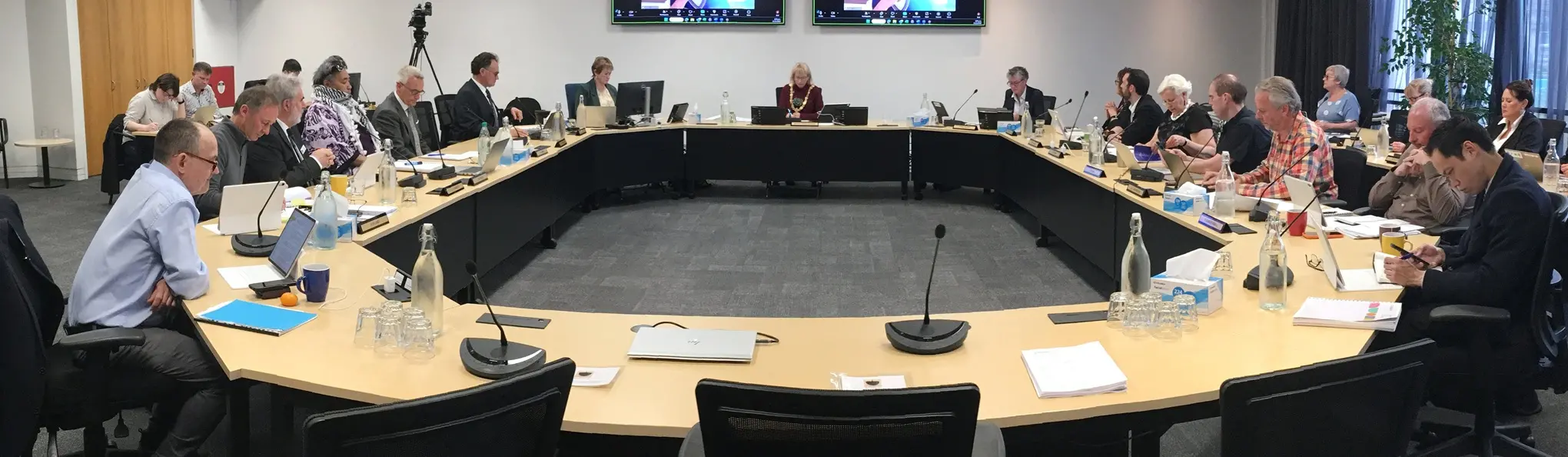
On May 21 an ODT article noted that Dunedin City Treasury Ltd wants the Local Government Funding Agency (LGFA) to lift a borrowing cap so that the Dunedin City Council Group can borrow more money.
This debt cap is imposed by the LGFA because LGFA debt is raised collectively, and it is guaranteed on a qualified joint and several liability basis by all local authorities that access it.
It prevents the activities of one irresponsible borrower from generating obligations against the assets of other borrowers via this collective guarantee arrangement.
In this case removing the LGFA debt cap on DCC debt would expose other borrowers to the arrangements that have been put in place which make the ratepayers responsible for the debts of trading companies that are owned by the DCC via DCHL.
This collective ‘‘DCC Group’’ debt arrangement has already been identified by the LGFA as unusual.
This situation also appears to be in direct contravention of section 62 of the Local Government Act, which states: ‘‘Prohibition on guarantees, etc: A local authority must not give any guarantee, indemnity, or security in respect of the performance of any obligation by a council-controlled trading organisation.’’
S62 was put in place to ensure that ratepayers are not exposed to debt liabilities generated by council-controlled trading organisations (CCTOs) that they do not directly control, and within which disastrously expensive ‘‘sub-optimal’’ arrangements and activities may consequently lurk.
Recent DCHL-overseen and CCTO-based financial catastrophes, such as Aurora, Luggate, Jacks Point and Yaldhurst, all come to mind here.
S62 has been circumvented by the DCC Group, and the ratepayers thus exposed directly to the fiscal consequences of its CCTO’s activities via the following arrangements:
1) Unusually, DCTL borrows money using a single ‘‘multi-option instrument issuance agreement’’. Borrowing via this method costs less than bonds, but it is riskier as the scale and timing of the liabilities that it ultimately generates for the borrower are not reliably predictable.
In its 2025 annual report it describes this instrument: ‘‘As at 30 June 2025, the company had a $1.6 billion multi-option instrument issuance facility [sic] which is secured against certain assets and undertakings of the Dunedin City Council Group.’’
However, a DCTL interim report dated Dec 31, 2025 notes: ‘‘The company has a $1.9b multi-option instrument issuance facility which is secured against certain assets and undertakings of the Dunedin City Council Group.’’
This indicates that the scale of DCC Group’s unusual debt provision agreement had risen by a stadium-and-a-half’s worth in just six months — with little that is tangible to show for it.
2) The DCTL annual and interim reports note that the ballooning debts under this agreement are: ‘‘secured against certain assets and undertakings of the Dunedin City Council Group’’.
The ‘‘certain assets’’ in question are identified by yet another deeply buried note in the 2025 financial statements of DCHL: ‘‘Since incorporation Dunedin City Holdings Ltd has issued additional shares of $1 each in favour of the Dunedin City Council. The shares carry equal voting rights and 1,600,000,000 are uncalled.’’
Uncalled capital consists of shares that are held by a company that can be ‘‘called’’ against an identified third party, who then has to pay the value of these shares into the company.
By this arrangement the directors of DCHL have the cast-iron legal right to call a $1.6b (now $1.9b) sum from the DCC.
This DCHL capacity to demand money from the DCC is the asset noted by DCTL.
However, as it is contingent, and thus intangible, it can conveniently be kept off the headline balance sheets of both third parties to the arrangement.
The ‘‘certain undertakings’’ are rather harder to identify, and they are not specifically noted in any public documentation that this writer can locate.
However, as DCTL’s accounts specifically note that they have the effect of securing the DCTL liability noted above, they must be a form of guarantee arrangement issued by DCHL that links the DCHL asset identified above with the liability amount specified by the limits of the multi-option instrument issuance agreement reported by DCTL.
If this were the case, and the DCHL asset and DCTL liability were linked by a functional guarantee, then one would expect these two items to move together in lockstep, and indeed they have consistently done so.
Proposals for identical increases in both items have been regularly presented together to the council for some 10 years now. The amounts involved have increased relentlessly.
The DCHL 2025 annual report describes the latest such tightly linked occurrence in a single statement: ‘‘On 22 August 2025, Dunedin City Treasury Ltd increased the amount which it can borrow under its multi-option instrument issuance agreement from $1.6b to $1.9b. On August 22, 2025, Dunedin City Holdings — increased its uncalled capital with the Dunedin City Council from $1.6b to $1.9b.’’
The mechanism of the guarantee is thus manifest. Were DCTL’s creditors to call their $1.9b unpredictable loan agreement, then this sets an unstoppable train of events in motion.
1) DCTL must call the $1.9b guarantee on DCHL.
2) DCHL must call the $1.9b uncalled capital on the DCC.
3) The DCC must pay DCHL $1.9b.
4) The DCC must use the Ratings Act to extract this $1.9b from the ratepayers.
The DCC would probably do this promptly by placing a lien liability on all DCC ratepayers’ properties to the $1.9b amount (plus some) via the provisions of the Ratings Act, and then (re)borrowing the money against this newly created ‘‘asset’’ from commercial sources.
The creation of this large and uncertainly increasing liability against what is most people’s principal personal asset would then hopelessly conflate ratepayers’ personal financial affairs with those of the DCC Group. This would thus rapidly and massively impoverish the community.
This is a truly extraordinary situation. These arrangements amount to a direct guarantee by the DCC of debts incurred by DCTL — a CCTO.
Last year, the Dunedin city councillors agreed via these arrangements that the organisation that they govern should commit to an on-demand liability of $1.9b.
They did so when it was perfectly clear that the DCC has no visible means to meet this demand if it is ever made, either wholly or in part, other than by direct recourse to ratepayers under the Ratings Act, with a potential per residential ratepayer exposure of some $35,000.
It is exactly this situation that S62 was enacted to prevent.
The councillors in question may have been assured in good faith by both the sources of this proposal and various expert advisers that it will never happen.
As a business researcher, I survey a landscape that is littered with the remains of individuals and organisations who unwisely accepted such assurances when they entered into such commercial guarantee arrangements.
These arrangements are required and maintained by creditors for a reason.
On May 22 the ODT reported that the council had duly acceded to DCTL’s request. Only four councillors voted against (Vandervis, Lund, Simms and Galer).
Several of the councillors voting for the motion have a track record of agreeing to raise the on-call capital liability that can be levelled against the ratepayers of this city — utterly unaffordable and potentially unlawful though it may be.
We can therefore only hope that the LGFA declines to co-operate, on the perfectly reasonable basis that a group of councillors who repeatedly vote to increase an on-demand debt commitment that now stands at $1.9b, when their organisation clearly possesses no visible means of meeting that commitment, either wholly or in part, can only be described as incorrigibly reckless (beyond irresponsible), and thus a clear fiscal danger to both those they represent and those whom they seek to borrow money with.
• Dr Robert Hamlin is a senior lecturer in the School of Business at the University of Otago. He is commenting here in a personal capacity as a DCC ratepayer who is directly and personally exposed to DCTL’s debt arrangements.