
PHOTO
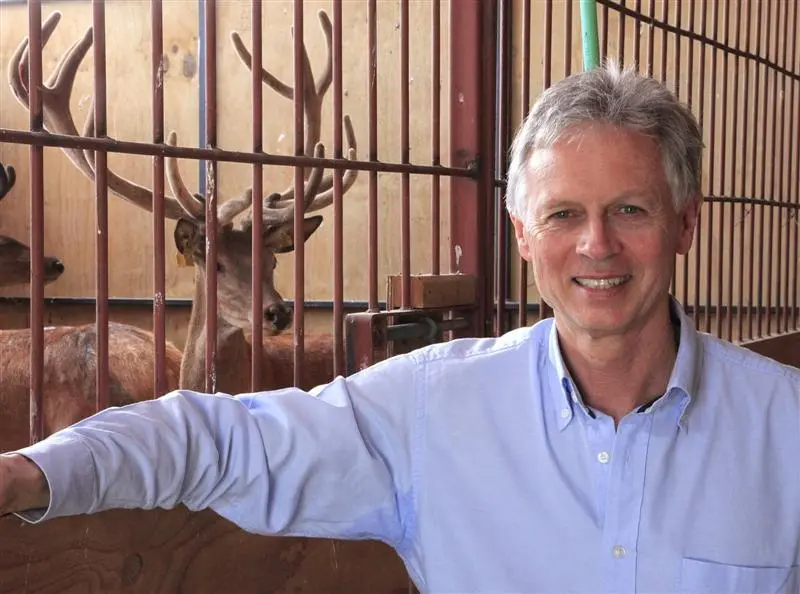
More than 30 years after he started out in the deer industry, Queenstown developer Alastair Porter is still a farmer at heart.
"I learnt to ride and I can fence and I've dagged thousands of sheep in my day and handled more deer than most people would dream about."
This week, he had about 60 prospective purchasers for the annual stag sale at his Remarkables Park Deer stud, mixing business with farming.
If it was not for the advice of his brothers and business partners, who reminded him it is more cost-effective to employ someone else to do the farm work, he reckoned he would still be out in the paddocks.
Instead, he is a greenfields developer who farms.
"I was always a greenfields developer. We're property developers first, but because we've got farming skills, we farm it [the land]."
While he is known as a developer in the Wakatipu, Mr Porter and his brothers started out in property development in areas an hour out of Auckland and Rotorua, developing land for mostly rural lifestyle blocks, including an area on the south side of Kaipara Harbour, where they started their deer operations.
"We bought five farms around Kaipara, mainly for rural residential blocks, but the main farm was ideally suited to deer farming."
Farming became a business and was extremely lucrative, and because he and his brothers had business background, they applied what they knew from the financial and business world and stock market to farming and started selling deer on forward contracts.
And, until the then minister of finance Roger Douglas changed the rules, they also took advantage of what Mr Porter said were great tax write-offs for forward contract investors.
"A lot of wealthy people in Auckland were our clients. All the partners in PriceWaterhouse [accountants] were share farmers."
They were heady days which boosted the greenfields development, he added.
And the deer industry interests continued, including that still maintained at Remarkables Park Stud where 60 stags, some with massive trophy style heads, went under the chalk at a Helmsman-style auction this week.
Buyers from all round the country turned up to see what Remarkables Park Stud had produced this year, on the back of four years of artificial insemination to improve the blood line.
After years of plummeting fortunes in the deer industry, where both velvet and venison hit record low prices a year or so ago, this year's sale at Remarkables Park Stud attracted "a very good result", Mr Porter said.
Ever the businessman, he noted sales were up 41%, with 41 sold, prices up 12.2%, with the average fetching $2902 and the highest price 24% better than last year, at $8700 for the top stag.
Stock at recent sales in Canterbury and Kurow might have fetched higher prices, but the deer at the Remarkables Park Stud were heavier and bigger, he explained.
The higher breeding value was partly because of the AI the company used for their selection over natural mating, to ensure top genetic lines for venison, which comprises 90% of the New Zealand herd.
AI company Deer Improvement, of which Mr Porter was a founding director, had made huge inroads in genetic improvement of the stock, applying the same technology used in the dairy cow industry, Mr Porter said.
And using AI stock improvement, plus 20 years' breeding and herd development, made the stud farm land viable before development, he said.
However, with the big prices to be made in the trophy market, Remarkables Park Stud was making the switch to trophy stock, a change that took three years from insemination, he explained.
While some at this week's stock sale were talking of a the global economic downturn and an expected slowing in the international trophy market, where the top head in the Waikato attracted $50,000 this season, Mr Porter was optimistic the returns would still be good in the future.
And when the land was no longer needed for farming, and planning controls were in place, it could be used for development, he said.
Developing land was like farming.
"I think you have to be pragmatic and . . . balance the needs of people against the needs of the country."
The land in Kaipara produced "fabulous" rural residential lots for people to enjoy the coastal environment, he explained.
And another block of land he developed in Waiheke Island for housing sites improved the quality of the land through destocking, erosion control and planting, he added.
"It was a much more appropriate use than farming."
"That's why I like the Resource Management Act. You look at the productive capacity of the land. Some land is good for farming, but less-productive land is better used for urban development," he added.