
PHOTO
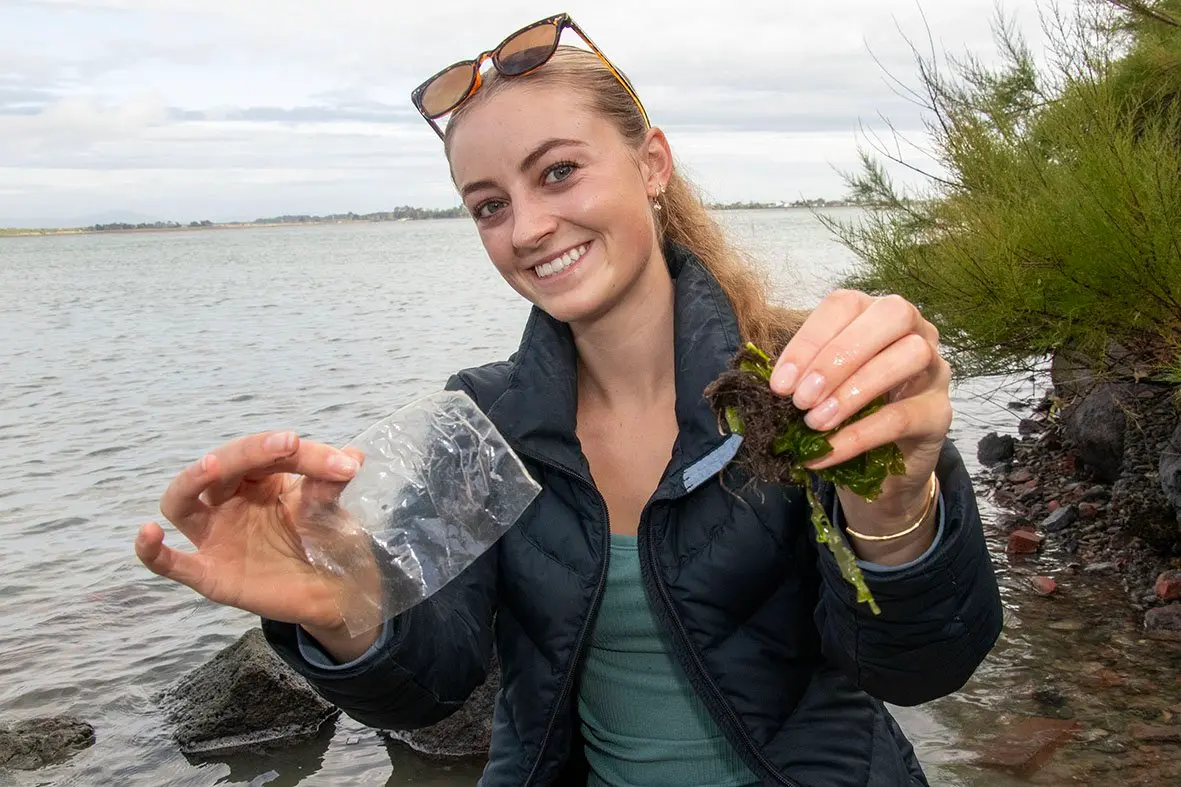
University student Olivia Cooper is closing in on a long-held dream to help reduce climate change with a business start-up turning seaweed into plastic-free packaging.
The University of Canterbury second-year biochemistry student has developed a flexible seaweed film to replace petroleum-based packaging and already had two bakeries showing interest in a prototype.
Her PacSea — formerly called GreenShift Packaging — business project was a last-minute entry in a venture accelerator programme at the university.
It was due to go before a panel of judges yesterday to try to make the final cut of the 10 best business entrepreneurs pitching their ideas live at a showcase next month.
"So, it started when I was 7 and I decided I wanted to help combat climate change and I got interested in marine biology and seaweed specifically because I live in Sumner. I always thought I’m going to be a scientist and I did my first year in biochemistry and saw an advertisement for an incredible university summer course and applications were closing in three days and I had to come up with a business."
That came to her after watching a United States company making bioplastics from seaweed on a YouTube video.
With no business background and days before the deadline, she went to work in the kitchen blending a prototype seaweed film to get into the Summer Startup programme.
To her surprise this was accepted and she feels more confident after spending 10 weeks meeting guest speakers, business mentors, investors and founders to gain insights in the business world.
Miss Cooper said the seaweed packaging project was still in its infancy, but had already got a good reception.
Living in a seaside suburb and near the Avon-Heathcote Estuary gave her ready access to a fast-growing red/brown seaweed commonly found in New Zealand.
"So currently the prototype is very basic and very early. I collect the seaweed, dry it out a bit and then I process it in a food processor, boil it, take it through some other steps and add a few natural ingredients and then I cast it in a film and let it dry."
Through trial and error, she has come up with a pliable packaging film that works.
This has much the same flexibility as a plastic bag, can be made thicker or thinner, heat-sealed and tailored for different uses such as soft wraps and firmer packaging.
Initially, she wants to develop bread bags, before looking at other alternatives.
Her goal is to pilot a product by the end of the year for local businesses.
Eventually, she wants to design a material able to tie into existing manufacturing to avoid building new infrastructure.
She said the advantage of her ocean-friendly alternative was, unlike single-use plastics, they were designed to break down naturally in a home compost bin after being used.