

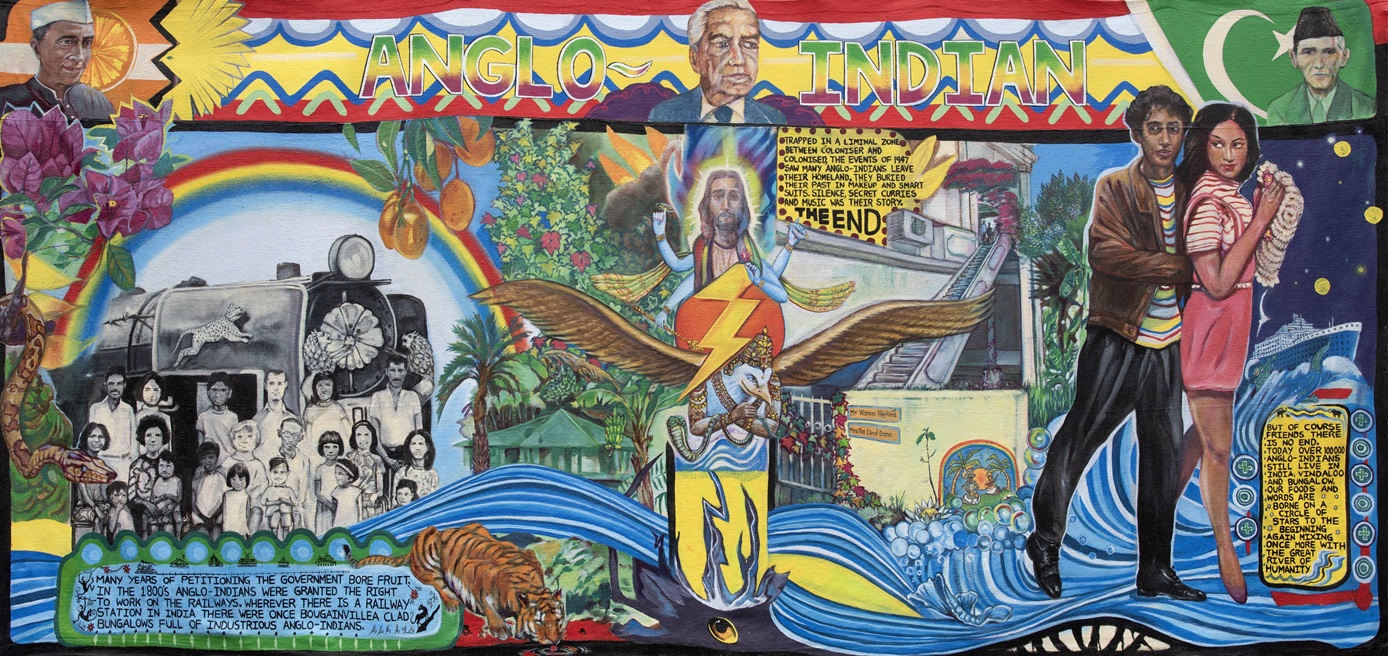
Guy Howard-Smith grew up in two worlds — Pākehā and Anglo-Indian.
At home, Anglo-Indian curries were served and "zany, big celebrations" were common.
But outside of the home, for his father and grandparents, it was about blending in. "Try to be more English than the English."
For Howard-Smith, whose mother is Pākehā of Scottish and English descent, the blending in was easier.
"I’ve got pale skin, it’s easy to blend in and it’s, I wouldn’t lie, you don’t experience any of the subconscious ... bias."
To him the zany parties, the Anglo-Indian cuisine known for its boiled curries, dal, pepper water and vindaloo, were "pretty cool" and he enjoyed the celebrations.
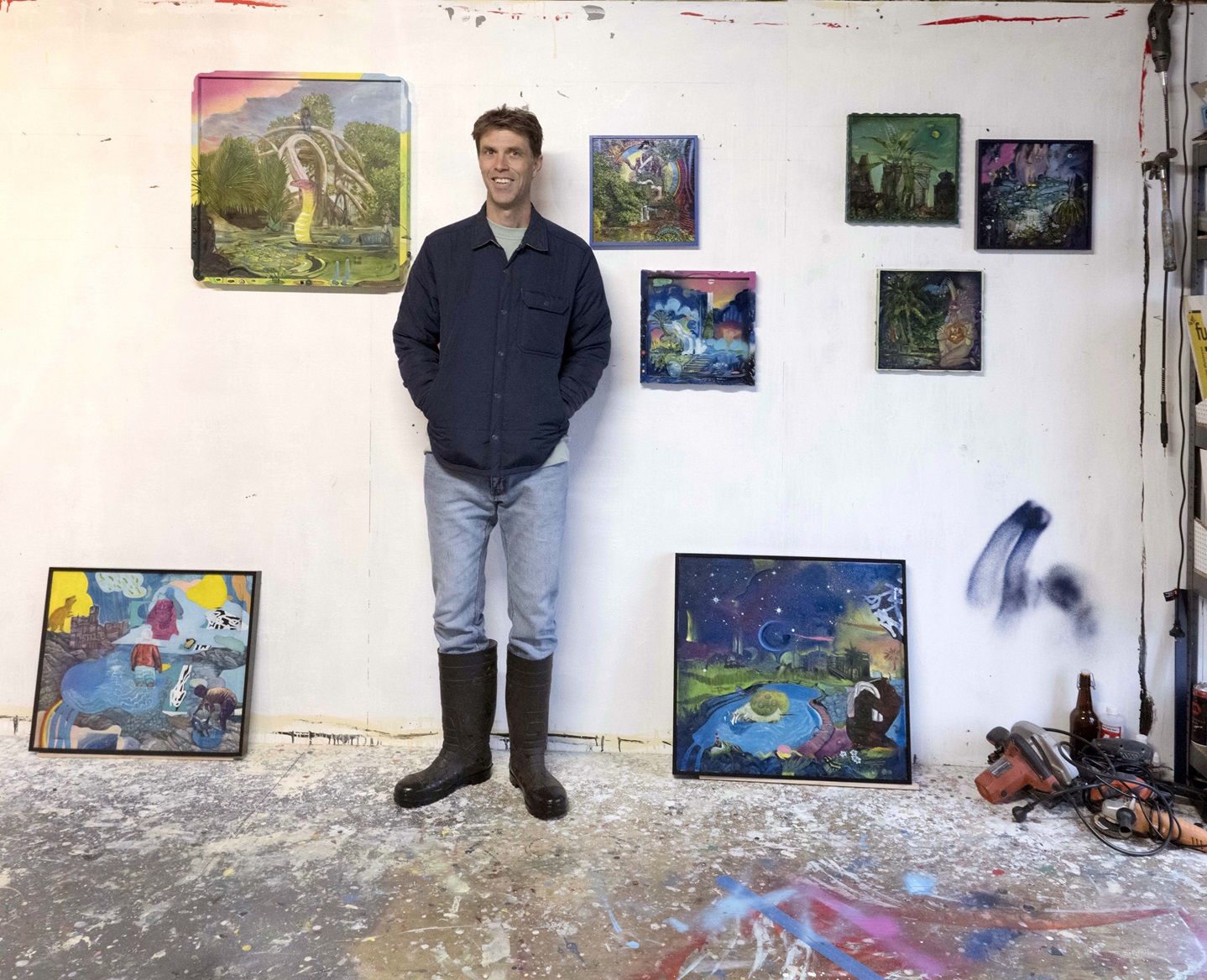
While he grew up listening to his grandparents’ stories about India, it is only in the past five years he has become interested in finding out more about their heritage.
As an artist, Howard-Smith has a bachelor of fine arts (2003) from Elam School of Fine Arts, University of Auckland and is known for his mural, street art and painting practice.
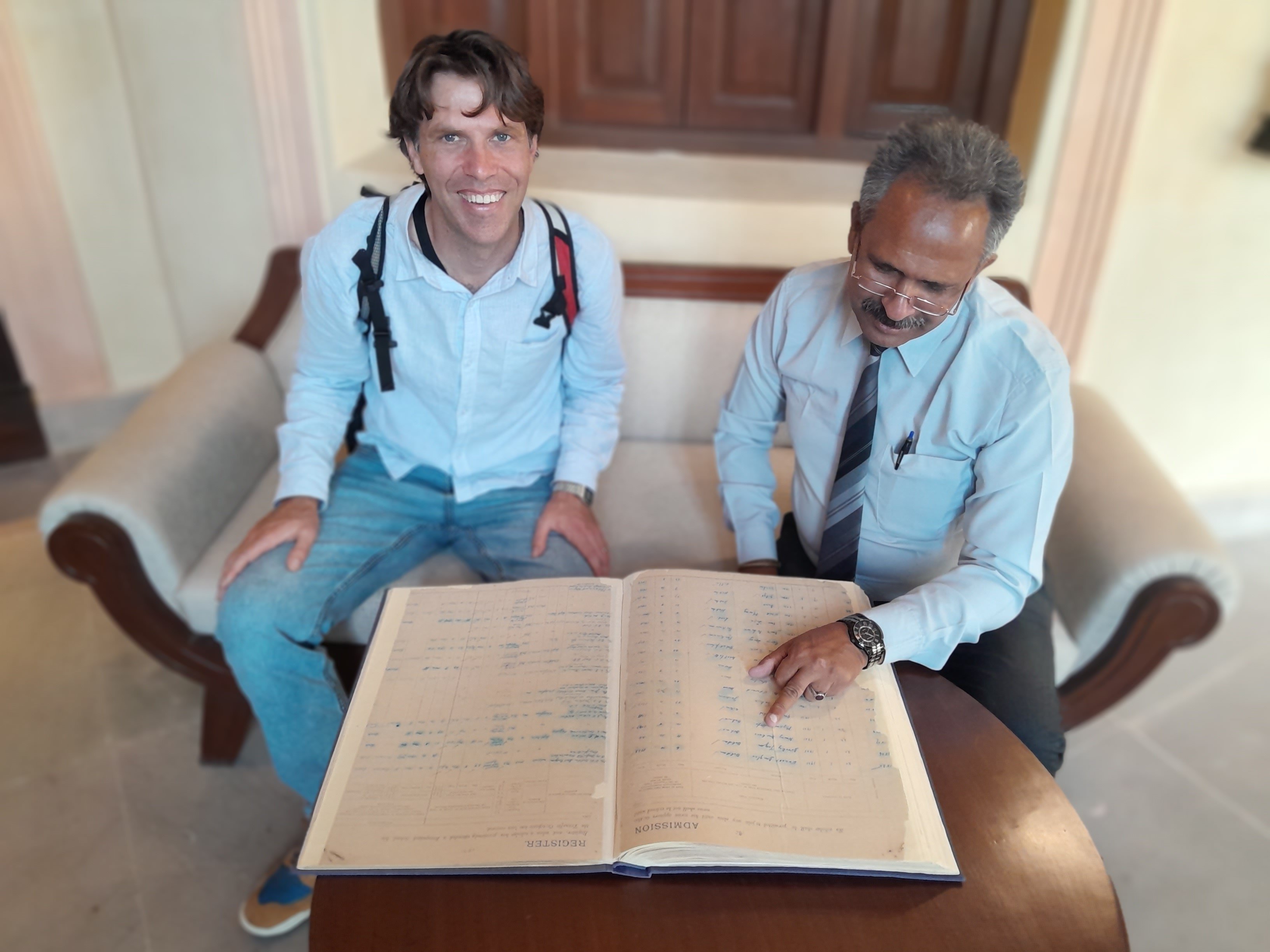
With the help of funding from the Asian New Zealand Foundation and Creative New Zealand, he has been able to travel back to India to where his father’s family comes from.
"It’s been awesome. So I sort of went back as a journey of discovery to see where Dad was born and see where my nana and papa had grown up and meet distant relatives, but it sort of morphed into a thing where the community is having a little bit of a renaissance."
His father was born into the Anglo-Indian community, an ethnic group with its origins in the 15th century Portuguese colonisation of India and, later, 17th century British rule.
Men were brought from England to work in India and married local women. The resulting mixed race Eurasian population became constitutionally recognised as Anglo-Indians.
"They just lumped it all together as Anglo, but it’s actually Eurasians, European and Asians. So that’s the big mixture of all the European people that came to there and they all got lumped together."
"Because that’s sort of an interesting thing which I’ve been exploring and looking into is they sort of sat between the British and Indian cultures because they were a mixed race, so they were sort of not flavour of the month with either of them, so they left when independence came."
Many families migrated abroad, especially to the United Kingdom, New Zealand, Canada, Australia, and the United States.
"There’s a massive diaspora around the world and there is still thousands that live in India but they’re trying to get some cohesion between all of the people spread out."
His father’s family was one of them. Due to the civil unrest and loss of job security, he and his extended family emigrated to New Zealand, settling in Ponsonby in 1949.
Looking at that past history has not been welcomed by some of Howard-Smith’s relatives.
"I’d be lying if a lot of my older relatives who grew up in India weren’t just like, what are you doing? We just got out, we’ve managed to, like, sweep it under the carpet and you’re shaking it out. So it’s just a generational shift where everybody that’s one step removed from it is really interested in it, I think."
Howard-Smith, who has lived in Dunedin since 2009 when he returned from London, decided to visit Kolkata where his nana’s family were based from the late 1700s and where the largest population of Anglo-Indians in India now live, as well as Lucknow, where his father and uncle were born and his nana went to school.

However, there is a small undercurrent as many Anglo-Indians in India are "doing it pretty hard".
"They took me around everywhere, and it was super amazing. But there’s always a gap, of course, because of where you come from. There’s a tiny bit of resentment to it as the people that could afford to left."
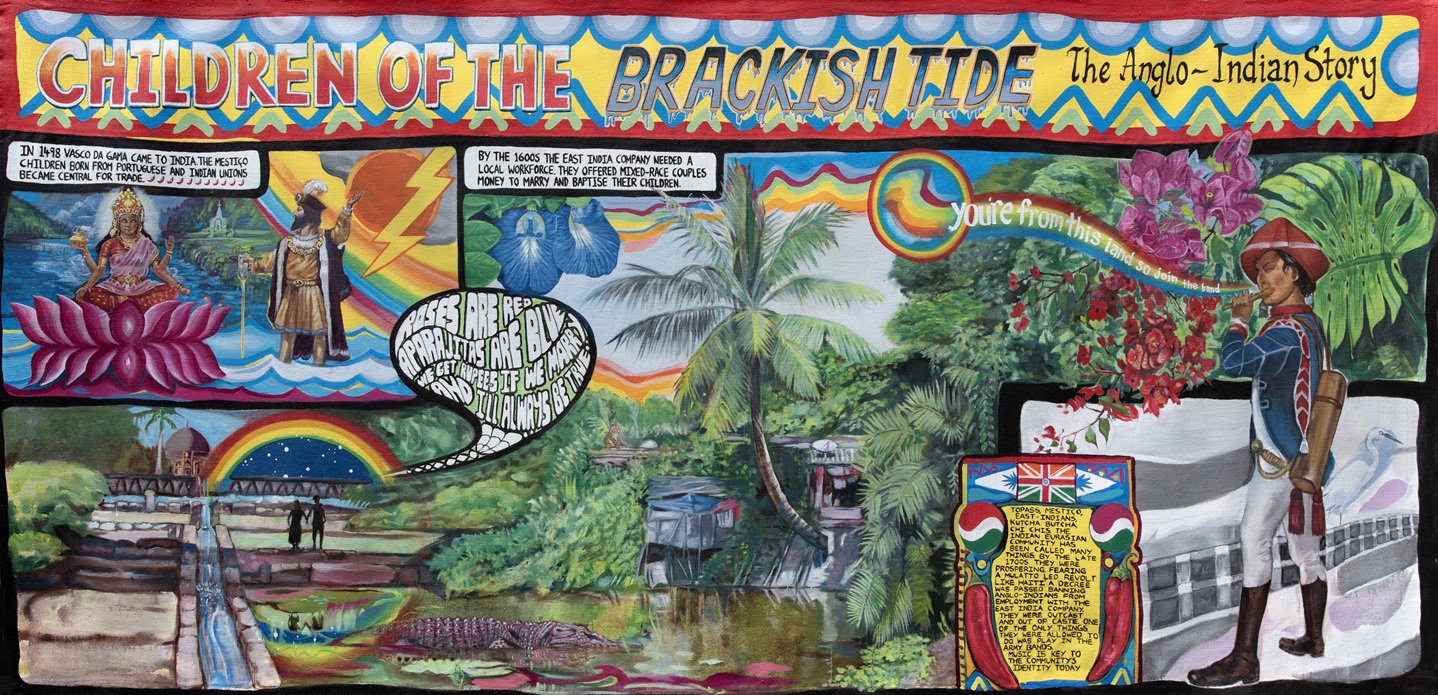
When he returned to New Zealand, his experiences inspired a series of works exhibited as "Big sea, Small waves", at the Corban Estate Art Centre in Auckland last year.
Having bought some jute in Kolkata, which is native to the area, he painted large panels about Anglo-Indian history.
"I’ve got a great-aunt that’s still alive. She just walked around the exhibition and just said, it’s all lies, it’s all lies. But again, that wouldn’t be the first great-aunt in any family to dispute family history."
He realised the community back in India would not "wear it" if he tried to speak for them through his art from such a distance so he focused on key factual events in their history.
For his most recent exhibition at Olga in Dunedin, Howard-Smith, who also teaches at Logan Park High School, has been working on smaller paintings in his studio in his back garden.
There are many Eurasian authors such as Micheal Ondaatje, from Sri Lanka who had a similar experience and status as those in India. Along with Anglo-Indian authors Alan Sealy and Keith Butler, he is a key proponent of magic realism.
"They write in a magic realist style, you know, like where time can jump forward or back and they take things where they ... I don’t know, the wonders of their environment and then just sort of weave in their family’s experience."
There is not a lot of factual Anglo-Indian history recorded but it has been recognised that in the 1600s children were taken and put into orphanages. When grown up the men were put to work for the East India Company and the women were married to European men.
"Its not the first community that happened to. It was the great European expansionism but it means no-one knows where they came from."
It has resulted in "crazy stories" often conflicting stories emerging about family histories.
One story in his family involved a Bavarian circus performer fleeing the tent after having an affair with an Indian lady while another branch of the family says he was from the Hanover School of Music and a proper music master.
"So it’s like there’s a kernel of truth runs through it all, but the stories are wildly divergent, even within families, and that you will find in nearly every Anglo-Indian family and that’s just humanity. People try and dress it up and make it sound amazing."

"In Christianity snakes are evil. In Hindu mythology they are a symbol of rebirth so it’s a real tangible understanding of how cultures morph and merge."
He has used snakes and other "touchstones" which mean something to him and talks about the "hybrid" community he comes from.
"So I’m trying to make a visual language that talks about hybridity and morphing of cultures and borrowing of ideas and them coming together."
Painted on wood and to emulate the rosewood and teak carvings of religious icons he saw in India, he has been carving his own frames and inlaying them with gemstones.
"I just thought they were super cool so I’ve leaned into it a bit more now, consciously doing it."
To see
"Snakes and Rubies", Guy Howard-Smith, Olga until July 24.


