
PHOTO
NO, I DON'T GET DANGER MONEY
Lisette Reymer
Allen & Unwin
As a 7-year-old Waikato farm girl, Lisette Reymer had witnessed coverage of the falling Twin Towers.
While most of us would prefer to keep our distance from such catastrophic events, she decided that news correspondent was the career for her.
Now, still only in her early 30s, as Newshub's Europe Correspondent she has travelled throughout danger zones and frontlines in Ukraine, as well as myriad other locations in Europe and beyond.
She has reported live from subzero bomb shelters, snowy landscapes and sites of utter poverty, been petrified by air sirens and continually run on very little, and fractured, sleep.
By her side has been her trusty cameraman, recording and supporting, as various shadowy local figures latch on as ‘‘security’’ in these troubled locales.
There is Artem — a James Bond figure with his pistol carried in a Louis Vuitton bag — a scary thug who proves to be as turncoat as he seems, a young bodyguard who has the energy of a streetside scammer and another who worked on ships in security against pirates.
It is a world of men, confrontation, and distrust.
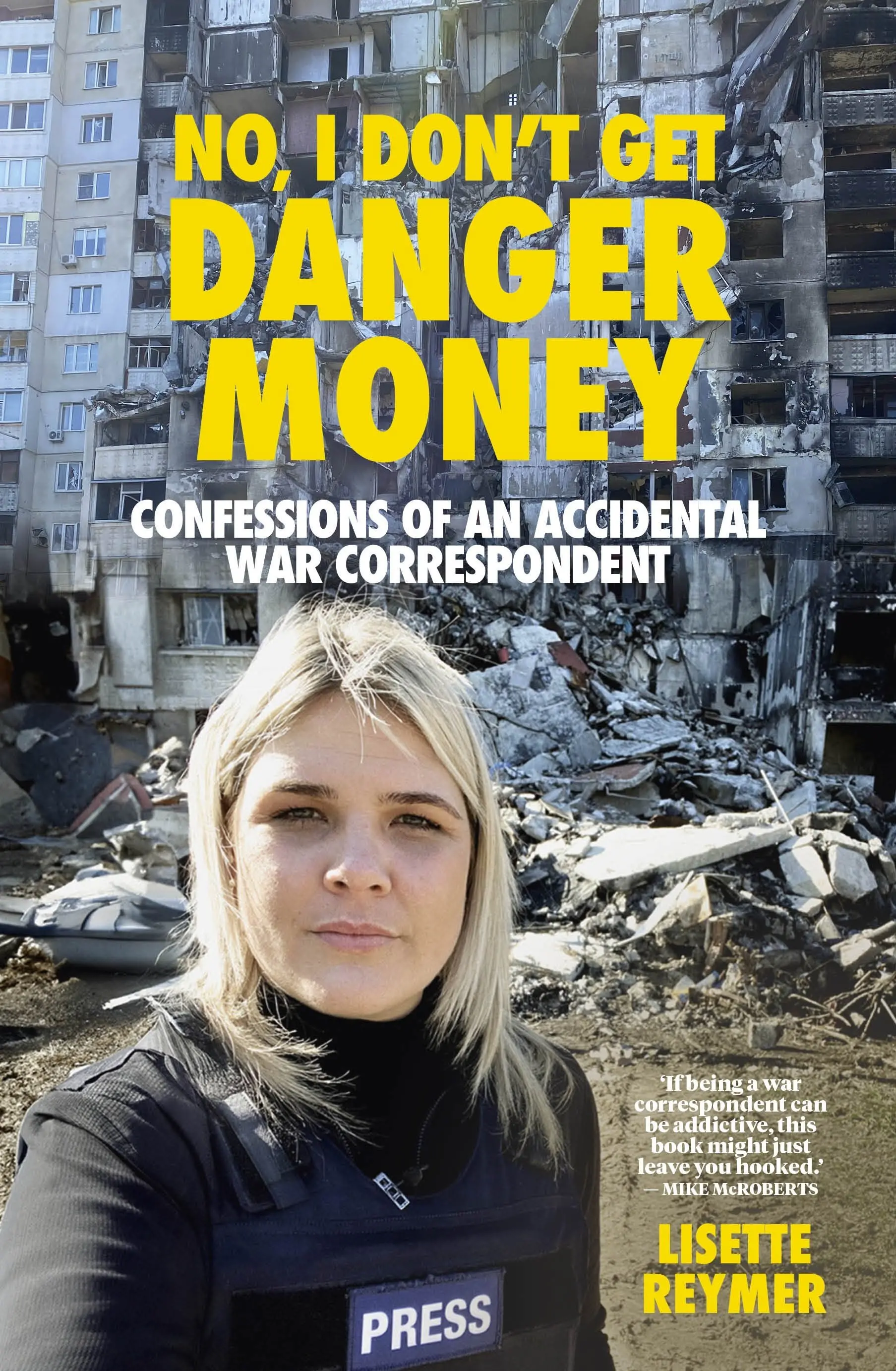
She has a black ‘‘war uniform’’ with chunky boots and puffer jackets, which she leaves by the door in anticipation of air raid sirens.
She investigates Bucha and Moshchun, settlements terrorised by the Russians, passing bomb craters and wreckage, and almost comes to grief on the roads.
She speaks to survivors and reports on their stories, and she is sanctioned by the Kremlin for her efforts.
This account by a young and fairly inexperienced Kiwi with huge responsibility is chatty in tone and accessible.
Reymer frequently regales us with details of her days and of her worry, both of which are familiar in their mundanity.
At other times she makes us laugh through her anecdotes, for example when she is desperately trying to cope with the effects of a stomach bug minutes before she is due on air.
She shares her discoveries such as an underground bunker in Kharkiv — the freezing home to a woman and at least 100 abandoned pets — the catacombs beneath the city (2500km long and 40m deep) and the hidden bomb shelter for almost a million inhabitants beneath Helsinki, Finland.
She shows her job as entirely unglamorous, where Red Bull and hotdogs or borscht beetroot soup are rocket fuel, and where meals can be conjured up out of pasta and cold tomato sauce.
Time is always relative, for she often records late at night for updates beaming live into New Zealanders' mornings.
This is a most interesting account told in ordinary prose, where Reymer is humble, in awe, or often overwhelmed and completely drained of energy.
Her spirit however shines through, where a coping mechanism is to laugh for release.
A series of coloured photos illustrate, where the faces in them range from ecstatic to exhausted and sleep-deprived.
There is also a basic map, helpful in showing the areas she had travelled.
She proves to have the stamina of a hardy one for this itinerant work, where she is right there with people on the edge of survival.
The situations can be bleak, but, as with her face in a camera, she knows how to draw us in with comprehensive written accounts from these war-torn worlds.
- Jessie Neilson is a University of Otago library assistant