
PHOTO
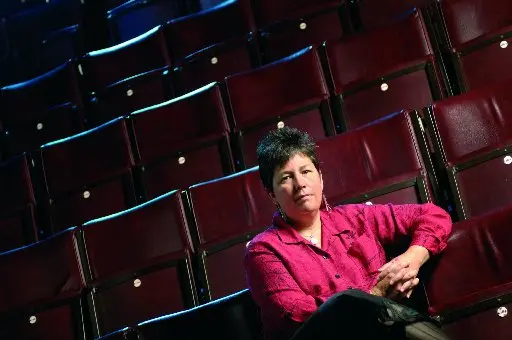
Imagine learning a major role in a Shakespearean play and committing it to memory in four weeks flat.
That would be a challenge for any professional actor on the stage today.
Now imagine performing up to six different plays every week and simultaneously learning a new production every fortnight.
An accomplished actor in early English theatre in the late 16th and early 17th centuries may have had to learn 70 full parts within a two- to three-year period.
How could they master so many complex roles so quickly? That is the question that fascinates Professor Evelyn Tribble, the Donald Collie Chair in Otago's Department of English.
Using Shakespearean theatre as a model, she is researching distributed cognition as a major part of her focus in the first stage of a three-year collaborative study into The Extended Mind in Early Modern England.
Tribble says there has been a major cultural shift in the way we use our memories.
Today we rely on books and computers to recover complex texts, whereas actors in early English theatre companies were used to quickly committing complex passages of text to memory.
One technique actors used to learn their parts was to memorise "sides", hand-written scripts of only their own lines and cues, stripped of any other distractions.
In this way the cognitive load of learning a new production was spread over the whole company.
FUNDING
Marsden Fund