
PHOTO
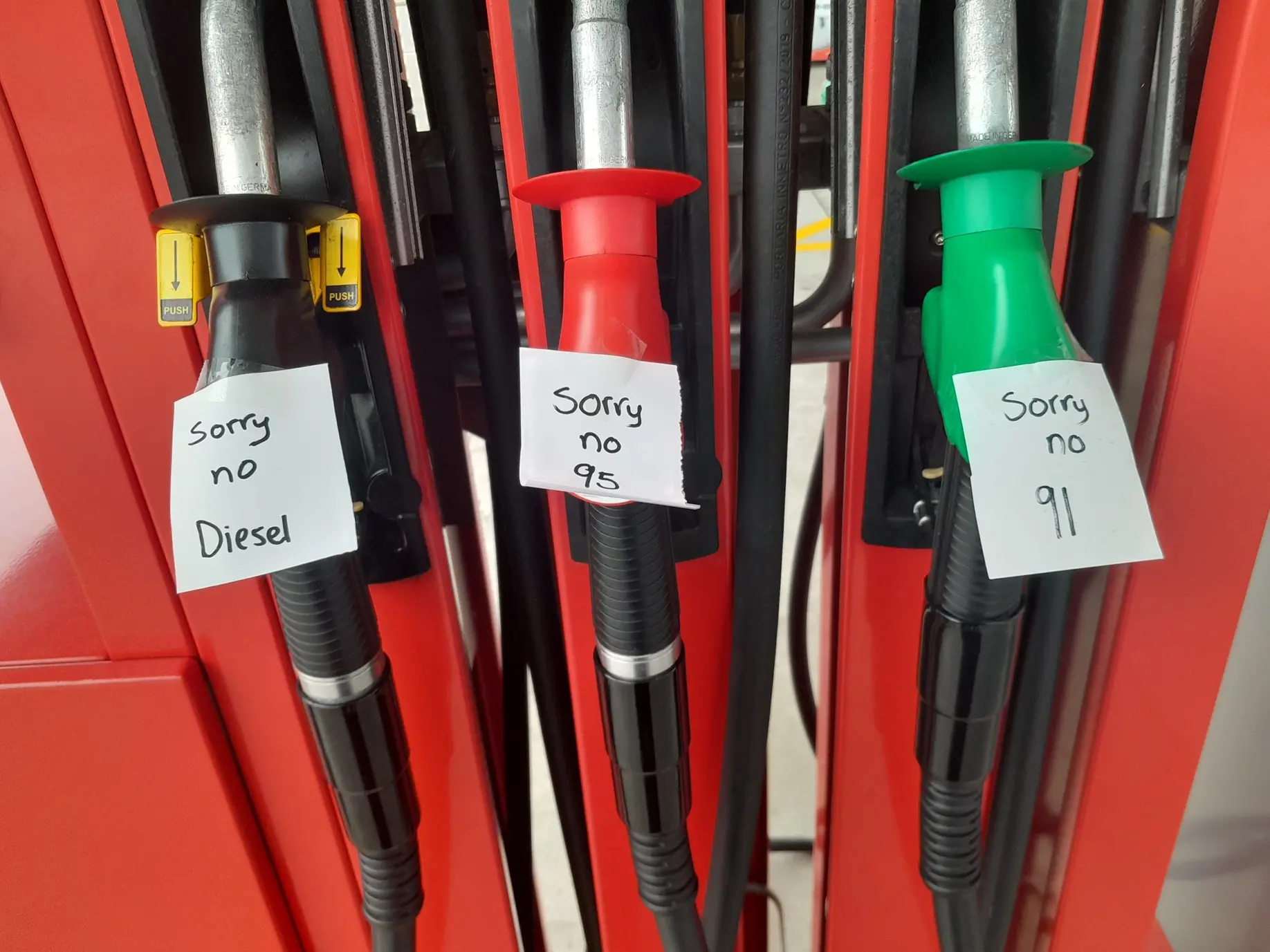

The current fuel crisis has done something that years of advocating for sustainability never quite managed — it has made the cost of dependence impossible to ignore. Trucking firms are absorbing diesel surcharges, food producers are watching freight costs climb and many of us are standing at the pump watching the numbers spin. While it doesn’t always feel like a sustainability story, it does feel like a cost-of-business emergency. But that distinction is exactly what this column is about.
For more than a decade, energy security analysts have been writing reports that went largely unread. Their argument was straightforward: efficiency and resilience are not the same thing, and in the race to cut costs from supply chains, we had quietly traded one for the other. In the era of peak oil, the current fuel crisis is not a surprise to those analysts. It is a confirmation.
To understand how New Zealand arrived here, we need to go back to 2022. That year, Refining NZ converted Marsden Point — our only oil refinery, operating since 1964 — into a fuel import terminal. The decision followed years of operating losses, and the economics were, at the time, compelling. Why maintain expensive domestic refining capacity when refined product could be sourced more cheaply from refineries in Singapore, South Korea and the Middle East?
With Marsden Point gone, New Zealand has no domestic backstop. Every litre of petrol, diesel and jet fuel we use arrives by ship from somewhere else. Our minimum stockholding obligations, which only came into force in January last year, require importers to hold 28 days of petrol, 24 days of jet fuel and 21 days of diesel onshore or within our exclusive economic zone. That buffer was designed to smooth over short disruptions — a delayed shipment, a temporary port closure. It was never designed to absorb a prolonged crisis.
The Strait of Hormuz is a narrow waterway through which about 20% of the world’s oil shipments pass. When the strait was effectively closed in early March, the fragility of New Zealand’s fuel supply chain became immediately visible. Brent crude surged, freight surcharges followed, diesel prices climbed sharply and the government began issuing daily updates in a register not heard since the Covid pandemic. The logistics had changed overnight, but the vulnerability had been accumulating for years.
It is tempting to frame this as a government failure and there are legitimate questions about the pace of New Zealand’s energy security planning. But the deeper problem reflects an assumption that became so widely shared it stopped being examined — that global supply chains would always flow, that the next shipment would always arrive and that the lowest-cost option was the best one. That assumption was held widely, including in boardrooms, procurement departments and logistics operations across the country.
The trucks that stock supermarket shelves in Ōtepoti Dunedin run on imported diesel. Because 93% of all products in New Zealand are delivered by truck, higher diesel costs flow directly into the price of goods on supermarket shelves. The refrigerated containers carrying Otago’s meat and produce to export markets, the machinery on construction sites, the vehicles in service fleets, all of it depends on a supply chain that runs through one of the world’s most geopolitically unstable regions. All this was happening before March but the crisis has made these relationships visible.
The temptation is to treat this as a temporary geopolitical shock that will resolve and be forgotten, but even if the strait reopens, the underlying dynamics don’t change. Fossil fuel supply chains are exposed to conflict, climate disruption and price volatility in ways that will only intensify. This crisis is putting a very visible cost on our dependence on imported fossil fuels.
For years, the sustainability transition in transport has been framed as a cost or a sacrifice. This moment reframes electrification, active transport and logistics efficiency not only as environmentally resilient choices, but as business resilience investments.
Therefore, what are smart businesses doing right now?
• Fleet decisions: businesses with EVs or hybrids are largely insulated from the diesel shock. Those who deferred fleet electrification are now paying a premium for that deferral. The investment case just got stronger.
• Logistics consolidation: batching deliveries, co-ordinating with suppliers and customers, reducing trip frequency. This saves money now and builds operational discipline for the long term.
• Enabling active and public transport for staff: subsidised e-bikes, flexible hours to enable bus use, remote work where feasible. These reduce fuel exposure while improving staff wellbeing.
• Supplier and procurement review: which parts of your supply chain are most exposed to fuel cost pass-through? Now is the time to map it, not when the next shock hits.
Furthermore, it is also important to ask what structural transitions make sense going forward. While this crisis may ease, the ripple impacts will continue for years and the fragile assumptions we built business operations on are now fully transparent.
There is a striking paradox at the heart of New Zealand’s current situation. We generate 85.5% of our electricity from renewable sources, one of the cleanest grids in the world. Yet transport, which accounts for nearly 40% of all our energy use, remains almost entirely dependent on imported oil. The tools required to build resilience against fuel shocks are exactly the same tools required to decarbonise: electrification, shorter and more local supply chains, investment in active transport and public transit, energy efficiency across operations. Businesses that have been building these capabilities for sustainability reasons are now discovering competitive advantage in a disrupted market.
For businesses in Otago and Southland, where distances are long and fuel dependency runs deep through freight, farming and logistics, the case is stronger still. Investment in EV charging infrastructure, regional logistics co-ordination and active transport options for staff is not green idealism. Right now, it is straightforward risk management.
The business owner at the pump is looking at a real-time readout of a structural problem that has been building for 20 years. The question isn’t whether change is coming, it is whether we use this moment to get ahead of it, or wait for the next crisis to make the case again.
Sara Walton is a professor of sustainability and business at the Otago Business School, University of Otago.