
PHOTO
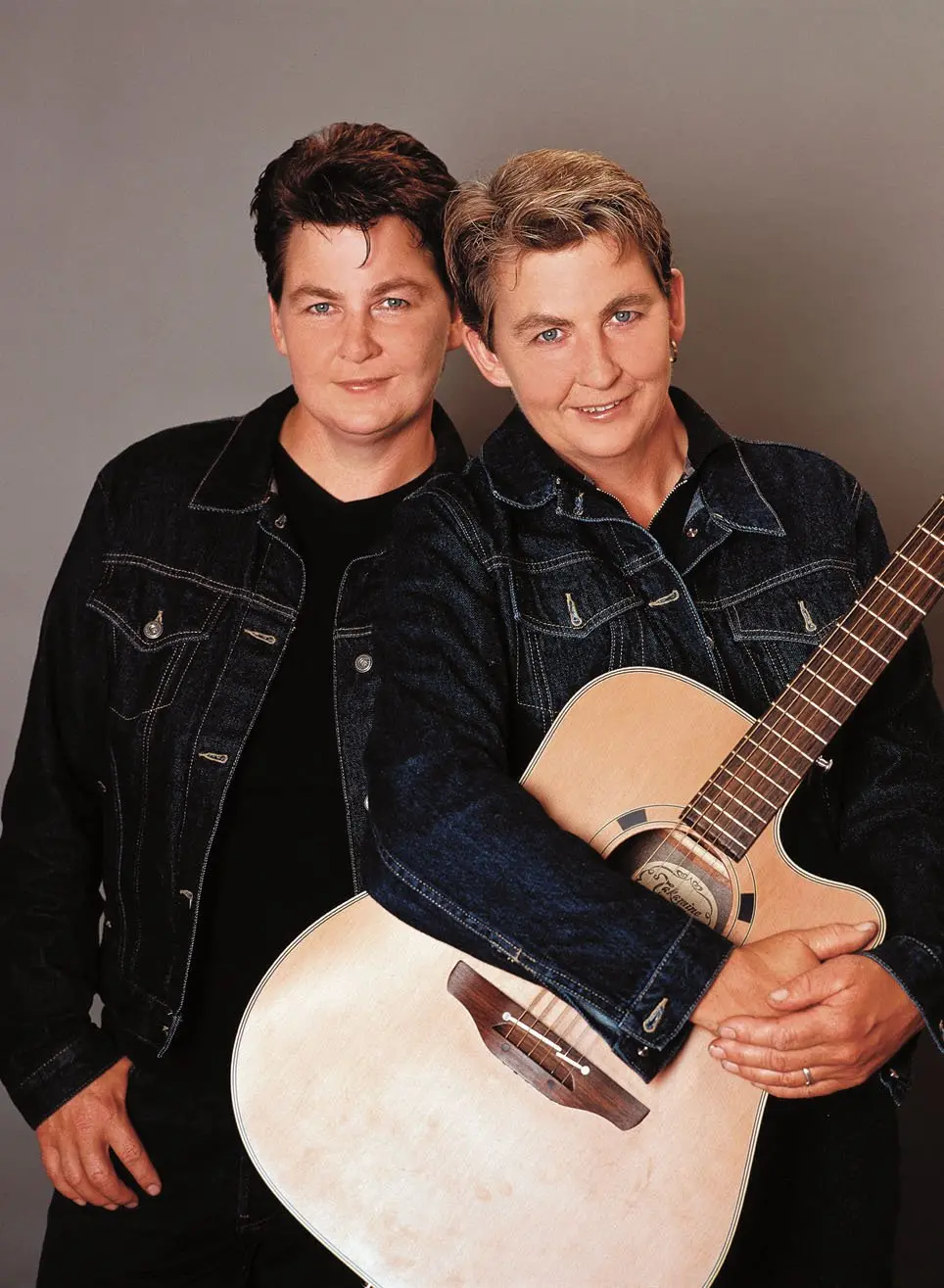
Julie Bethridge Topp was decidedly her own woman, but her life and career was inseparable from that of her twin sister.
Jools — the eldest by a few minutes — and Lynda Topp were born in Huntly on May 14 1958. Twins often have a strong bond but from their earliest years they did everything together.
They first sang together in public aged 5, and by secondary school they were performing in talent quests.
Their elder brother, Bruce, encouraged his sisters buying them a guitar and instruction book when they were aged about 12. Jools quickly took the guitar and threw the book away.
‘‘I've never looked at another guitar book ever,’’ she once said.
‘‘I just learned all the chords that I could. They're all just very basic chords.’’
Basic or not, they served the sisters incredibly well.
In 1976, the twins joined the army territorial force and spent two years stationed in Christchurch where, to supplement their earnings, they started busking.
‘‘That was our training ground, how to woo a crowd,’’ Jools said.
They moved to Auckland where they made busking a living, regularly performing in the inner city on a Friday night and developing a keen following — not the least among law enforcement, frustrated at the Topps’ audience blocking the street. The sisters were prosecuted for obstruction but won their case.
Openly lesbian at a time when homosexual law reform was yet to be passed, loudly left-wing when a deeply conservative National government was in power, singers of country music in the era of punk and disco, the Topp Twins were an unlikely act to become beloved stars and household names, but that was the path that they had embarked upon.
‘‘Every good movement needs a damn good song, and we were just in the right place at the right time,’’ Jools said.’’
Untouchable Girls was their anthem and regular show closer, but they had many other memorable songs such as Calf Club Day and their version of Nga Iwi E. In all, the sisters released five albums, four EPs and a best-of collection.
By now the sisters were more likely to be seen performing in theatres than on the streets, and they built upon the banter which came naturally to them as street performers to include comedy sections in their expanded show.
Having found a horrendous gingham skirt in a second-hand shop, the sisters devised the country-mad Gingham Sisters, Belle and Belle — the first of many memorable Topp characters.
‘‘We made ourselves look ridiculous,’’ Jools said. ‘‘We asked them to laugh at us, not to laugh at someone else's misfortune.’’
A 1987 a Topp Twins television special was a ratings winner and earned three television awards.
It was the precursor of a range of Topp Twins shows over the following decades. The Topp Twins amassed many TV appearances, not just their own shows but commercials, documentaries and travel shows.
For those shows they created some of their best loved characters: the good Kiwi blokes Ken and Ken, and Camp Mother and Camp Leader (Jools).
‘‘People feel self-conscious when they've got a big camera pointing at them, so we needed to create those characters to make people feel at ease to really communicate with them,’’ Jools said.
The Topp Twins — Untouchable Girls, a documentary film on the sisters’ lives, was released in 2009 and won a raft of awards at both gay and general film festivals worldwide.
In 2006, Jools Topp was diagnosed with breast cancer and underwent a mastectomy. Having kept little from their audiences their whole lives, the sisters went public on this too. Already advocates for breast cancer awareness, they spoke more and more about a disease which kills hundreds of New Zealand women every year. Lynda was later to be diagnosed with the disease herself.
In 2014, the Topp Twins were back on TV hosting a travel and food show, Topp Country: it was the highest rated local programmes of 2014 and another award-winner.
In 2018, both twins were named Dames Companions of the New Zealand Order of Merit, for services to entertainment.
On May 22 this year the twins were awarded the Country Music Honour for Contribution to Country Music. The citation said that Dame Lynda and Dame Jools ‘‘have dedicated their lives to standing up and singing for what’s right and bringing joy to audiences in every nook and cranny of Aotearoa’’.
A day later, Jools Topp died aged 68. — Allied Media/ NZ On Screen