
PHOTO
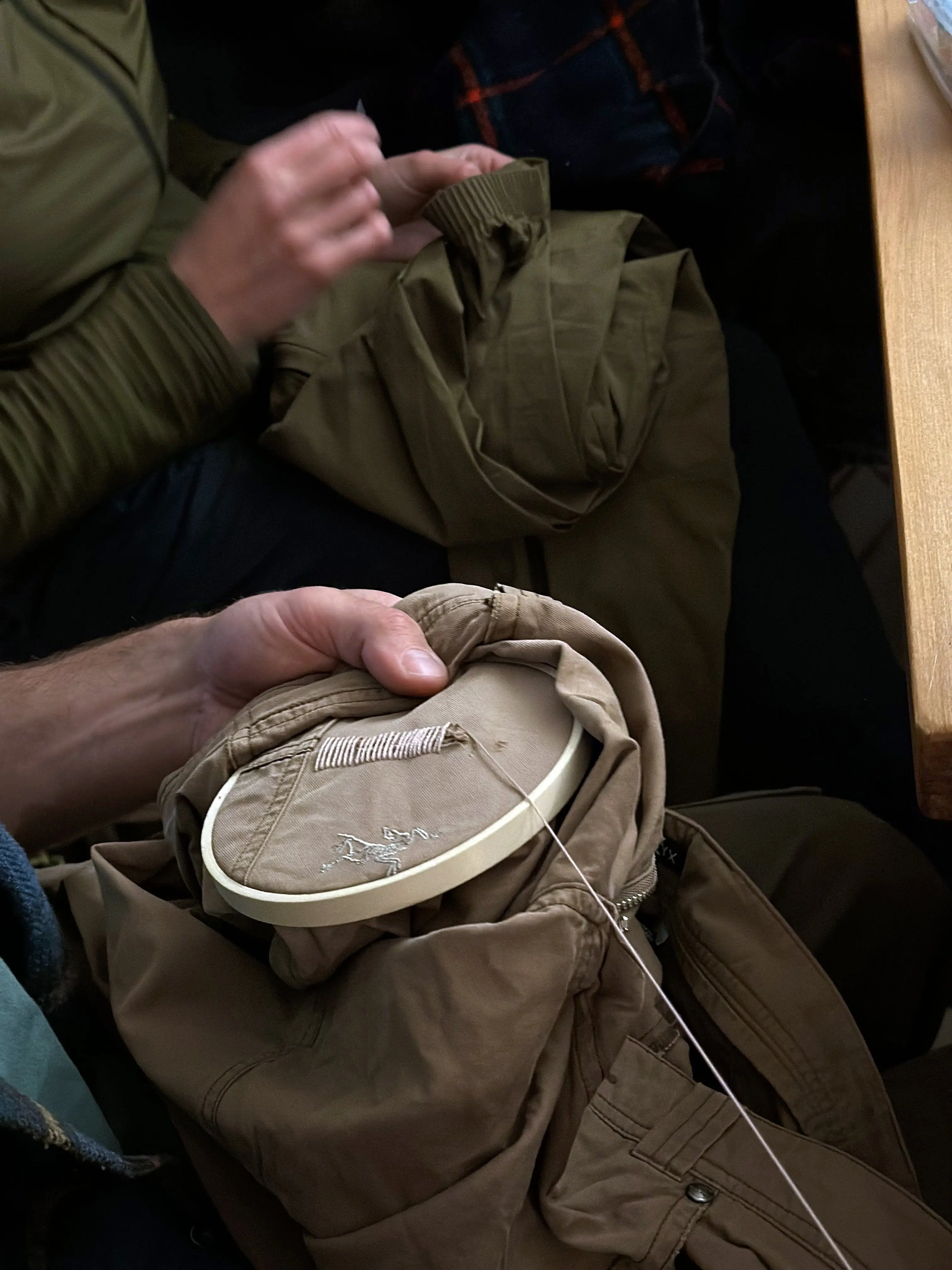
Last month, Wastebusters held its first Loose Threads Social event. It is part of the popular Repair Revolution series, but instead of having an amazing volunteer fix your item, you fix it yourself.
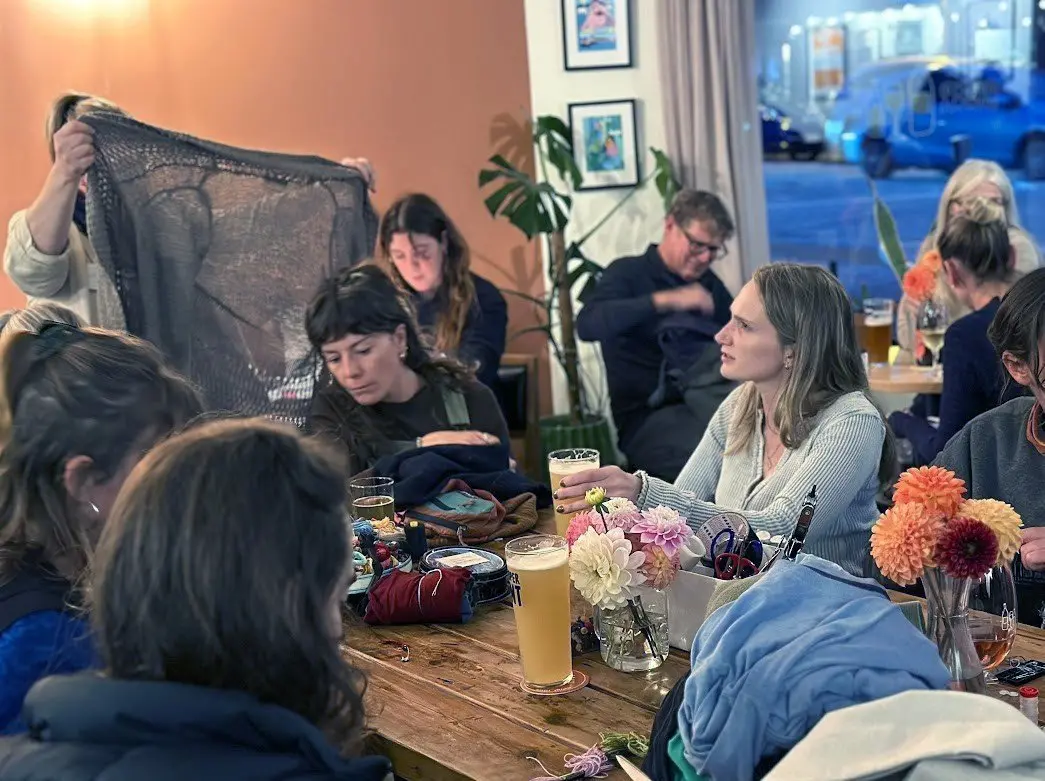
Loose Threads Social was a chance to share skills, build mending confidence and connect with others. Social mending if you will, that just happened to come with a side of social cohesion.
Held in Verve, a cosy bar in Wānaka, the concept was a hit. Tables were packed with fabric, threads and things to fix. Every seat was taken and the conversation between friends and strangers was flowing. Loose Threaders traded methods, showed off their fixes and swapped stories. The things we love to fix have lots of stories, from the dress that travelled from America even though it had a broken strap (now fixed), to the favourite woollen cardigan from France that got some love. Best of all, the night ended with people eager for the next one.
That our things have stories is part of why I love to fix things. Then there is a problem to puzzle through, techniques to try, patience to test and a fair amount of staring at something closely until you understand it. And then it’s fixed (ta da!). That moment, often small, is more satisfying than you would expect.
At Loose Threads, that joy was evident. I sat beside a guy who brought in a holey sock and his mum’s darning mushroom. One bright-yellow honeycomb darn later, he had learnt a new skill, fixed his sock and announced he was going home to fix the rest of his sock collection. That is what a good repair does. It sends you looking for more things to fix. My mending pile, which is often full of other people’s things, speaks volumes to that feeling.
Another person learned that repair is forgiving in a way that most things are not right now. If the fix is wrong, you unpick it and try again. He worked through a fix to mend his shorts, learning how to use a sewing machine and a seam ripper in the process.
This eagerness to turn our attention to making and fixing is noticeable these days. Screen-free, tactile work even has a new name: analogue hobbies, or grandma hobbies. Age old skills that needed a re-brand for people to take notice again.
I love this revival, and the nod to our ever resourceful grandmas and great grandmas. Grandmas made things from scratch, wasted nothing, repaired everything. They worked in a circular economy (before we had to name that too). Full of knowing what materials do and how to use them, what can be salvaged and how. They knew how to position a darn to redistribute load across a wider area so the worn patch does not fail in the same place again. Their hands decoded patterns, algorithms, geometry, tension, and magicked three-dimensional structures from strands of wool. They were engineers who just happened to work at home. Now the quintessential grandma hobby, knitting, has reached the lab.
Research led by Elisabetta Matsumoto, an associate professor in the Georgia Institute of Technology School of Physics, has shown that the elasticity of a knitted fabric lives in the stitch, not in the yarn. Change the pattern, not the material, and you get an entirely different fabric with entirely different mechanical properties. The team found they could mathematically predict how a fabric will stretch or hold firm by adjusting stitch tension and yarn thickness. That predictability has applications in soft robotics, wearable technology and, Matsumoto noted, in reducing the need for synthetic fibres by engineering elasticity through stitch structure alone. These exciting findings could open the door for clothing constructed entirely from natural fibres, engineered to perform without the synthetic aids. Grandma, it seems, was onto something.
Loose Threads Social proved researchers are not the only ones looking to age-old skills for answers. Once this knowledge moved naturally, from generation to generation around kitchen tables and fireside chairs. I imagine it was not taught so much as absorbed through watching, questioning, giving it a go. This is how it happened at Loose Threads. No pressure, just someone who knew something showing someone who wanted to know, and that someone going home to fix the rest of their socks.
I was one of a handful of the event’s designated ‘‘people who know a thing or two’’. Usually I fix at home, so this gathering of fixers was a pleasure. I felt a real energy in the room, meeting new people, hearing their stories and passing on a thing or two I had learnt over the years. The resurgence of analogue skills is more than nostalgia: it is happiness in a fix, connection in the doing, an antidote to heads-down-screens-up living.
If you have a mending pile at the back of your wardrobe consider this your sign. Pick up a needle and come along to our next social. And if you are a fixer who wants to sit, fix and chat, there is a seat at the table for you too. Together we can create a space for a new age of darners, sewists and fixers to flourish.
• Ruth Blunt is communications manager at Wastebusters. Each week in this column writers address issues of sustainability.