

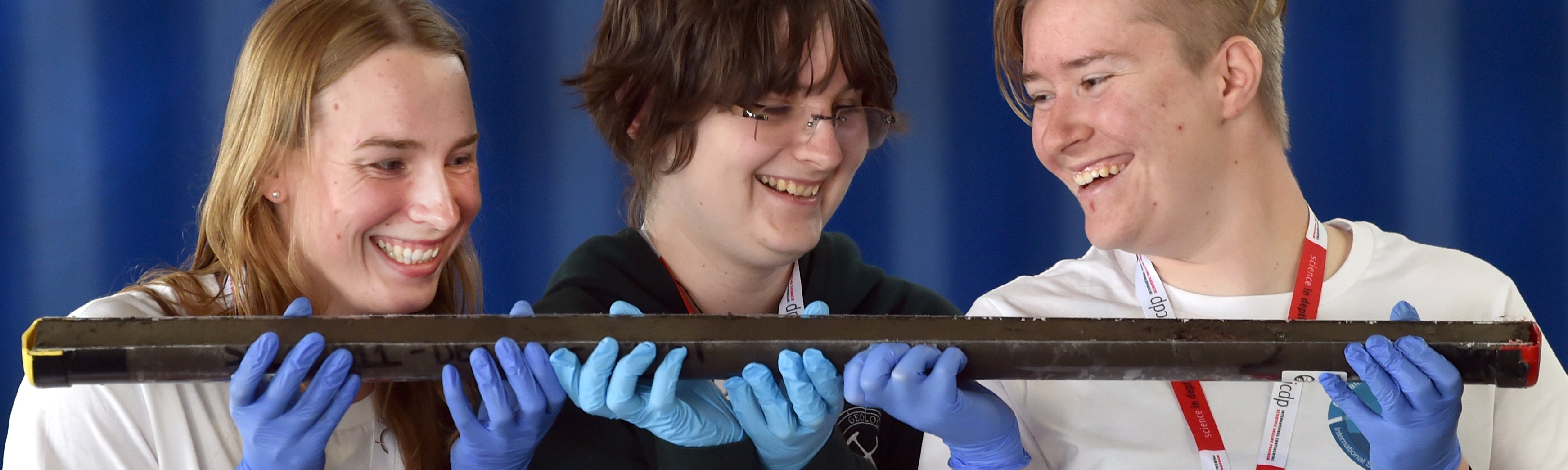
But to University of Otago marine science and geology students such as Petra Arthur, core samples from the sea floor around Doubtful Sound contain a detailed view of the history of how carbon has been absorbed over the past 2000 years.
"There’s mostly mud, but there’s also lots of bits of little shell fragments and there’s bits of tree in there, and they’re really cool to see — we can analyse them to look into the past."
Ms Arthur was one of about 25 students from New Zealand and Australia who took part in a marine geoscience masterclass in Doubtful Sound last week, on RV Polaris 2, collecting core samples from about 400m below sea level.
The 12-day masterclass, hosted by the University of Otago, continues in Dunedin this week, where the students are at the university’s Otago Repository for Core Analysis (Orca) facility, doing scientific research and analysis of the sediment cores.
She said it was a special opportunity for the students to investigate climate and environmental influences on carbon cycling and sequestration.
"Carbon sequestration is when carbon — CO₂ from the atmosphere — gets absorbed in various kinds of forms.
"In our example, it would be CO₂ which is absorbed by trees, and then a landslide might happen from the side of the fiord, and then it gets deposited down in the very depths of the fiord.
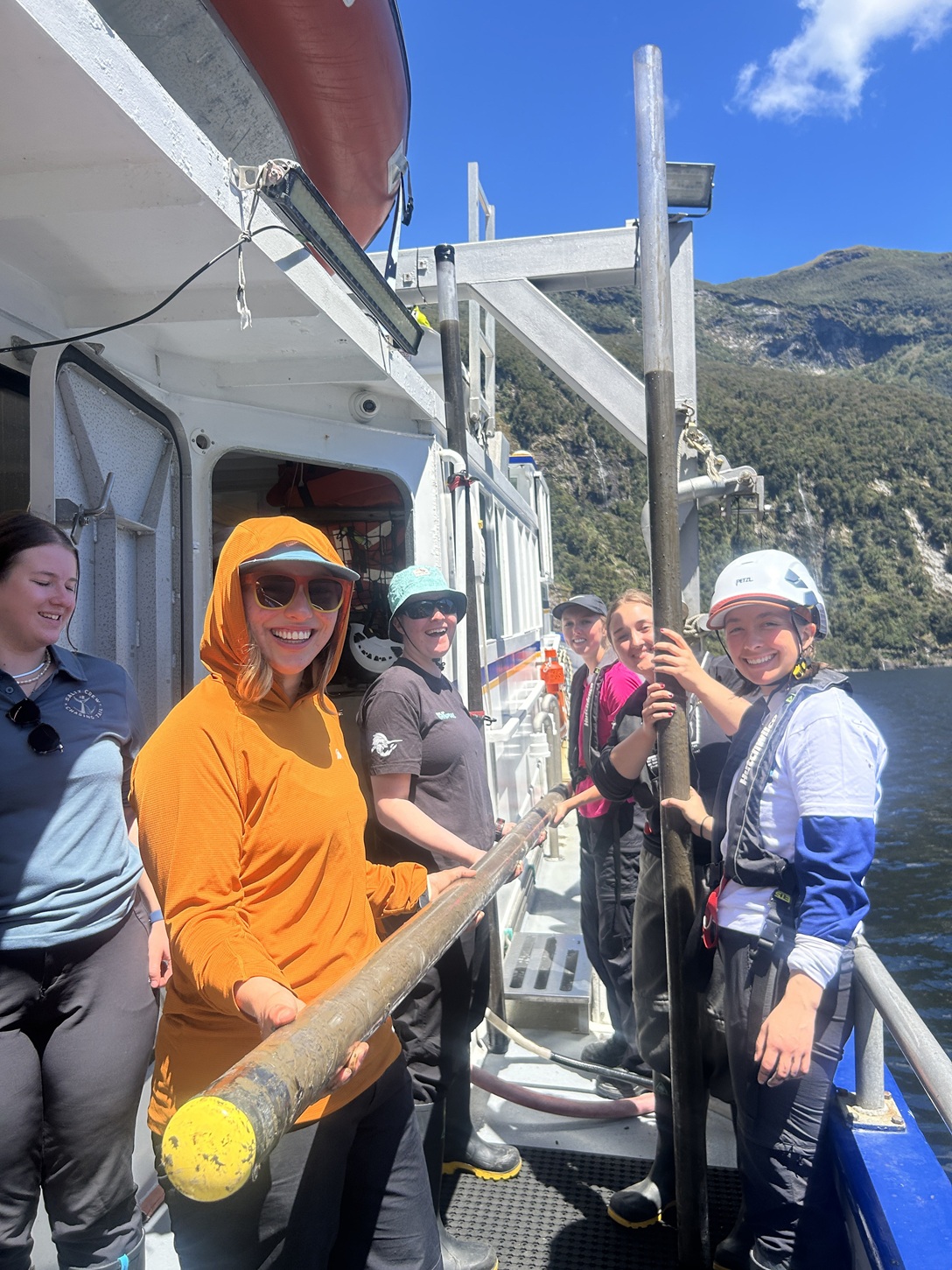
University of Otago geology professor Chris Moy said the students were now analysing the core samples to see how well Fiordland’s fiords absorbed carbon over various time scales.
"What the cores allow us to do is look back in time and essentially track how carbon has been delivered to the fiords over the last millennia or two, based on the length of these fiords.
"What we can tell is how effective these fiords are at taking that carbon and sequestering it — keeping it on the sea floor, essentially.
"We’re really interested in the delivery of terrestrial vegetation that essentially has been pulling carbon dioxide down from the atmosphere and moving it in solid form, in the form of organic matter in the sediments."
It was hoped the core samples would help them work out what environmental management scenarios could be potentially applied to fiords, to ensure they retained carbon on the sea floor.
"We’re also looking at what are some of the holistic things that need to happen, for this carbon sequestration to continue."
The masterclass finished yesterday.


