
PHOTO
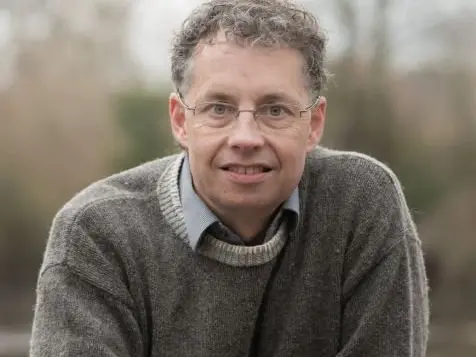
For Carl Bergstrom, misinformation is like a living organism — it can travel across networks and spread through populations like pathogens.
The University of Washington theoretical and evolutionary biologist will be at the University of Otago on Tuesday and Wednesday to give three public talks based on his research into how large language models (LLMs) contribute to misinformation and disinformation, and the ways they are changing society.
Prof Bergstrom is a founding member of the University of Washington Center for an Informed Public, which aims to resist strategic misinformation, promote an informed society and strengthen democratic discourse.
His research analyses the spread of misleading data, especially in science communication, journals and preprints, and he is investigating AI-generated content, such as fake faces, and the "Russian fire hose" strategy of overwhelming audiences with false information.
He is also developing tools and techniques to help the public identify reliable evidence and combat what he calls "bulls..." — false, misleading information.
More recently, he has spent a lot of time actively working to counter false claims regarding the Covid-19 pandemic, vaccines and treatments.
He has created a course at the University of Washington and written a book about how people use data, statistics and graphics to mislead and deceive, and he has developed a second course to help people learn how to live, learn and thrive in a world where LLMs are ubiquitous.
This course will be the subject of his first public talk at the University of Otago, titled "Modern-day oracles or bulls... machines? How to thrive in a ChatGPT world", at noon on Tuesday.
Prof Bergstrom’s second talk, also on Tuesday, will centre around what social media and information technology are doing to society, how society ended up where it is, and where it might go from here.
His third talk, on Wednesday, is more academic.
It focuses on scholarly publishing and how it relies on peer review to identify the best science.
He said finding willing and qualified reviewers to evaluate manuscripts had become an increasingly challenging task, which could threaten the long-term viability of peer review as an institution.
His talk will question what should be done to salvage it.