
PHOTO
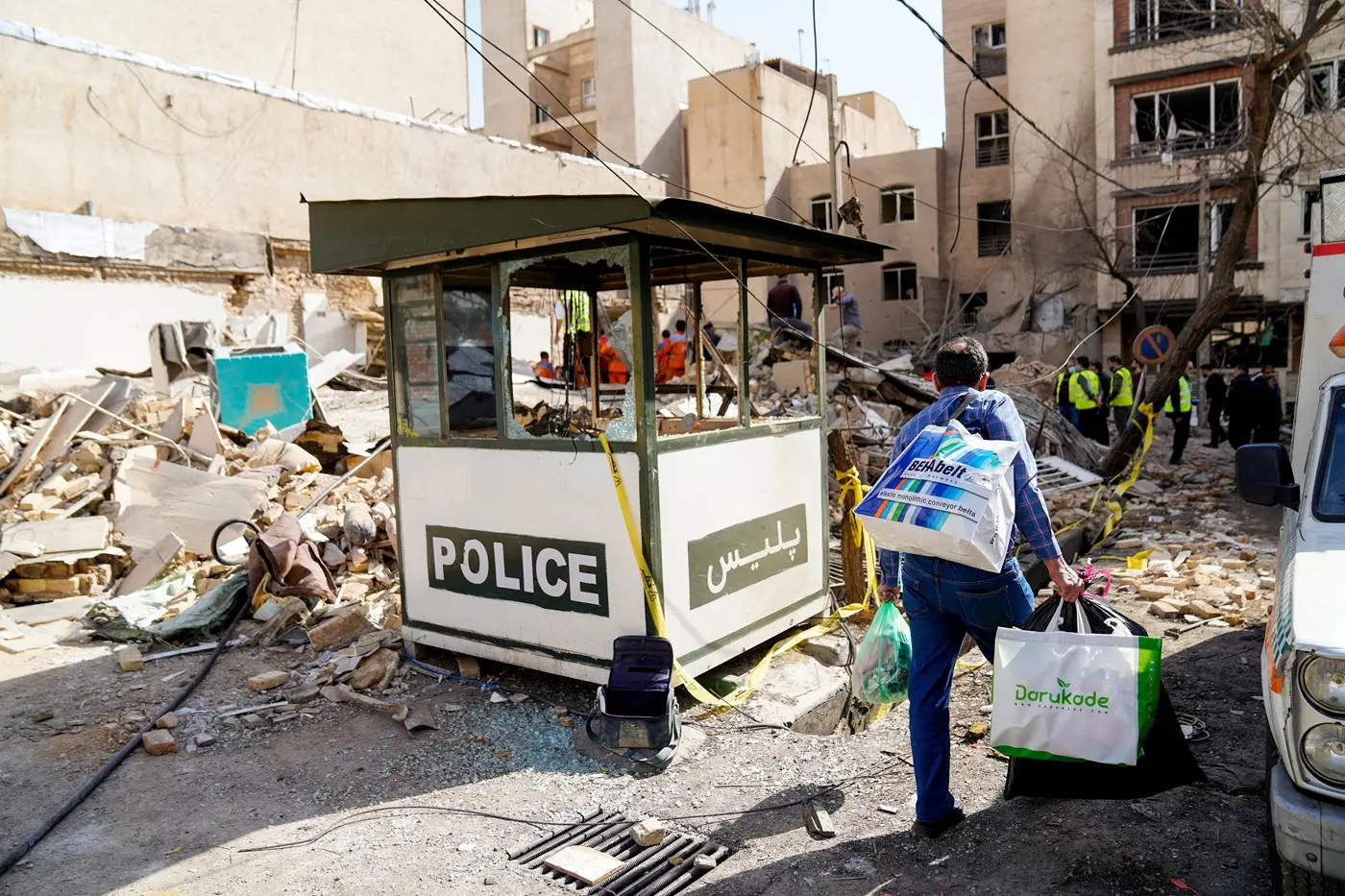
An international relations academic says he does not foresee swift and peaceful regime change occurring in Iran if "the United States and Israel continue to bomb the country".
The United States and Israel launched the most ambitious attack on Iran in decades on Saturday, and US President Donald Trump said Supreme Leader Ayatollah Ali Khamenei had been killed in the operation.
University of Otago international relations academic Prof Robert Patman said while Israel and the United States’ "illegal" attacks on Iran might have removed Ayatollah Ali Khamenei, he did not foresee a smooth or peaceful handover for regime change if "the United States and Israel continue to bomb the country".

"The US has struck because it perceives that the regime in Iran was very weak and vulnerable but there's a danger that it will resuscitate the regime by attacking Iran.
"That is to say, people who have been protesting against the regime may not take kindly to the US using force and killing Iranian civilians in the process in trying to rearrange the political furniture in Iran. Most Iranians, I believe, irrespective of their political views, do not want America to dictate their political future."
"So what puzzles me is the idea that seems to be entertained in Washington and apparently in Tel Aviv, that if you keep killing a number of prominent Iranian officials that will somehow magically improve things."
The US did not seem to have learned from their experiences in Iraq, Prof Patman said.
"It overthrew a very unpopular, repressive regime. But it was not greeted with flowers. Many Iranians that hated the Iraqi Saddam Hussein regime in Iraq subsequently participated in an insurgency against American presence."
Prof Patman said Mr Trump faced "two very difficult options which I'm not sure he's thought through".
"If the regime rallies and continues in place despite the death of the Supreme Leader, then they either have to escalate and put troops on the ground because that's the only way you can achieve regime change.
"Or he may have to de-escalate having not achieved his objective. So you can see the dilemma here for Trump."
This was a "high-risk operation".
"Iran is quite a big country and it seems to me that there's an assumption that the regime will quickly collapse under airstrikes and the Iranian people will take charge of the government.
"I'm not sure that's going to happen — and even if they do, they will want to make sure that it's not America calling the shots and determining their future.
It was also very difficult to carry out with military precision just targeting members of the regime.
"Lots of innocent civilians will be killed.
"I think the United States and Israel may have miscalculated the situation and it's a further erosion of a rules-based international order on which New Zealand and the majority of countries depend upon.
"They could kill the entire Iranian leadership but there would probably be replacements already on hand."
It was vital countries such as New Zealand upheld the international rules-based order, Prof Patman said.
"What's happening is pretty sobering and quite dangerous for us.
"Because if we are witnessing a sort of descent into the law of the jungle, that's great for the big guys, but it's not so good for the majority of countries in the world."