
PHOTO
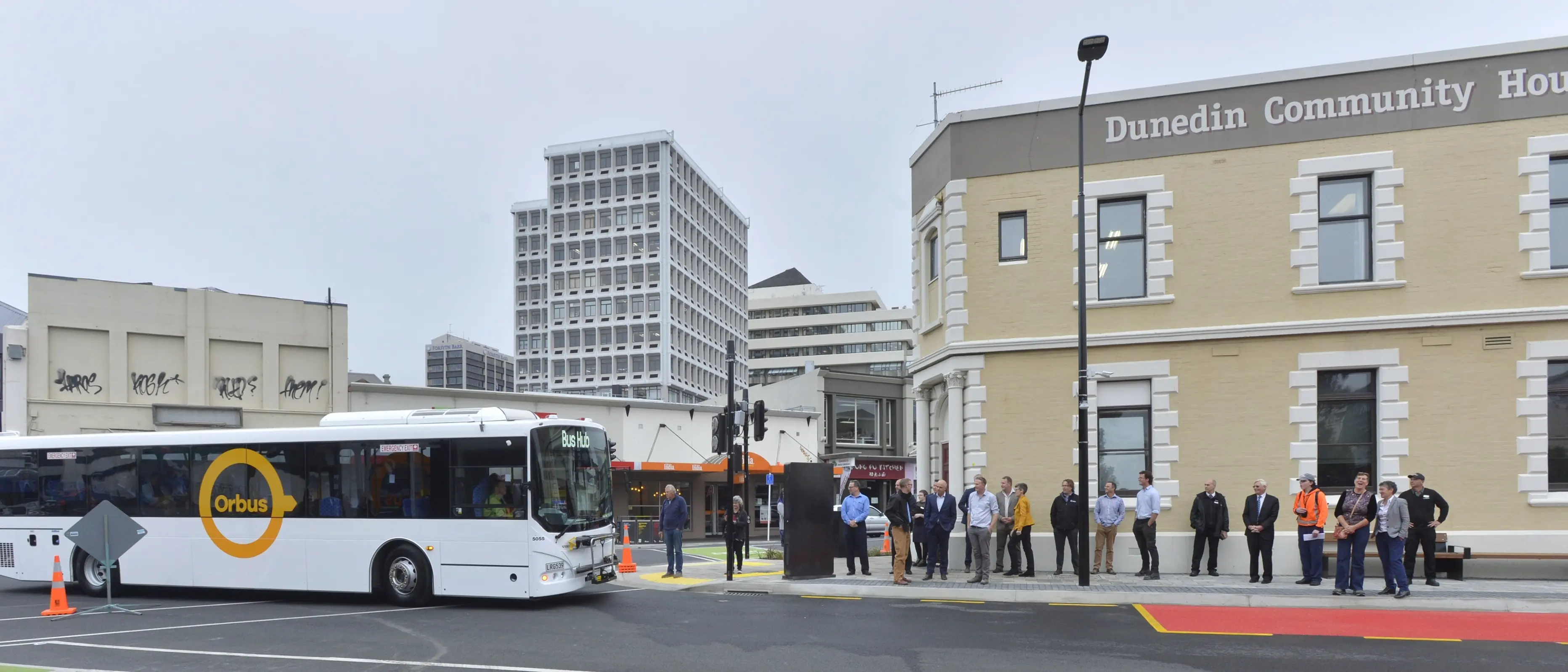
Elderly and disabled people have issues with Dunedin's bus system, advocates say.
South Dunedin community development officer Michell Reddy said feedback from her work in the community, and a recent hui, indicated people were having trouble accessing the buses.
They were struggling to get to where they wanted to go due to route and stop changes, and those with disabilities found the timetable difficult to read and understand.

The routes seemed to be scheduled to suit the bus service, rather than the users' needs, she said.
Grey Power Otago president Jo Millar said the lack of seating outside the Community House stop was an issue.
She had also had feedback from members who were unable to read the timetable.
"[The hub] is designed to move buses. It's not designed for the people using the buses.''
Advocate Carmen Houlahan, who is standing for mayor, said the walk to George St was too far and agreed there was inadequate seating.
People asked for seating during the hub's consultation period, but it was not sufficient, she said.
"People asked for seats and what they've got is the bar.''
Mrs Houlahan said there had been issues with elderly being unable to use their SuperGold cards, which entitled them to free travel during off-peak hours.
The hours included 9am-3pm and from 6.30pm onwards on weekdays.
She highlighted the experience of seniors who boarded a bus before 3pm free of charge, and due to scheduled delays at the hub, had to pay for the second half of their journey.
During some journeys, buses stopped at the hub for about 20min and users paid for the second half when they got back on the bus, or changed to another, after 3pm when they had started their journey before 3pm.
"If you want people to use the bus you have got to make our city more bus-friendly.''
Otago Regional Council transport manager Gerard Collings said when the network changed at the end of 2017 it was designed on a "hub and spoke model'', connecting residents across Dunedin to the city and beyond in a simple, well-connected format with regular frequencies.
While the changed format may have inconvenienced people who were used to a particular stop and route, it had benefited others, he said.
"The hub has made transferring and connecting to other services in the inner city much easier. For some people it means walking a block to George St, but for others it has provided easier access to the hospital.''
Taking buses away from the Octagon eased congestion in the city, and passenger numbers had increased since the hub opened, he said.
The large electronic Wayfinder screens and eStops at the hub were designed for the visually impaired, with large lettering and audio buttons.
"We are also looking to revise the format and increase the size of the text where possible for on-street timetables.''
Mr Collings said since Community House was a heritage building, the council was restricted with its seating options.
He confirmed SuperGold cardholders could travel free with a GoCard during off-peak hours.
"When we make changes - whether that is a new timetable design or a change to a service - we consider the integrity of the entire network and how it will best support most of our bus users. ''
JESSICA.WILSON @thestar.co.nz