

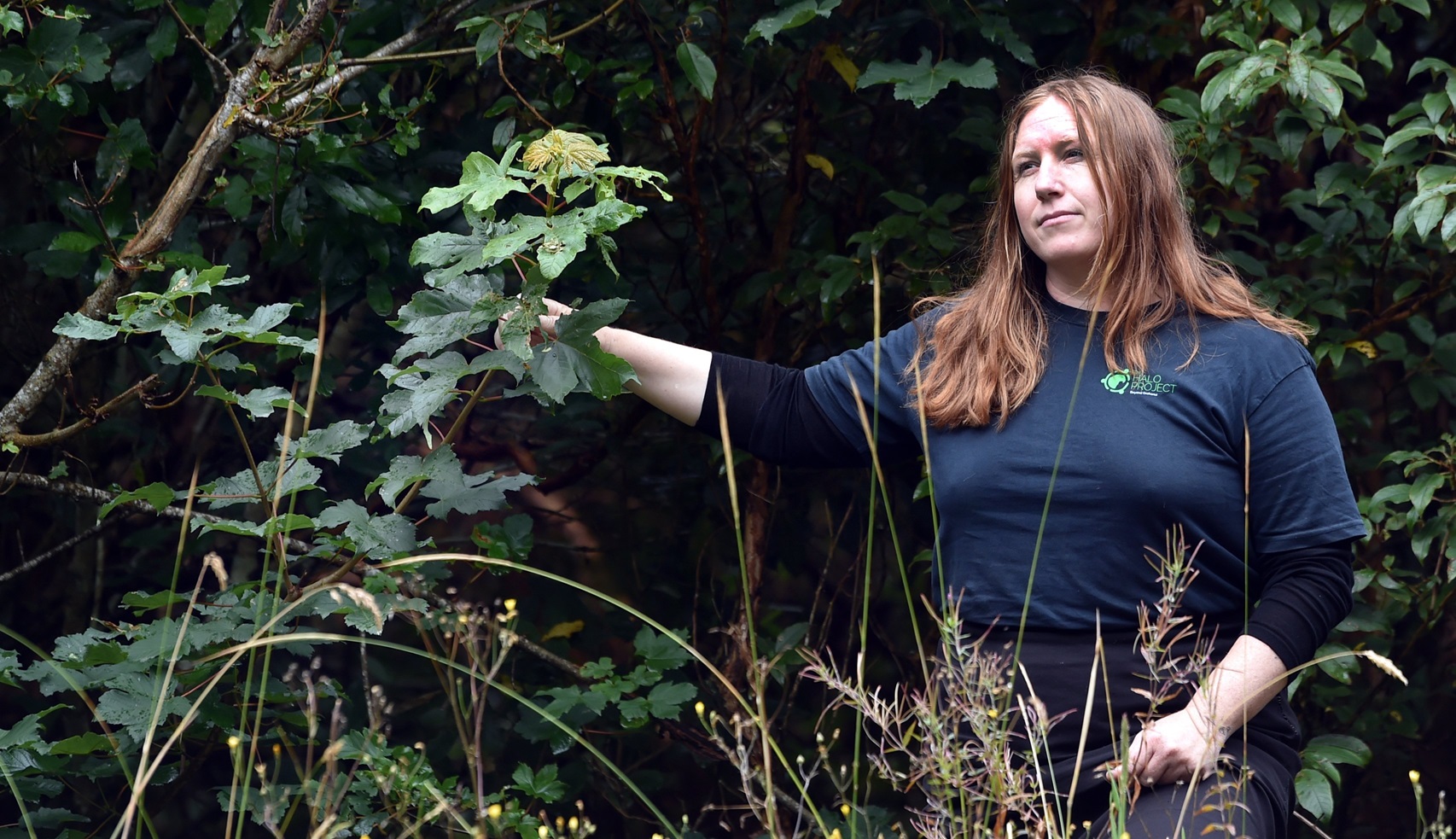
The Halo Project has received funding from the Otago Regional Council targeting the pest plant sycamore.
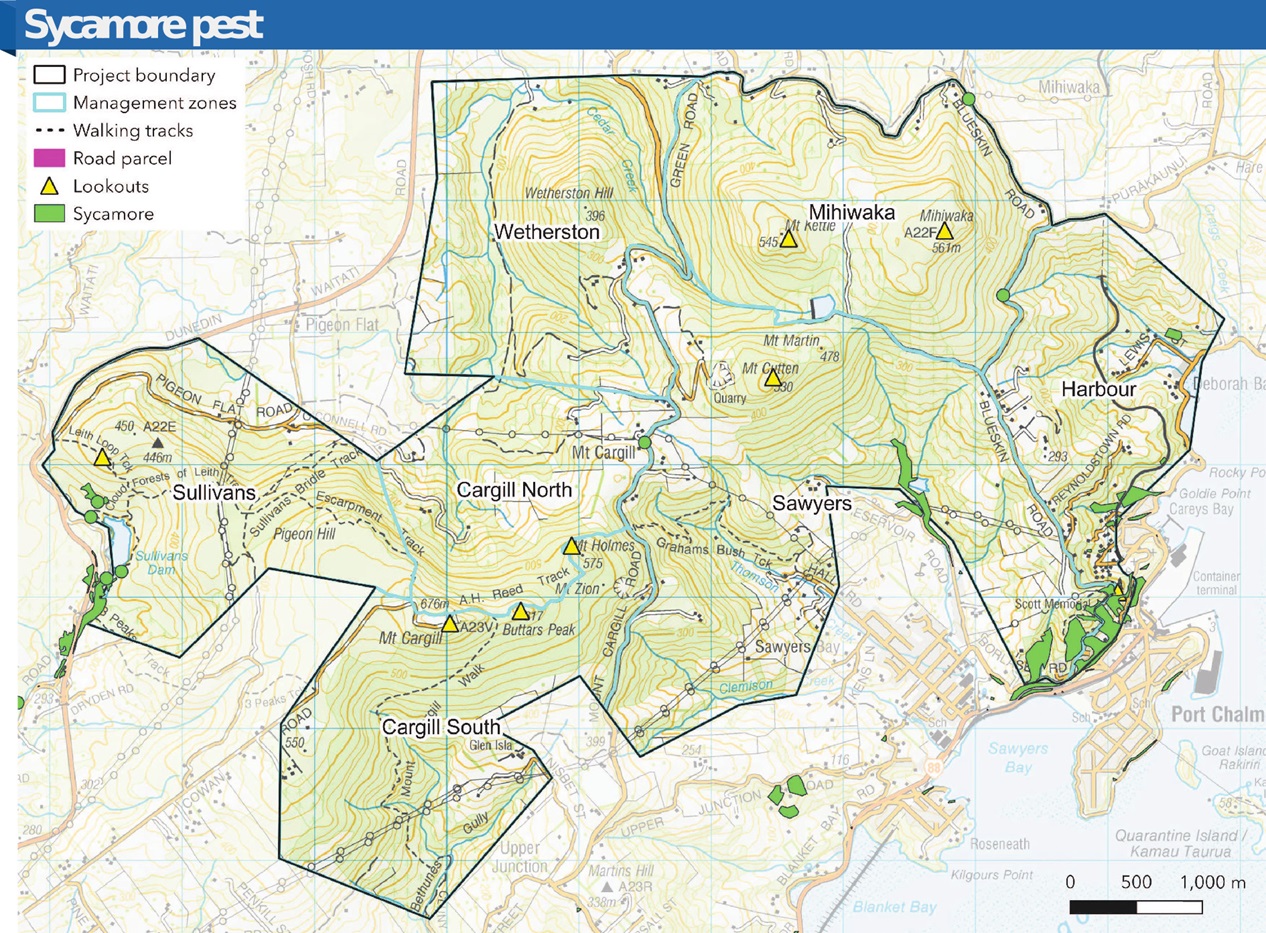
In 2018, there was 270ha of land in the West Harbour area which had sycamore presence, with high density in 60ha and sparser density in 210ha.
Halo Project's Source to Sea project manager Alice Macklow said sycamore trees were steadily expanding into native forest remnants.
Its biology explained its success in spreading.
Each adult tree produces tens of thousands of wind-dispersed seeds annually.
They eventually grow into dense stands that suppress the native understory.
As a tall deciduous tree, sycamore trees drop heavy autumn leaf litter that smothers small seedings.
In the Upper Leith Valley and parts of the West Harbour, infestations threatened native forest.
Ms Macklow said in Dunedin’s fragmented landscape, invasive canopy trees can shift forest composition over time.
Ms Macklow said the trees could be managed using a range of control methods, most of which required herbicide treatment due to the tree’s strong ability to resprout.
Seedlings could be hand-pulled where numbers were low, although dense patches required significant effort.
Small to medium saplings were typically cut and the stumps immediately treated with herbicide gel to prevent regrowth, with follow-up monitoring recommended.
Larger trees could be controlled in the same way, or by drilling and filling or frilling techniques to deliver herbicide directly into the trunk.
She said sycamore was widely distributed across Dunedin, particularly within developed and fringe-urban landscapes.
There was plenty more to do in other areas.
Large populations are established in areas such as Ravensbourne, around Signal Hill Reserve, through the Port Chalmers Town Belt and neighbouring suburbs, at Ross Creek, the lower Leith catchment and across Flagstaff Forest extending into Silverstream Valley.
There are smaller clusters above Logan Park High School and parts of the Town Belt.
Scattered individual trees can be found throughout the city.


