
PHOTO
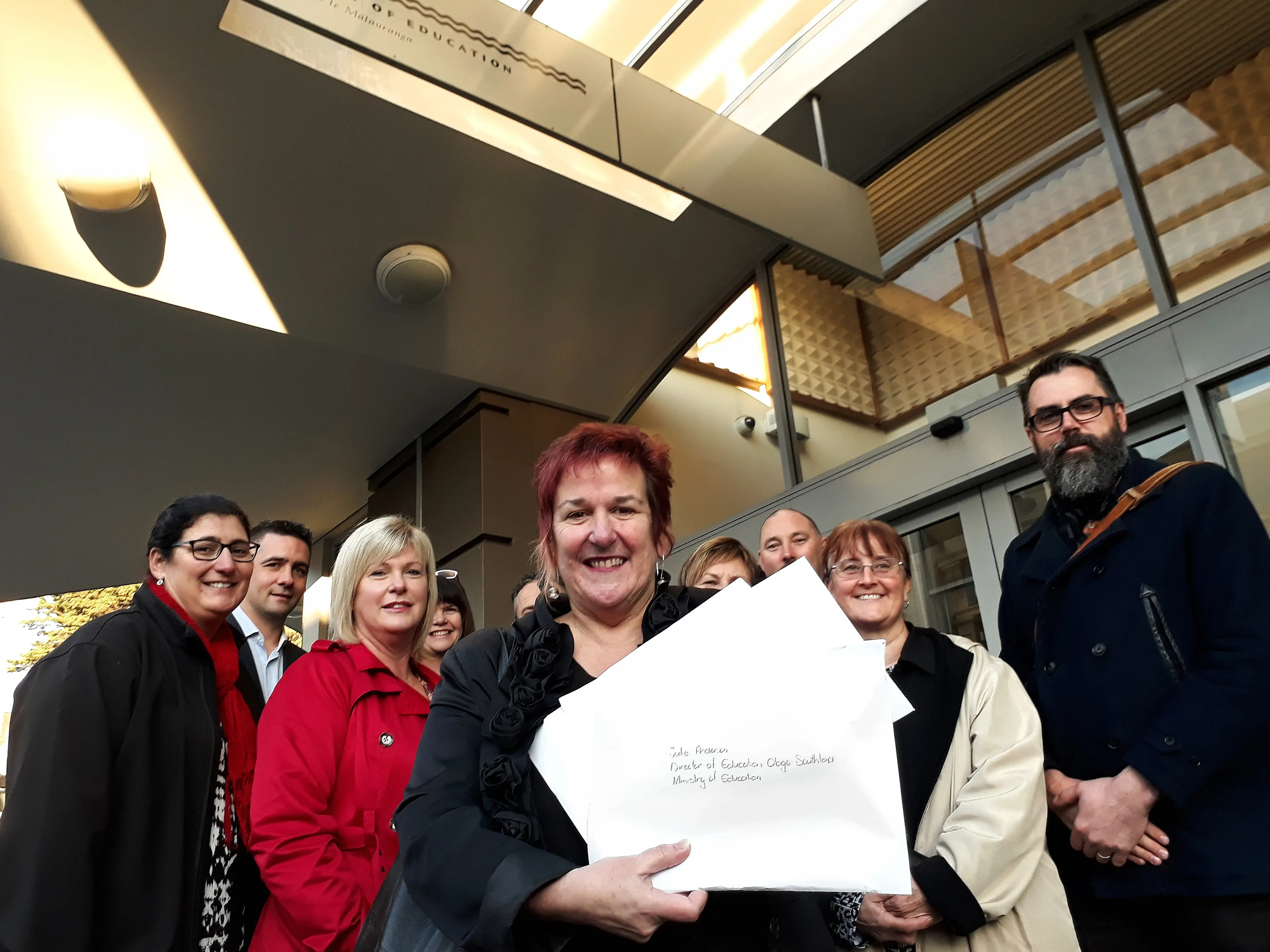
Otago and Southland primary school principals are disengaging from Ministry of Education work streams, including task forces and working parties, to raise awareness of pay parity issues in the sector.
A small group of Dunedin primary principals also hand-delivered more than 100 letters to the ministry's offices in Dunedin yesterday, from primary principals across Otago venting their dissatisfaction at the Government's latest pay offer.
New Zealand Educational Institute (NZEI) national principals' council chairwoman and Abbotsford School principal Stephanie Madden said the letters would show the Government how angry principals were, and that it had not addressed their issues.
''There's an awful lot of goodwill between principals and the Ministry of Education in a lot of the work we do, and today is an indication that that goodwill is running out.
''We need the Government to listen to the issues that we've got.''
She said that as a show of their dissatisfaction, primary principals would now disengage from work streams such as ministry task forces, working parties and work groups until they saw progress on the key issues.
''One of the key issues for us is around pay parity. In the teachers' offer, the Government showed they understood that issue, but for primary school principals, that is not on the table.
''Primary principals have the same qualifications, the same years of experience, the same size of school, yet they don't have parity [with secondary principals] and that's not fair.''
She said another issue was senior teachers and deputy principals were often earning more than their principals.
''In many situations, particularly with the increased offer to teachers, there will be many places around the country where principals in small schools will be earning less than their deputies in the same school. We're hearing stories of that already.''
Under the new pay scale, the top of the teachers' scale is higher than the starting rate for principals.
''We're not going to be able to attract quality leaders into principalship if this continues. It's just not going to happen.''
Mrs Madden said it was still too early to say whether principals would strike over the issues.
''NZEI is certainly talking to its members at the moment about what actions they are prepared to take.''
Ministry secretary for education Iona Holsted said principals' pay had always been determined by school roll size, and remained so under the latest offer.
She said some small-school principals were paid less than teachers with leadership responsibilities in larger schools.
''This is not new and the current offer does not change this.
''Our offer was weighted in favour of principals of our smallest schools, who got proportionately bigger increases than other principals. The offer also included additional staff for small schools.''
The ministry will meet NZEI president Lynda Stuart later this week to look at a range of principals' issues through an accord, including pay parity.