

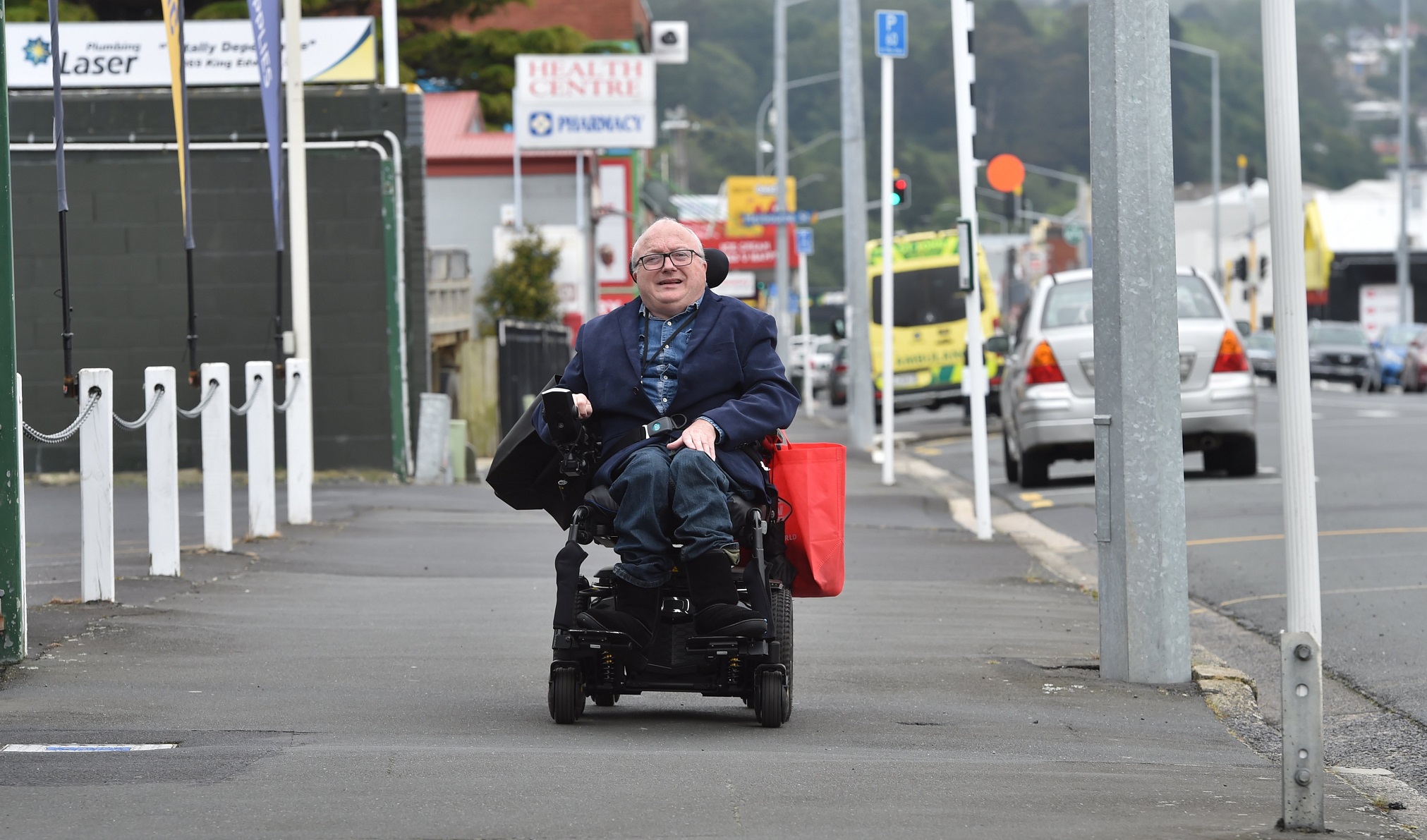
Dunedin Taxis has been accused of taking hours to attend to customers, leaving people with disabilities stuck waiting on the footpath, unable to get home.
Dunedin Taxis manager Antonio Seiuli accepted there was a problem and blamed it on a shortage of drivers.
Disabled Persons Assembly NZ senior community connector Chris Ford said issues with taxi companies had been exacerbated by Covid-19 and deregulation, and people with disabilities were paying the price.
"I heard just the other day a complaint about someone not being picked up, and the taxi driver saw who they were, saw they were a wheelchair user, and used that as an excuse and went away," he said.
Limited hours of operation also made it difficult for wheelchair users to be out late.
"People for example are being taken somewhere by a taxi company, and when it comes time to getting home, that taxi company isn’t available.
"We’re really experiencing issues in accessing public transport, particularly taxis. It was an issue before Covid, but it’s become a real concern now."
A Dunedin woman with disabilities, who declined to be be named, said she depended on taxi services to get groceries and regularly waited up to an hour for Dunedin Taxis.
She said she had once endured a two-hour wait, despite making multiple calls and being assured a vehicle was on the way.
"It was such a horrible experience, and it’s happened on a consistent basis since I’ve been catching the taxis for two years.
"It’s not the drivers’ fault. They’re frustrated and they’re embarrassed. The guy who picked me up after an hour wait was absolutely mortified."
Mr Seiuli said he was aware of complaints and the problem was down to staffing shortages.
"The first thing people need to know is that because of Covid we’ve been short-staffed some 30%. That is the contributing factor to a lot of delays."
When asked about people being left waiting hours without a taxi, he said there had been occasions where that happened.
"Again, it comes back to short-staffing," he said.
Mr Ford said part of the trouble locally comes from the liquidation last year of Southern City Taxis, which was a major provider of wheelchair-accessible taxi services.
"We understand what the challenges are that face the industry, but in reality, we as disabled people are paying for it, in many different ways."
The owner of Big John’s Mobility Express, John Gonsalves, said he got into the industry in recent years because of how poorly people with disabilities were being treated by other companies.
He was also under pressure to meet demand and had been forced to decline requests.
"It’s been an ongoing problem in Dunedin for a long time," he said.


