

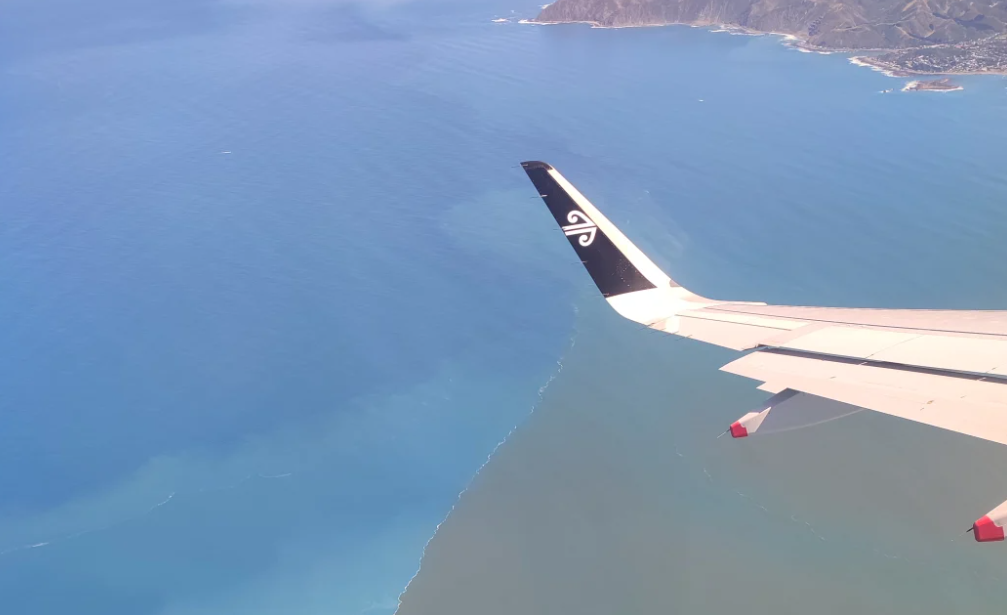
On Wednesday, the Moa Point wastewater plant's lower floors completely flooded when sewage backed up in the 1.8km outfall pipe, which normally sends treated wastewater into Cook Strait between the North and South islands.
Since then raw sewage has been spewing from a five-metre pipe directly into the southern coastline.
In a notice this morning, Wellington Water said screened wastewater was now discharging to the long outfall pipe again.
Last night staff were able to get the long outfall pipe partially operating and the screens at the treatment plant working, Wellington Water said.
The screens remove items like sanitary pads and wet wipes from the wastewater before it is discharged.
Wellington Water board chair Nick Leggett said at present, they were only able to pump 900 litres per second of wastewater through the long outfall pipe.
"Which is most of the wastewater during an average day, but during peak flows throughout the day we will need to use the short outfall pipe."
Wellington Water said discharging screened wastewater out to sea via the 1.8km long outfall pipe allowed for greater dilution of the wastewater in the Cook Strait, reducing the amount of untreated wastewater flowing around the coastline.
However, the risk to public health still remained.
"For this reason, our advice to the public remains the same: we strongly advise that people avoid the coastal area along the south of Wellington until further notice," Leggett said.
"Do not enter the water or collect kaimoana from this area. Do not walk your dog along the beach."
Leggett said though the situation remained serious, it was good to see progress.
"The team are working carefully throughout the weekend to increase the volume of flow through the long outfall pipe as much as possible, to reduce the use of the short outfall pipe.
"However, the situation remains complex and at this stage we are unable to provide a timeframe of when this may be."
Wellington Water said work was also being done to drain the clarifier tanks.
"There is some biological material that settles in the clarifier tanks that cannot be trucked, and the plan is to drain this via the long outfall pipe, where it is diluted."
The company said it was important to remove this material as soon as possible before it had a chance to become anaerobic and septic.
"This would cause an odour problem and pose a significant health and safety risk to workers onsite."
However, it cautioned that while the material was being drained people could expect to see an increase of murky water in the area 1.8km out to sea.
Divers were also inspecting diffusers at the end of the outfall pipe today.
"Shoreline inspections and clean-up of debris on the coastline around the short outfall continue three times daily, with a focus on completing these at low tide."
A rāhui remains in place and covers anything the water touches/can touch with the high or low tides. While it is in effect, no public activities should be undertaken on or around the beaches on the southern coastline.
Mayor Andrew Little previously described the event a "catastrophic failure" and said there must be an independent inquiry into what happened.
There were also concerns the leak could contaminate a nearby marine reserve and put several species at risk.


