
PHOTO
The Government has rejected a capital gains tax.
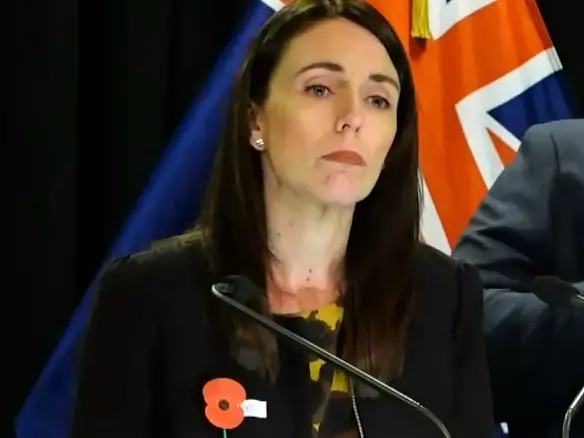
Prime Minister Jacinda Ardern made the announcement today.
"The Tax Working Group gave the Government, and the country, an opportunity to look at the fairness of our tax system and debate options for change," she said.
"All parties in the Government entered into this debate with different perspectives and, after significant discussion, we have ultimately been unable to find a consensus. As a result, we will not be introducing a capital gains tax.
"I genuinely believe there are inequities in our tax system that a capital gains tax in some form could have helped to resolve. That's an argument Labour has made as a party since 2011."
The rejection comes after the Tax Working Group (TWG) made close to 100 recommendations in its February report and cost an estimated $2 million to run.
Under the group's proposal, a CGT would cover investment properties, land, shares, business assets and intangible assets like intellectual property.
The Tax Working group report's recommended a CGT would exclude the family home, cars, boats and artwork.
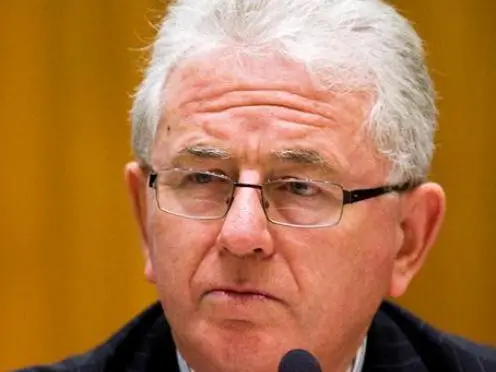
Group chairman Sir Michael Cullen said the CGT would bring in $8 billion over the first five years.
The revenue raised from the CGT would help pay for other initiatives – such as cutting the personal income tax rate and cutting KiwiSaver tax rates for low and middle-income savers.
The TWG also mooted new environmental taxes which would punish companies for polluting.
Three members of the group prepared their own 'minority report' – which suggested the amount of extra revenue the tax would collect would be "relatively low".
After the group's report was released, Finance Minister Grant Robertson said it was "highly unlikely" that all of the recommendations would be implemented.
He also said the Government would make its decision as to which of the TWG's recommendations the Government would be adopting in April.
National is strongly opposed to any form of a CGT and has vowed to repeal any law the Government puts in place which would give effect to such a tax.
After the Government says which of the TWG's recommendations it will be adopting, officials will get to work on drafting legislation to make it law.
The Government would pass any legislation to implement any policy changes arising from the report before the end of the Parliamentary term.
Robertson had promised no policy measures would come into force until 1 April 2021 – "giving New Zealanders the chance to vote on any decisions made by the Government".
Capital Gains Tax timeline:
2011: The Labour Party, led by Phil Goff, campaigned on implementing a 15% capital gains tax.
2014: The Labour Party, now led now by David Cunliffe, again campaigns on the same CGT policy.
2015: In the May's Budget of this year, then-Prime Minister John Key introduced a bright line-test, which required income tax to be paid on any gains from residential property, if sold within two years – a form of a CGT.
2017: The Labour Party campaigned on setting up a Tax Working Group, which would look into a CGT.
2017: In November, the Tax Working Group was set up and Finance Minister Grant Robertson ruled out any capital gains tax on a family home, or the land under it.
2018: In February, the Government extended the bright-line from two, to five years.
2018: In September, the Tax Working Group released its interim report which provided a bit more detail on its thoughts on a CGT.
2019: In February, the group released its final report which included a recommendation for a CGT.
2019: Today, the Government announced its decision on which of the Tax Working Group's recommendations it was adopting.