


A long-promised project to shift Stewart Island to solar power could be under way within months and operational by Christmas, officials say.
Rakiura's 480 residents currently rely entirely on diesel for power generation, and are bracing for a steep rise in prices due to the conflict in the Middle East.
Southland Mayor Rob Scott said officials were looking at ways to speed up progress on the planned solar farm, which secured a $15 million government loan last year.
The council was about to apply for consent and, under the Resource Management Act (RMA), was seeking to classify the project as emergency works to be carried out in exceptional circumstances, he said.
"This is certainly an exceptional circumstance ... so we're currently exploring Section 330 of the RMA, which would enable us to get started while going through the consenting process," he said.
The aim was to begin construction in June, and it could not happen soon enough, as far as Scott was concerned.
The solar farm would reduce diesel consumption for electricity by about 75 percent, he said.
"I guess the project's kind of proven its value now. One of the reasons why we've done it is not just to address the high power prices that residents on the island were already paying, but to take out some of this vulnerability, the susceptibility to high diesel prices which we're experiencing right now," he said.

In a normal year, her household spent between $500 - $800 per month on electricity, she said.
Ross, who is also the co-owner of the island's only petrol station, said fuel at the pump had gone well over the $4-a-litre mark.
"We are expecting this winter is going to be a lot harder than other winters have been for us," she said.
Southland District councillor Jon Spraggon, from the Rakiura ward, said the council-owned power station had issued a warning to residents to conserve electricity where they could.
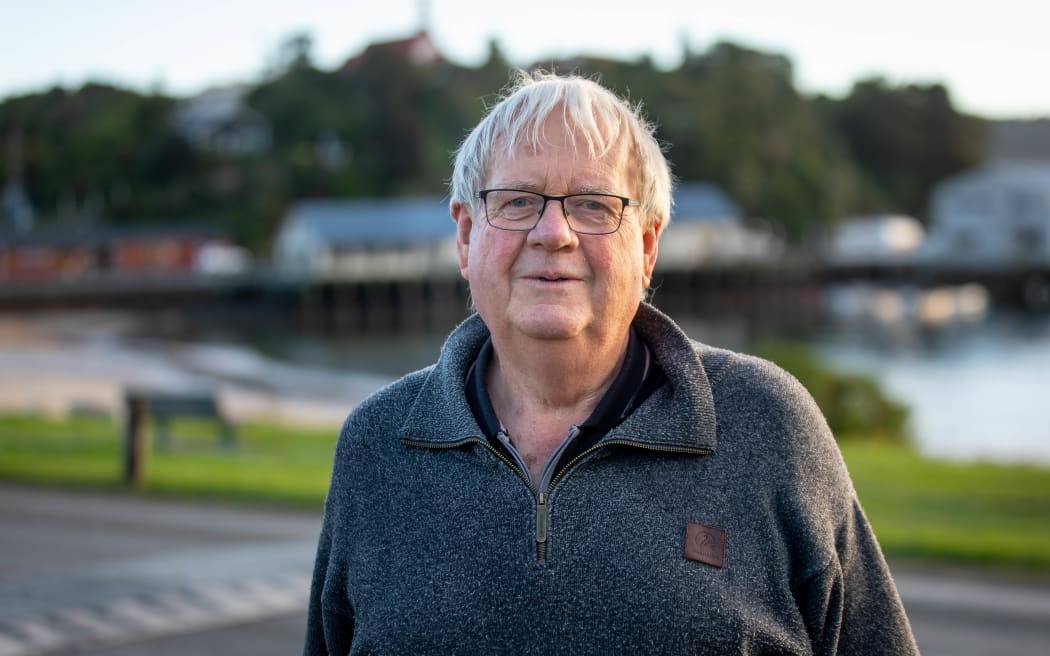
There were limitations on how quickly the council could raise the price, but residents could expect a few "short steps" up in their power bills, he said.
"There's no way we can hold the power price down, and people are going to have to look at the amount of power that they actually use."
Spraggon said he was optimistic the solar farm could be running by Christmas.

Residents seeking their own solar power
Local business owner Helen Cave said the power bills for her hotel and fish processing business were already more than $10,000 a month each.
The potential for further price hikes this winter had prompted her to explore alternatives, she said.

Resident Morgan Bellworthy Hamilton said he, too, was looking at ways to reduce his own reliance on the grid, even with the promise of an island-wide transition.
"We've been talking about solar, and I think it probably is the best option for us, as a house, to get solar," he said.

Rakiura's climate made it a difficult place to rely on the sun for electricity, he said.
"I'm pretty excited for it, but I don't know how much it's actually going to fully cover and what sort of price reduction that will truly create ... we don't have a lot of sunshine here just because of where we're positioned in the world, and we get a lot of cloudy days," he said.
"But I'm really grateful that our Southland mayor has finally taken the true steps to get it across the line and get the money from the government to pursue this."

A project long in the making
Stewart Island's solar project follows a mooted hydro scheme and a failed wind farm.
Ross said when it came to switching the island off diesel, there had been years of false starts.
"When we moved here 14 years ago, we seemed to be in the exact same conversation. And they kept on doing studies, and they would revisit these studies, and nothing happened. And we're thinking, if this is the third, well, probably fourth time that it's been reviewed, and nothing is going to come of it again, it would be so incredibly frustrating," she said.
Scott said while there were still hurdles to work through, residents could be assured that this time was different.
"I don't accept failure and I've given the island my word that this project's going to go ahead," he said.
The volatility of global oil markets was another reason to make the project happen as soon as possible, he said.
The solar farm would not bring prices down to mainland levels, but would help lower bills and make them more predictable, he said.
"We do need to factor in the maintenance and the replacement of the solar farm. So the prices are still going to be relatively high, but they are going to be certain and stable," he said.


