


Greendale sharemilkers Marc and Megan Lalich have pencilled in the next five years to get to dairying’s ultimate prize of farm ownership.
They can probably scratch a year off that.
Several high payout seasons have helped them close in on their goal and they are ahead of schedule.
Mr Lalich said they would hopefully be in a position after this season to look at investing in a farm within five years.
They would look at any opportunity, but ideally buy a farm locally.
"An opportunity is an opportunity, 100%, at the end of the day, but Canterbury and this sort of area near this farm if we are lucky. Definitely Canterbury is where our network is here now. We know the weather conditions and the seasons and roughly what it’s going to do in most months so this is definitely our area."
Mrs Lalich said the projections showed they were on track to invest in some shape or form in a dairy property in four years, depending on payouts.
She said it was always hard to know which direction future payouts would go, but they were happy to save hard while it was high.
"Our big end goal, which we are on track to doing, is farm ownership. That is where we are tracking to and are building equity growth and track that every year. We actually use the 10-year equity tool with Dairy NZ, which is a good one to be able to see how many years off we are and what sort of production we have to hit to keep on track."
Mr Lalich said they had fine-tuned their system this season to chase more milk in a good payout year and that included pre-mowing before cows went on a paddock and keeping the fertiliser and water on target.
Their nutritionist has adjusted the herd’s feeding to hit high protein levels and get more milk in the vats.
The exact detail of what farm ownership might look like for them has yet to be fleshed out, but they have a few ideas.
Once their equity base gets to a level that meets the approval of bankers they suspect they will initially invest in an equity partnership.
A business venture outside of farming is on the cards too, so they can expand beyond the dairy industry.
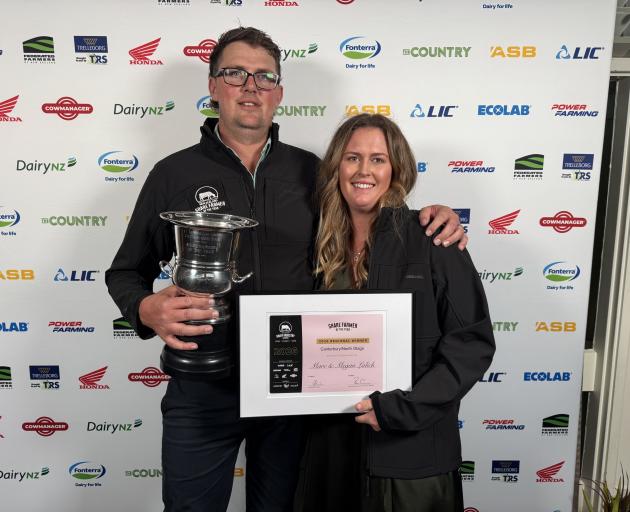
The couple were named Canterbury/North Otago Share Farmers of the Year and are in the running for the national title to be revealed in May.
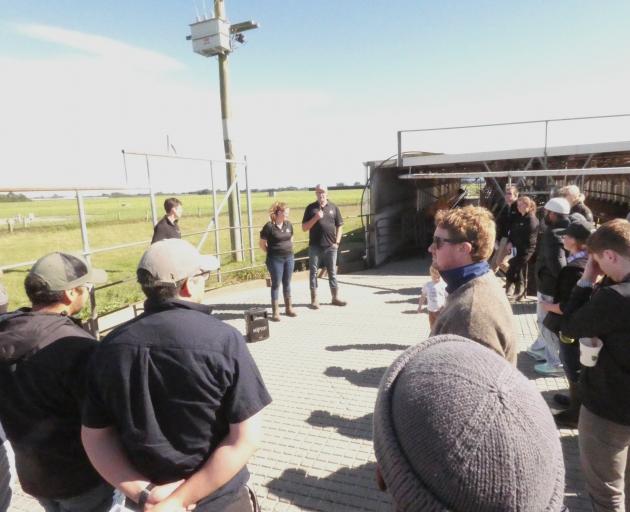
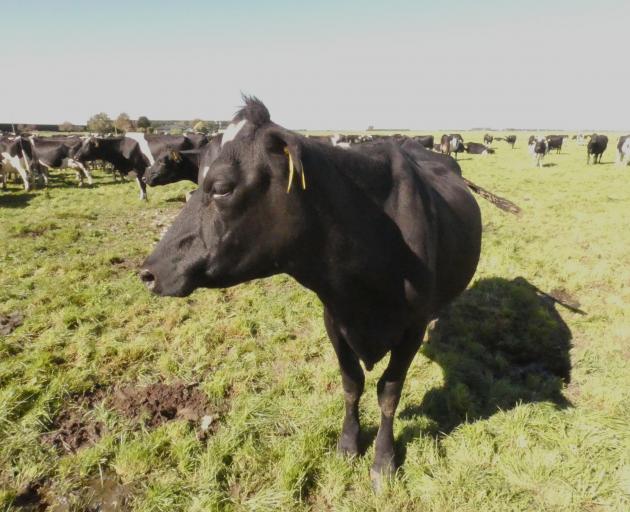
They are 50:50 sharemilkers for his parents, Peter and Susan Lalich, on 173ha Pinevale Dairies, milking 685 cows at the spring peak.
This season they are on track to produce 375,000kg of milk solids at 550kg per cow and 2168kg per hectare.
That would shade last season’s result of 357,000kg at 530kg per cow and 2063kg per hectare.
Farming is in their blood with Mr Lalich born into dairy farming in Waikato’s Te Awamutu, while she was brought up on a sheep and beef farm at Fairlie.
After entering construction as a school leaver and finishing an apprenticeship, he worked his way up in dairy farming roles.
"I was building, but still loved dairy farming and that became the main goal. I just really enjoy the animals, the outside and machinery. It’s a good passion of what we do and our main passion overall is probably the cows. I became farm assistant to 2IC and then went off to Canada cowboying for a year to come back to contract milking."
They met in 2017 when she was a calf rearer at Pinevale, while studying for a commerce degree in agriculture at Lincoln University.
Until then, Mrs Lalich had never milked a cow and eased into calf rearing and relief milking before returning to her sheep and beef roots to go shepherding for four years.
Mr Lalich began contract milking at Pinevale in 2019, with Mrs Lalich joining the company three years later.
They went to a larger farm in North Canterbury’s Culverden, milking 780 cows for a season, before returning to the home farm to become 50:50 sharemilkers.
Mrs Lalich said they took the Culverden contract for a year as his parents wanted to have "one last crack" at farming before they took on a 50:50 role.
"Then we got to August and they said we could have the opportunity to do it and this is our third year now and we have loved every minute of it."
Her strength is the financial and paperwork side of the business.
During the 2023-24 season 49ha of land leased from the neighbour was added to the main platform, allowing them to increase the herd from 540 cows to 680.
Their goal is to breed better cows to help them expand and grow their nest egg over the next few years to build enough equity to get to farm ownership.
This will see them produce as many milksolids as they can without their costs going pear-shaped.
"As long as we feed them and water them and keep everything up to date then everything else will lead to good production. That is a big part of our passion and we both really enjoy the business side of it. We want to go further into the business and get better at it and learn more around budgeting and the financials."
Last season their dairy operating expenses were $3.55 per kilogram of milksolids.
This compares well with $3.76/kg — the benchmark for 25 farms with 50:50 sharemilkers in Canterbury.
Aside from their labour and depreciation costs, they tracked below the other operations for the likes of supplement, grazing, support block, animal health, fertiliser, electricity, breeding and other costs.
An operating profit of $4741 a hectare topped the $3444/ha benchmark, while the gross farm revenue of $5.85 per kilogram of milksolids just shaded the average.
Their milk production for 2024-25 of 2066kg was above the 1753kg benchmark.
Mrs Lalich said their major costs were labour, grazing and feed.
Grazing costs were a result of cows being wintered off the farm to the neighbour’s property and calves raised on a run-off block, at market rates.
They tried to contract out as much as they could for feed, minerals and other inputs to keep prices low, she said.
"So our dairy operating profit was up a lot last year and we did a lot of milksolids per cow at 530kg to the factory and we feed all our calves out of that as well. This season we are on track to do about 560kg to 570kg milksolids per cow and currently 19,000kg ahead of last season so we are doing good. Our operating profit last season was $4741 per hectare which compares with $3444/ha for the benchmark. We pride ourselves on being above that benchmark."
Cows were kept on the farm for as long as they could and they tried to continue twice a day milking into May with lower performers taken to the works by the end of that month.
Mrs Lalich said they had never budgeted with discipline on a monthly basis as contract milkers as they were accurate with their final figure, but had upped their effort in this area.
"Unexpected costs do come in at certain times of the year so it is something we are getting better at it and are trying to be as accurate as we can."
Mr Lalich said they were trying to lift their equity as quickly as they could.

In the off season they winter 700 cows on a combination of Lalich farmland and the lease block.
Calving carries on from July 20 to September 30 with all calves fed on colostrum initially and then supply milk rather than milk powder which works out to be about 12kg of milksolids per cow in calf.
An original "bread and butter" 40-a-side herringbone milking shed dates back to when the farm was converted in 1998, but has been upgraded with automatic cup removers and auto teat spraying technology to make it more efficient.
"Everyone wants a new shed, but we have got pretty good cow flow through here and they come in and go straight out," Mr Lalich said.
"There are no corners or anything so we will put the cups on this afternoon to 2pm with two people on so probably a third of the time it’s just one person and everyone will be home and washed up by 5pm easily. So we do get the cows through pretty easily and probably no slower than a rotary deck."
After making a plan with their animal nutritionist they have worked out extra feeding to lift milk production is financially viable under the payout this season.
Feeding in the shed is restricted to 1.5kg per cow. Last season 1096kg of imported supplement was mostly fed in the shed with silage meeting cow feed demand. They have increased silage harvesting off the platform.
In their system they stick to pregnancy testing via the milk and avoid intervention during mating, with first time bulls mated to the heifers and the last heifer calving on September 25.
This system works for them with their empty rate for the herd at 11% last season and 13% this season as they focus on high milk production.
Mr Lalich said this still gave them plenty of room for culling out older, lame or weaker performing cows with replacements.
They liked high-producing, medium-sized cows, he said.
Artificial breeding started on October 18 for five and a-half weeks followed up by the bulls put out until December 16 and a short gestation for the final two weeks finishing December 29.
A strong three week calving for the herd resulted in them being half way through calving by August 8.
More heifers were raised because of the strong market as a result of more dairy conversions in Canterbury and they aimed for about 25% of surplus heifers outside of their replacement needs.
Beef bulls are put over lower performing cows.
Pinevale has 39 days of stored water and the neighbouring lease block 15 days.
This was the first year they entered the Dairy Industry Awards, winning a prize package of just over $8000 and merit awards for farm hygiene and innovation, animal wellbeing, recording and productivity, environmental sustainability and business performance.
There is family history in the competition, with the Lalich seniors winning the Waikato contest in the 1990s and repeated this with a Canterbury title in 2018.
"We knew a bit about it, but didn’t think too much it was for us," he said.
"And then my parents and our bank manager and accountant saw us sit on our hands a bit with not a heap on and pushed us that it might be a good step to take."
He credits their small team of Jowan, who has been with the for three years, and more lately his cousin, Sunny, for them continuing to run the sharemilking business while they put their energies into preparing for the competition.
The couple are Synlait suppliers and credit being part of its Lead with Pride programme for doing so well in the environmental sustainability category.
Shallow silt loam, free-draining Lismore soils catch annual rainfall of 650mm to 800mm and their sharemilking operation is in the Ellesmere Waihora nutrient zone.
So they are disciplined about leaching and have a policy of under-cooking their fertiliser needs.
The Selwyn River is 4km away and to reduce leaching they do not spread fertiliser on the front 100m of a paddock in a high nutrient area where cows sit and fertilise the soils naturally.
Last season they put on 171kg of nitrogen a hectare which was well under the 190kg cap and this season they look like they will be even lower.
On Pinevale they have recycling and waste reduction systems and have invested in diesel machinery with fluid automatically injected into the exhaust system to reduce emissions.
They are big on their greenhouse gas obligations and have plantain in their lease block, reduced imported feed and are breeding towards having fewer cows producing more milk to help reduce emissions.
Judges praised them for their business awareness and financial discipline.
Runners-up in the competition were Chileans Raul Benavente and Vaneza Escobar, contract milkers for Deebury Pastorals Partnership, milking 1080 cows on 286ha in Ashburton, while third place-getters Vojtech Jelinek and Eliska Jelinkova are contract milking for Hurunui Limited Partnership at Culverden, milking 631 cows on 214ha.


