PHOTO

A three-year trial monitoring the effectiveness a detainment bund to reduce stormwater contaminants leaving a sheep and beef farm in West Otago and entering Pomahaka River is complete and scientists are now crunching the data.
Earth Sciences New Zealand land and water scientist Andrew Hughes, of Hamilton, was part of a team who collected data at the inflow and outflow of stormwater at the bund.
The results on how much sediment the bund trapped would be presented at the end of next month, Dr Hughes said.
Provisional results show about 80% of sediment was being trapped by the bund including about 70% of phosphorus and 60% of nitrogen.
‘‘These bunds are very effective.’’

For a bund to be effective it needs to be installed in areas vulnerable to sediment movement, Dr Hughes said.
National bund project manager and geologist John Paterson, who was born and raised in East Chatton near Gore and now farms deer and sheep in Rotorua, said the provisional results looked very promising.
The size of a catchment dictates the required size of a detainment ponding area.
An effective pond stores at least 120cu m of stormwater per hectare of catchment.
‘‘That’s really important. Farmers can go out and dig a hole and say they’ve made a sediment trap but so often they’re grossly inadequate.’’
To find the best site to install a bund required geographic information systems mapping.
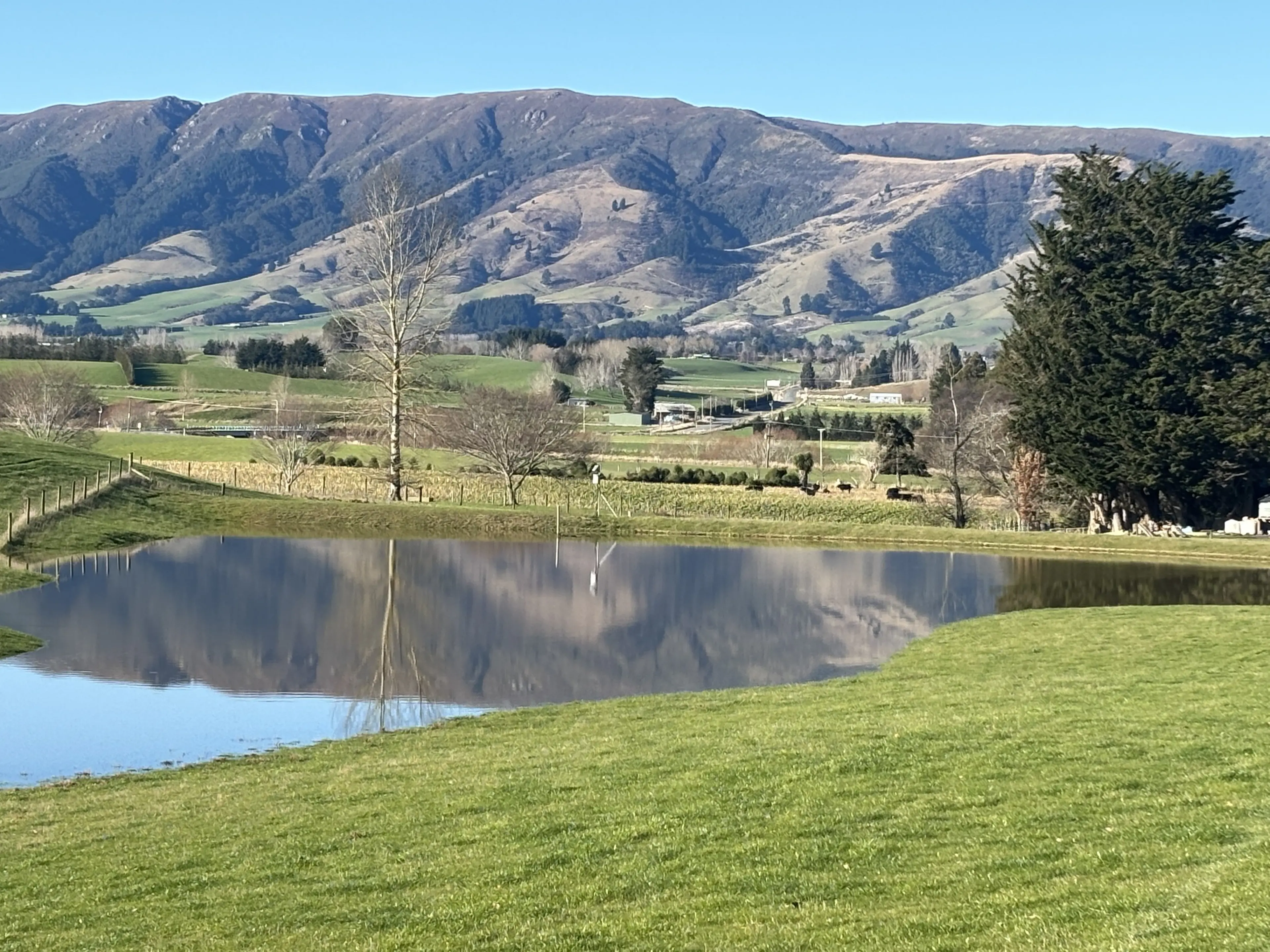
He was pleasantly surprised by the provisional results in West Otago, as he thought the heavy clay soil on the West Otago farm would be ‘‘stubborn’’ compared to more porous soil at a bund trial site in the North Island.
He praised Al Body for being a role model, as it might encourage more farmers and catchment groups to follow his example.
Practice change in agriculture could take up to 20 years, he said.
He believed government agencies should be providing assistance to encourage farmers to install bunds.
‘‘There’s a value to the community if everybody does this.’’
Another benefit of bunds being installed in the right places, was the potential for reducing peak storm flows.
‘‘If farmers do enough of these detainment bunds structures across their landscapes then effectively they’re restoring the hydrology back to what it was before development.’’
Detainment ponds could hold the peak of the storm, a task once done by native vegetation cover.
Mr Body and his wife Julia volunteered to install the bund on their family farm in early 2023.
The provisional results were encouraging, Mr Body said.
He was ‘‘100% keen’’ to build more bunds but would wait for their farm to be mapped to find the most effective place and scale for the bund.
‘‘You really need to be storing enough water, otherwise the exercise is a bit pointless. If you’re not trapping enough, then you’re wasting your time.’’
As his first bund was a trial site, it was ‘‘a big, Rolls-Royce type structure’’.
Once he had the mapping data, he expected bunds on smaller catchments on his farm could be created for up to $3000 and be as effective as the trial site.