
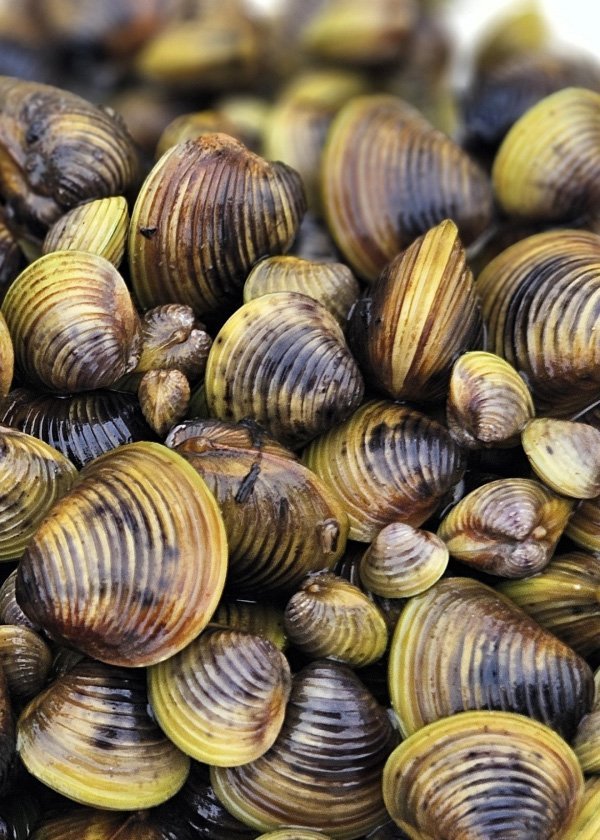
Dr Nathan Kenny’s advice is to panic a little bit, and don’t keep clams — especially gold clams.
The University of Otago biochemistry researcher has received a $350,000 grant from the Ministry of Business, Innovation and Employment He Ara Whakahihiko Capability Fund, to combat the invasive species which is threatening freshwater ecosystems in New Zealand.
Gold clam (Corbicula fluminea) was first discovered in the Waikato River in 2023, and is now spreading widely across the Waikato and moving into Taranaki.
They are native to eastern Asia and are widely established in North and South American and European freshwater lakes and rivers.
The 50-cent-coin-sized clams are hermaphrodites, and a single clam can fertilise itself and produce thousands of juveniles, leading to rapid population growth.
Dr Kenny said they could outcompete native species for food and habitat resources, disrupt ecosystems and lead to declines in native populations.
He said they posed a major threat to kākahi (freshwater mussels) and altered ecosystem dynamics, including nutrient cycling and sediment composition which in turn affects water quality, and potentially leads to further ecological changes.
They could also cause economic impacts by clogging water intake pipes and machinery, and could have an impact on recreational activities such as swimming and boating.
While gold clams have not yet been found in the South Island, Dr Kenny warned there was a high chance this could change.

He is now working with Ngaa Muka Development Trust, on an existing molecular tool which uses the gene-editing technology CRISPR to detect very small quantities of DNA in water.
"We’re looking to adapt it so that if you were looking to keep a particular waterway free of gold clams you could use this tool on a regular basis and detect even if one clam got in."
He said if one was detected in a waterway early enough, it would be possible to physically remove them.
But left undetected they would spread very quickly and would be too labour-intensive to eradicate.
"If you go up to some parts of the Waikato at the moment they’re like a carpet. It’s astonishing how quickly they can reproduce.
"So being able to detect them early on definitely helps, because you can also then go back and recheck in a week or two to see whether your intervention was useful."
He said the gold clam probably came to New Zealand in the ballast of a recreational vessel, and it could be easily moved around by other boats, fishing gear or swimming gear, so there was a high potential for it to establish itself anywhere in New Zealand — including Otago and Southland’s freshwater lakes and rivers.
"If we can effectively stop Corbicula from spreading, that can only be good for Aotearoa.
"And the quicker we can get these tools into the hands of people looking for them, the easier it will be to stop problems going forward."


