
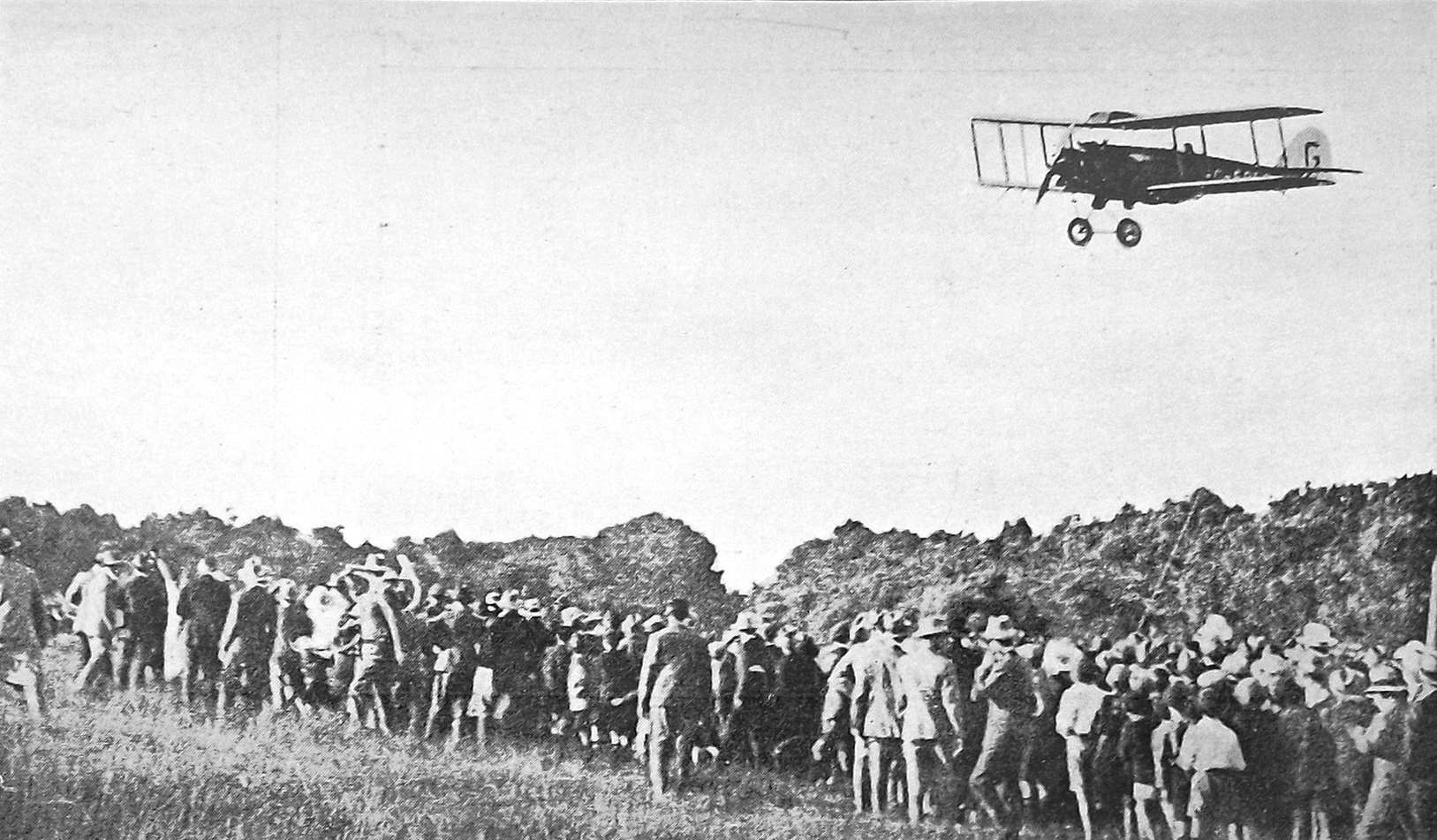

The object of Mr Cobham’s flight, which was commenced on January 13, is to make observations in connection with an extension of the service from Britain to Egypt.
Māori and pākehā
There may seem to be a shade of conventionality at this time of day in the formal interchange of compliments between the Maoris and their friendly partners in the occupancy of New Zealand. Amicable co-operation has been established for so long that happy relations are taken for granted. But there was nothing conventional or superfluous in the circumstances of the "hui" which took place at Tikitiki on Wednesday, when the Governor-General, with the Prime Minister in attendance, was accorded a loyal and cordial reception. The Maoris are superbly endowed with the genius of ceremonial observance. They ardently cherish ancestral traditions and the memory of fierce warfare both before and after the arrival of the European emigrant, but are still more passionately thrilled by the thought of their relationship with Imperial Britain and the martial part which they played in the Empire’s hour of dire peril. They are strong in the sense of historic continuity, and at Tikitiki on Wednesday there will have been lively appreciation of his Excellency’s reminder that his father, Sir James Fergusson, had visited the district as Governor of New Zealand half a century ago, and his consort’s father, the Earl of Glasgow, some twenty-five years later. Members of the Maori race have held, and still hold, important positions in the public service, and the Governor-General’s hope that the number will increase is pretty sure to be realised. Sir Charles Fergusson gave wise counsel to the Maoris in respect to the desirability of guarding the records of their ancient history and traditions, even the mythological traditions which represent so much of the inherent poetic spirit of the race. The Prime Minister added an appeal for the preservation and development of those arts of Native craftsmanship which have won universal admiration. It might not be all incongruous to imagine the shade of George Augustus Selwyn, the great first Bishop of New Zealand, whose devotion to the Maori was fervent to a fault, hovering in benediction over the impressive scene. — editorial
Illuminating figures
Mr D. Tannock, speaking at the Dundas Street Floral Festival on Wednesday evening, championed the climate of Dunedin for general purposes of horticulture. Against those who contended that Dunedin had a wet and cold climate he quoted the figures from Government statistical records.
Mean Temperature: Auckland 60.1 degrees Fahrenheit, Wellington 57.1, Christchurch 53.7, Dunedin 63.8, Invercargill 51.8.
Days of Frost: Auckland 1, Wellington 34, Christchurch 109, Dunedin 72, Invercargill 73.
Rainfall: Auckland 66.66 inches, Wellington 48.21, Christchurch 25.33, Dunedin 32.9, Invercargill 36.73.
Rainy days in the year: Auckland 196, Wellington 164, Christchurch 135, Dunedin 130, Invercargill 197.
"Shielded from the south-west wind, tropical and sub-tropical plants will grow out of doors in Dunedin." — ODT, 19.2.1926


