


However, those who had been overlooked were soon suggesting they be given due recognition, so here goes.
The building in Albany St which is now the Playhouse Theatre is 150 this year having started life as the Oddfellows Hall.
It opened on May 24 1876 with a Grand Concert featuring top local talent including Tom Bracken reciting Bingen on the Rhine, a poignant reflection on the loss of a soldier which was a guaranteed tear-jerker at any Victorian concert.

In 1915 it was used by the Spiritual Scientists Church on Sundays and in 1918 Rona Fabling, later an international figure in the world of spiritualism, gave lectures with titles like, The Other Side of Death: Contacting the Invisible — a popular subject after the carnage of World War 1.
The Oddfellows Hall had its most high-profile decade as the Playhouse Theatre, the home of the Southern Comedy Players from 1963. William Menlove and Bernard Esquilant converted the old hall into a 100-seat theatre with a cafe and exhibition space.
The opening season featured Bruce Mason’s The Pohutukawa Tree, directed by the playwright. The company brought professional theatre to towns in the South Island and later undertook national tours and for a time, the Playhouse Theatre was home to New Zealand’s only professional theatre company.
Most of the theatre world’s luminaries of that time performed in the Playhouse. In 1971 it was sold, along with an extensive collection of props and costumes, to the Dunedin Repertory Society which continues to use the hall for amateur and community productions.
In recent times the society has been planning upgrades to the theatre and last year secured a $3.34 million grant from the Dunedin City Council.
Another $2.5 million is needed to do all the work that’s required and next week’s three performances of the Grand Old Playhouse Music Hall is one of many fund-raising ventures.
Let’s hope the restoration lasts another 150 years.
But wait. There’s more.
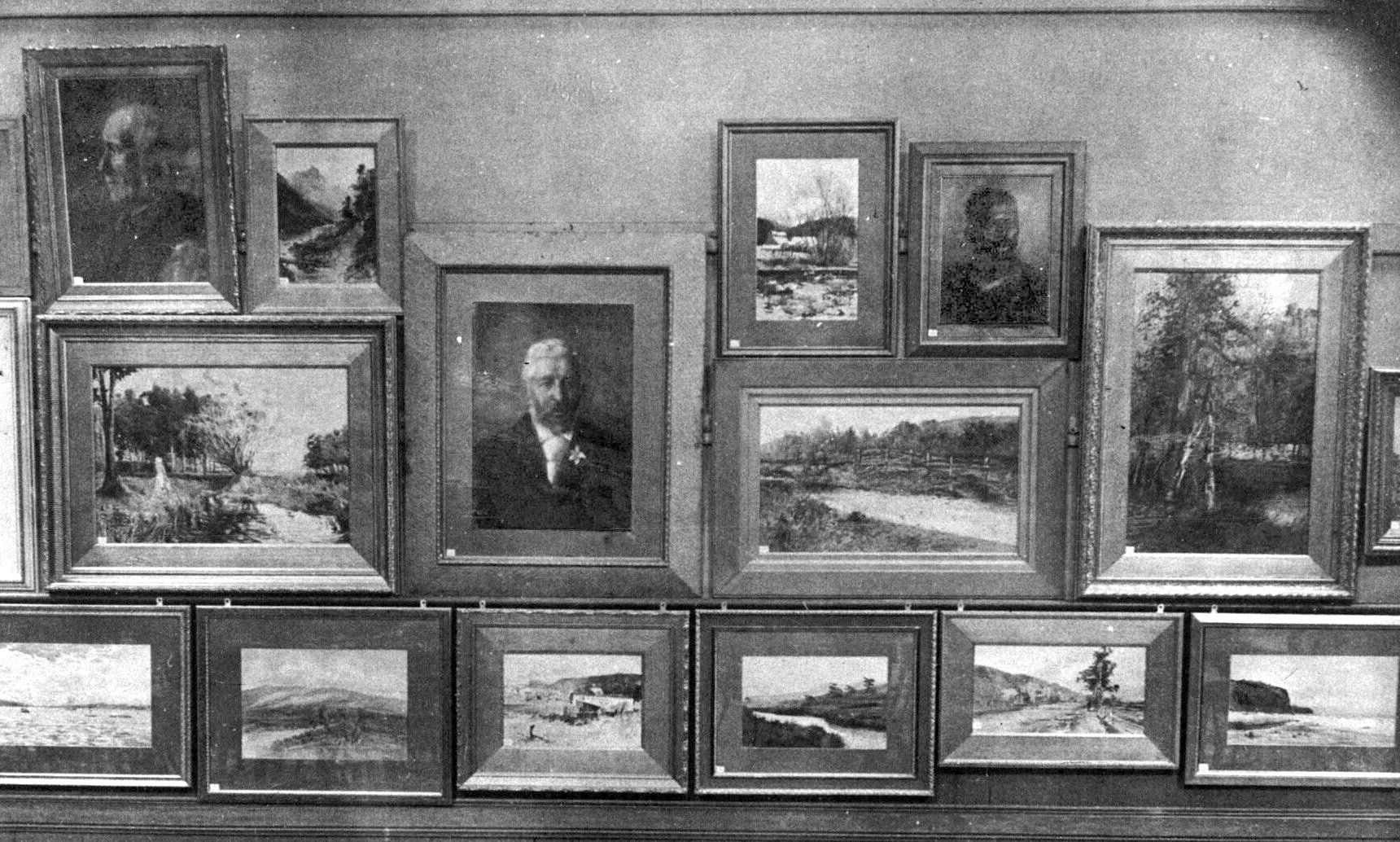
In October the first exhibition was held at the Normal School in Moray Pl but attendance was poor in great contrast to an earlier exhibition featuring artworks by the school’s pupils. The solution was to establish an art union and the raffle boosted attendance.
Sometimes a concert was held on opening night and in 1894 the attraction of the musicians saved the opening from being a dismal failure because of the miserable weather.
The newspapers provided detailed verdicts (almost always positive) on all the works on display and an extract taken at random suggests that art critics, then as now, adopt a style which begs to be ridiculed.
John Hoyte’s painting Remarkable Ranges earned this review: “The light is thrown with considerable artistic feeling on the upper part of the mountain, and falls on the patches of snow, the buttress-like flanks of the hill receiving it at the same time in a more soft and diffused manner. A small pool of water, with rock and herbage, forms the foreground, in which, however, to our thinking, there is rather more colour than ought to be introduced in the effect of this kind.”
A trawl through the catalogues reveals that art was a common pastime for Dunedin’s upper crust and Anglican bishop Samuel Nevill earned a good notice for his Wellington Harbour — “it is, we are informed, a ‘field sketch,’ and in its manner shows that his lordship is no mean artist. We hope to see a few finished productions from his brush.”
For most of its long life the Otago Art Society was shunted from venue to venue and in the 1940s endured a wrangle which saw the public debate the merits of the society and those of a city-council funded art gallery. Luckily, we have both and in recent years the society has found a permanent home in the Dunedin Railway Station.
The clock tower provides storage room for the society’s treasures and to mark the 150th anniversary 40 of these can now be seen in the Looking Forward to Looking Back exhibition.
And that, I hope, wraps up 150th birthdays.


