
PHOTO

A sure sign of the political year beginning is party leaders arising from their holiday slumbers to deliver that hardy annual, the "state of the nation" address.
Prime Minister Christopher Luxon was fastest out of the stalls, yesterday outlining his assessment of the lay of the land and his plans for 2026 at an event hosted by the Auckland Business Chamber.
Unsurprisingly — both for this being the first National party political broadcast of election year and for the chosen audience — Mr Luxon’s speech was heavily focused on the economy and what responsible stewards of the economy his government had been.
Apparently, although some Kiwis may be struggling to see them, the green shoots of economic recovery were clearly visible, Mr Luxon claimed. There is some justification for this: inflation is back within the mandated band, and the economy did indeed grow during the last quarter.
Mr Luxon also claimed credit for the drop in mortgage interest rates — although not mentioning that several banks recently increased them. He also promised to create more jobs and opportunities, a pledge which turns a blind eye to the recent surge in the number of people who are jobless.
He spent more time extolling the virtues of the trade agreements the government has signed, and well Mr Luxon might. While some finished off the work of previous administrations, some — notably the yet to be ratified but highly promising free trade agreement with India — were all his government’s work and he deserved a lap of honour before an appreciative audience.
However, overall, the speech was an uneasy mix of how bad things were and how much better things were going to get. Claiming the latter could be regarded as an invitation to question just how much progress National has actually made on its priorities in the past two years.
Then there is the question of whether things really are going to get better. Mr Luxon came bearing no new promises or stirring new policies; rather he pledged that there would be no "sugar-rush" economics, more cost savings, and no extravagant promises from National, either in the Budget or on the election trail.
Again, while pitching for simple, basic economics and economies is all very well and sensible, the requirement for stark austerity does not sit well with National’s claims of imminent prosperity.
Which was coming, Mr Luxon promised, citing his government’s work on education, law and order and Resource Management Act reform as evidence of the foundations for growth being laid.
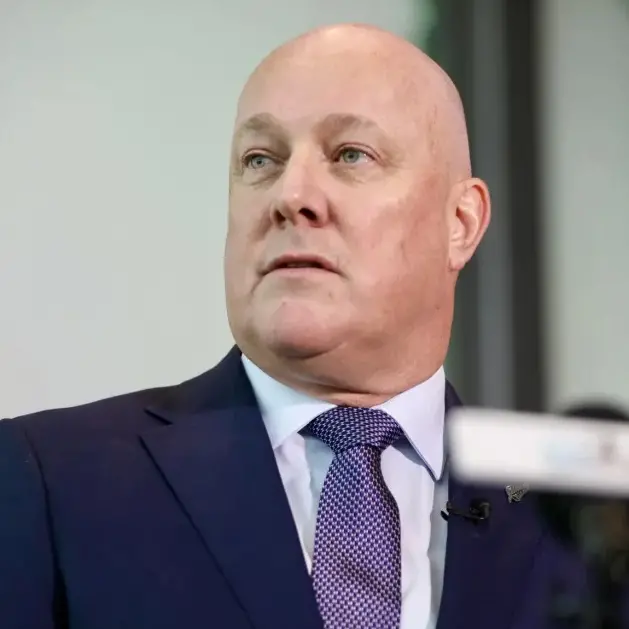
In fact, the prime minister lauded Education Minister Erica Stanford more than the actual Minister for Economic Growth, Nicola Willis, in a perhaps telltale sign of just how well the economy is actually performing. Mr Luxon noted that in December’s half-yearly update, projections suggested the government’s books could be back in surplus in 2028-29 — but most of the audience will have known that the return to surplus date has been extended several times.
Much will depend on the increasingly volatile world political situation and the actions of the worryingly erratic president of the United States.
Mr Luxon’s sole, in passing, reference to this was to say that there was a "pattern of countries respecting international law only when it suits them and ignoring the rules when it does not".
He may have meant Russia, but that applies equally to the US.
Interestingly, Mr Luxon was keen to highlight government progress on superannuation reform — a long-time focus for coalition partner New Zealand First. National did show courage in campaigning on raising the pension age last election and will seemingly stick to that policy in 2026.
Unsurprisingly, Mr Luxon paid no heed to the "Mood of the Workforce" report, not at all coincidentally issued by the Council of Trade Unions the same day.
Not unnaturally, its counterpoint survey to the Mood of the Boardroom poll — in which many of the people in Mr Luxon’s audience would have participated — was far from as rosy.
It found more than half of workers believed their income had fallen behind the cost of living, that 90% of respondents rated the performance of the government as "very bad" or "bad", and that a similar percentage also rated Mr Luxon’s personal performance within those two options.
More of a concern to Mr Luxon would be that some people in his audience yesterday may well hold similar sentiments. Those were the people he needed to convince: their verdict will become apparent as election year unfolds.