


In 2020, standing orders were changed in a bid to make it easier for non-contentious member’s Bills to be passed into law. Rather than waiting to be drawn in the member’s Bill ballot, if the signatures of 61 non-executive MPs (ie, not ministers) could be secured, a Bill could avoid the lottery process and be placed on Parliament’s order paper.
Since then, but not for the want of trying, many worthwhile Bills have lingered in the biscuit tin which our Parliament, quaintly, uses for the member’s Bill draw, due to not attracting the support of one or both of the main parties - which, practically, is what it would take for the provision to be triggered.
Until now that is. Labour’s Camilla Belich and National’s Greg Fleming have joined forces to secure the introduction of the Modern Slavery Bill.
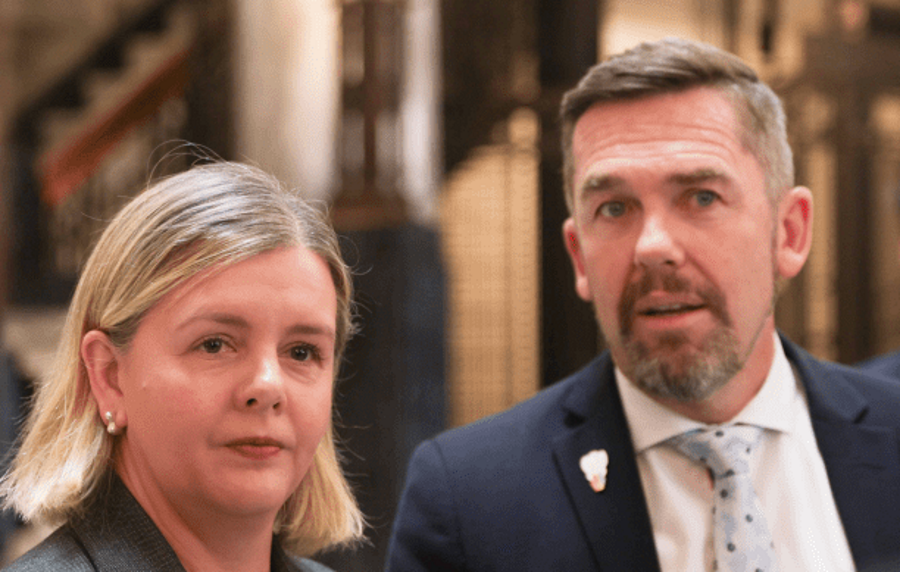
The issue has long been of interest to Ms Belich, an employment lawyer before she became a list MP; Mr Fleming, the MP for Maungakiekie, came to the issue through his involvement with various Christian charities.
They have brought both their parties together to ensure the Bill will be before the House this year: potentially, its first reading will come during the next sitting block.
Labour’s support was likely easy to attain: it took initial steps towards legislation in this area when last in government. National’s support was less guaranteed - it does place an additional cost on some businesses. Crucially, Prime Minister Christopher Luxon strongly supports the legislation, easing the way for like-minded National backbench MPs to sign up to supporting the Bill.
Mr Luxon’s opposition to modern slavery - child labour, people trafficking, debt bondage, sexual exploitation or forced labour - is personal.
However, there are also pragmatic concerns that the Bill will help address. Many other countries have similar laws and New Zealand signing up to some kind of system to eliminate modern slavery from the country’s supply chains is required in some of the recent trade agreements which the country has signed up to.
If passed - a near certainty - qualifying companies will be required to formally report to a register on how they identify, address, mitigate and remediate incidents of modern slavery.
Qualification to be required to report is high - consolidated revenue of $100 million or more - but that should encompass any firms operating at a level where a desire to trim their wage bill might have led them to consider such nefarious practices. An estimated 1300 companies will be captured by the regime.
Failing to meet the reporting requirements could incur a firm a fine of up to $200,000, as well as possible civil penalties. For a firm with those kind of revenue figures the penalty will be chickenfeed but - as the Bill proponents point out - the reputational damage of falling foul of modern slavery laws will likely be much more damaging.
Modern slavery is not an abstract or foreign concept. World Vision estimates that more than 50 million people worldwide are afflicted by a form of modern slavery and that 8000 of those people are here in New Zealand.
More generally, its research suggests that the average New Zealand, likely unwittingly, spends about $77 a week on goods that are likely linked to child labour, forced labour, or human trafficking. Clothing, toys and electronics goods are the most likely offenders in this respect.
The one sour note in this bipartisan chorus has been sounded by Act New Zealand. This Bill could have been adopted as a government Bill but at Cabinet Act opted not to agree to that course of action being followed.
Its Workplace Relations Minister, Brooke van Velden, issued a rather tepid statement to the effect that such a law change was not one of her priorities, before extending a less than wholehearted offer to look at the Belich-Fleming Bill once it is introduced.
This Bill is not a piece of performative politics. It signs New Zealand up to an international movement to combat appalling behaviour and brings the country into line with countries we like to compare ourselves to. Act’s deliberation should be short and the party should end up adding its shoulder to a unanimous effort to wipe out pernicious practices.


