
PHOTO
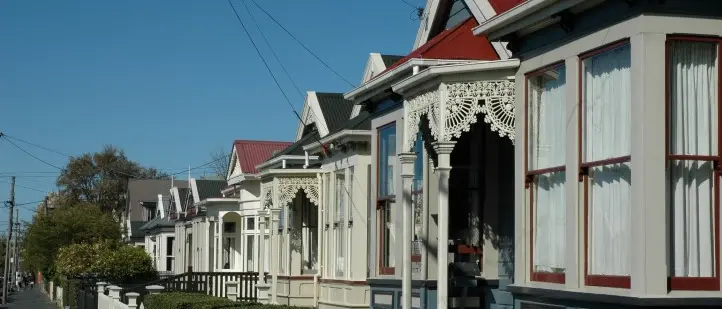
There should be no surprise recent news stories have highlighted appalling conditions inside many Dunedin student flats.
According to the Otago University Students' Association, and reported in the Otago Daily Times earlier this month, 75% of students said they had mould in their houses. The OUSA said that was way too many, that students forking out tens of thousands of dollars to rent a house each year deserved better than mouldy homes.
It is unlikely anyone in New Zealand would wish mouldy living conditions on students. But who is responsible for the city's mould problem? A group of tenants from a mouldy Dunedin student flat recently took their landlord to the Tenancy Tribunal and reached a confidential settlement. It was reported the house in question had weathertightness issues.
Where houses are not weathertight, or not insulated, it is hard to feel sympathy for a landlord. The Labour-led Government's new Healthy Homes law will, from July 1 next year, force landlords to guarantee new tenancies be either properly insulated or contain a heating source capable of making the home warm and dry. Fair enough.
But there is no similar law demanding tenants care for a rental property appropriately. Where a house is weathertight, insulated and has heating available, it is hard to feel sympathy for a tenant complaining of mould.
Going studying means the first time living away from home for most students; the first time they've had to organise their own studies, feed themselves every day, budget, do their own laundry. It is as daunting and challenging a step as many will have taken.
It is also often the first time students have the responsibility of keeping a house free of mould without a parent's help.
Most parents of high school students either own or are long-term renters of houses. Both situations demand a significant amount of knowledge in keeping a house healthy, and a significant amount of effort achieving it.
The repercussions of not keeping a house in order are substantial. Mould and rot can lead to poor health and severe financial penalties - not outcomes most parents leave in the hands of teenage children.
It is hard work. It is inconvenient, boring. It requires learning, constant attention and alertness. Windows and curtains must be opened at certain times, closed at others. Dampness from showers, cooking and clothes-drying must be ventilated. Heating must be used when necessary - even when the cost of doing so constricts other lifestyle desires. Standing moisture must be wiped up at once. Bedrooms must be aired. And in student flats it is young people - who in some cases have never had these responsibilities before, perhaps aren't even aware of them - who must do it.
Society discredits itself by neglecting to teach young people the realities of properly running a house. Even if those lessons aren't always palatable they are necessary if our university students are to have the best chance at studying in healthy, dry, warm, mould-free homes.
Parents, of course, should be leading those lessons. But perhaps there is a place for high schools to include them as well? Schools already impart far more than just academic knowledge to prepare pupils for life.
Because despite modern comforts, technologies, medicines and communications, the truth remains: we're all trying to survive on a hostile planet.
Surviving is hard work and most people will take an easy route if on offer. So will most animals, bacteria and viruses. And so will the fungi common to Dunedin's student flats.
Perhaps it is time, therefore, the realities of taking care of a house were instilled in our young people, with testing performed and licences issued, before they leave the family home and try to muddle through on their own.