


A handful of battered silver cutlery, a pocket-watch, a silver half-crown, a gold sovereign, an anchor badge and a button — nothing grand or theatrical.
I squatted down and stared at these seemingly inconspicuous items, transfixed. These modest fragments were, for a time, all that testified to the fate of the Franklin expedition, perhaps the greatest mystery of the 19th century.

The two ships were considered technologically advanced for their time, fitted with reinforced hulls, steam engines and provisions intended to last several years. Twenty-four officers and 110 men set off with Franklin.
At the Whalefish Islands in Disko Bay, on the west coast of Greenland, five men were discharged due to illness and sent home, reducing the final crew to 129 men. None would survive.
On the 26th of July 1845, the ships were sighted by whalers in Baffin Bay, waiting for the ice to clear. They were never seen again by Europeans.
Initially, the silence did not provoke alarm; Arctic voyages were expected to overwinter in the ice. After all, the ships had their own heating systems, myriad entertainments, and sufficient food for at least three years.
By 1848 however, with still no word from the expedition, and at the behest of Franklin’s indomitable wife, the Admiralty dispatched search parties, kickstarting one of the most extensive and controversial rescue efforts in maritime history. No fewer than 39 expeditions were dispatched to the Arctic in search of answers, but it was not until the 1850s that evidence of the men’s fate began to surface.
Via scattered artefacts, Inuit testimony relayed by the Scottish explorer Dr John Rae, and later archaeological and forensic investigation, a story of protracted and bitter catastrophe emerged.
Trapped in the ice in Victoria Strait, near King William Island, the ships were abandoned in April 1848 after Franklin himself and many others had already died. The survivors, led by Francis Crozier and James Fitzjames (captain of Erebus), set off on a desperate march southward towards the Canadian mainland — and vanished.
It is likely that a grim convergence of hypothermia, starvation, disease, scurvy and possible lead poisoning led to the men’s demise. Cut marks on recovered bones indicated the men had resorted to cannibalism.
When Rae conveyed this information to the Admiralty, however, details of his report found their way into the press, only to be met with great hostility and suspicion. The notion that Englishmen might have transgressed so fundamental a boundary of civilisation simply could not be countenanced. Lady Jane Franklin publicly rejected the claims, and Rae’s reputation suffered lasting damage as a result.
I like to imagine what life might have been like aboard Erebus and Terror. No doubt it was incredibly tough, bitterly cold and desolate.
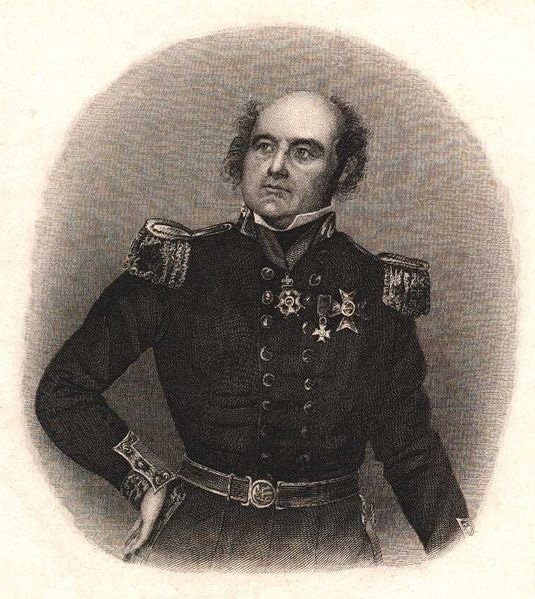
Why am I so fascinated with the mystery of the Franklin expedition? Why is it that I’m transfixed by a handful of battered cutlery?
Perhaps there is something about the unknown — not merely the lack of knowledge surrounding the fate of Franklin and his men, but the impossibility of ever knowing what exactly happened, and why. Tales of lost expeditions, vanished ships, missing people — they are compelling because they offer up an incomplete narrative.
They deny us the reassurance of an ending written by survivors, comfortably ensconced in their armchairs beside a roaring fire. In the absence of such endings, myriad possibilities arise, infinitely revisable in nature.
Without witnesses, anything is possible. There are a hundred different endings to the mystery of the Franklin expedition.
Then there’s the romance, the sublimeness, of the Arctic — a beautiful, lethal, indifferent place. The two poles of our planet with their towering peaks and crystalline, frigid beauty reflect the smallness, the insignificance of man in the face of nature.
The Franklin expedition also functions as a contained drama through which we might examine Britain’s imperial past: all the ambition, arrogance, courage, and blindness of the time laid bare. And in this age of maps and satellites, where every square inch of the globe has been accounted for, the idea of a true disappearance feels almost impossible, if not irresistible.
I cannot stop thinking about the monogram scratched into the tarnished silver spoons, the fact that these forks were carried who knows how many frozen miles.
I wonder about the men who held them, whether they stubbornly maintained their table manners as death closed in around them.
There is something about these relics that collapses the awful scale of the Franklin disaster into something small, human-sized.
To me, these spoons and forks indicate that the mystery of the Franklin expedition lies not in the specifics of where these men ended up or how exactly they died, but in how long they tried to remain themselves — civilised, ordered, hopeful — as cold and hunger erased them.
• Jean Balchin is an ODT columnist who has started a new life in Edinburgh.


