

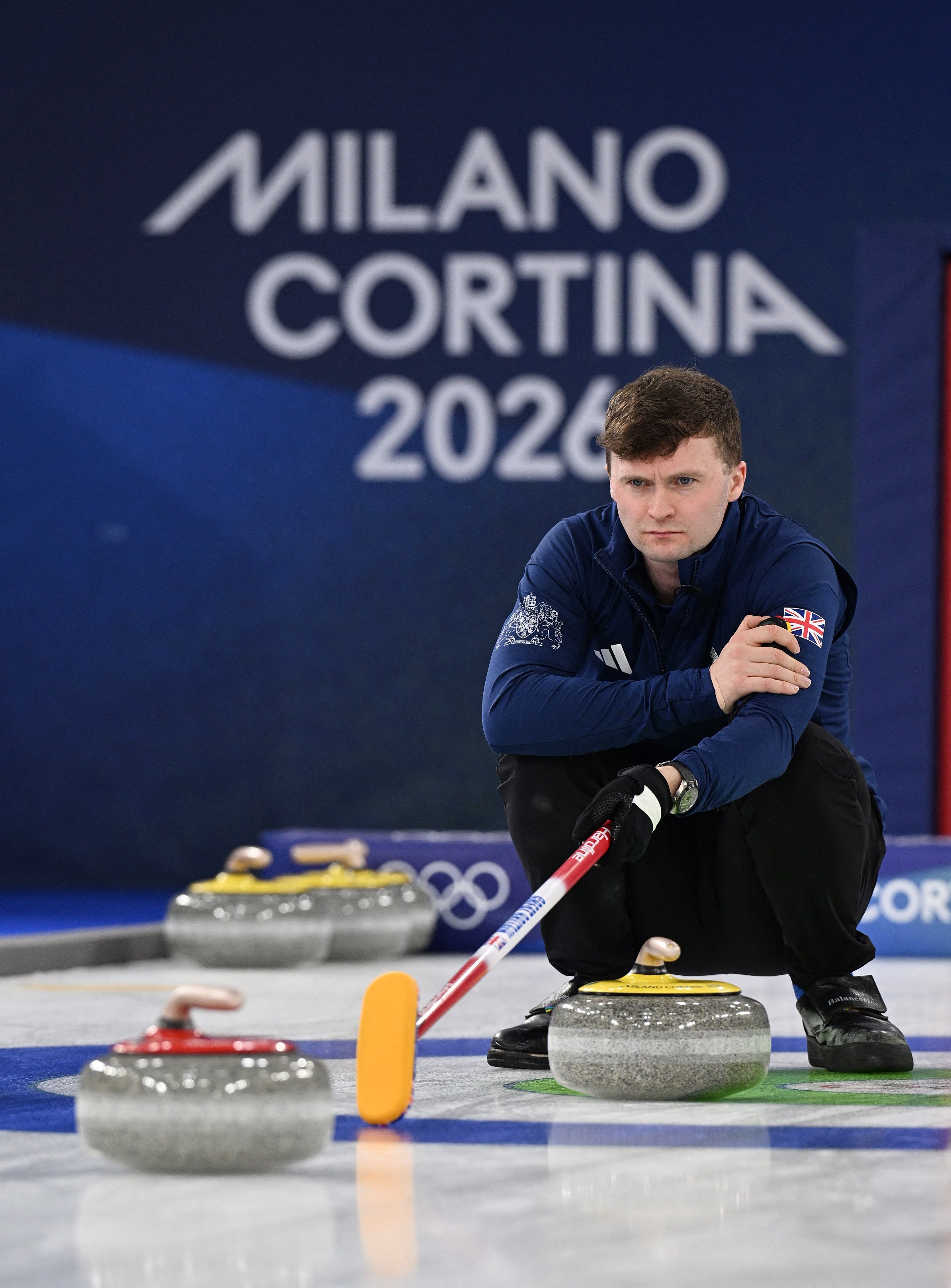
This past Sunday, however, I found myself gleefully skimming across the ice, curling stone in one hand, stabiliser in the other, simultaneously trying to gently release the stone with a clockwise rotation, remain upright, and preserve at least a shred of dignity.

I tried curling at Curl Edinburgh under the patient guidance of instructors Josh Kellock and Ian Keron. I was welcomed into what is, impressively, one of the busiest curling venues in the UK — and the home rink of Jennifer Dodds and Bruce Mouat, Beijing 2022 Winter Olympic medallists and current competitors at Milan Cortina.
For those unfamiliar with this glorious sport, let me explain. Fundamentally, curling is a sport where players slide granite stones across a sheet of ice towards a target area. Two teams, each comprising four players, take turns sliding stones across the ice, aiming towards the "house", a circular target or bullseye at the end of the sheet.
Each team throws eight stones per round or "end", and teams take turns throwing one stone at a time. The name curling comes from the fact that the stones "curl", or curve slightly, as they slide across the ice.
But what’s with the sweeping? Whilst it may look like overly-enthusiastic janitorial work, the sweeping is in fact crucial — the furious scrubbing melts the surface of the ice and reduces friction, making the stone travel farther and straighter.
Sweep hard enough, and the stone can be bullied into holding its line; stop too soon and it’ll curl off prematurely.
After all 16 stones have been thrown, only one team scores. They are awarded one point for each stone that rests closer to the centre than the opponent’s closest stone. Games usually have between eight and 10 ends, and the final score reflects the cumulative scores from all the ends.
Curling began long ago on the frozen lochs and farm ponds of 16th century Scotland. Archaeological finds provide evidence for its existence as a communal winter pastime: a stone inscribed "1511" discovered at Dunblane alongside another dated 1551, indicates that Scots were sliding stones across ice centuries before the sport was formally organised.
The first written reference to curling appears in the records of Paisley Abbey in 1541, whilst paintings by Pieter Bruegel the Elder (1565) depict related Low Countries ice games, hinting at shared northern European winter cultures.
Also known as "the roaring game" — after the rumble of stone on the pebble-textured ice — curling was for centuries an improvised, sociable pursuit played with river stones by farmers and townsfolk alike.
Its transformation into a modern sport came in the 18th and 19th centuries with the rise of formal clubs, most importantly the Royal Caledonian Curling Club (established as the Grand Caledonian Curling Club in 1838), which standardised stone weights, sheet dimensions, scoring, and etiquette. Emigrants carried the sport abroad, most successfully to Canada, where the Royal Montreal Curling Club was founded in 1807.
From the start, curling carried with it values often associated with Presbyterian culture — discipline, restraint, mutual respect, and a commitment to fair play. It was far from austere, however; bonspiels (curling tournaments) provided a welcome excuse to gather, drink, and argue amiably in the cold.
The Scottishness of the game carries through to the present day, not merely in custom but in language; curling’s vocabulary— "bonspiel", "hack", "end", "rink", and even the specialised meaning of "broom" — derives directly from Scots.
Then there’s the material of the stones themselves, still fashioned from granite quarried on Ailsa Craig in the Firth of Clyde.
The last time I immersed myself in a sport for journalistic purposes, I managed about five minutes on a roller derby rink before toppling over and snapping my wrist. This time, the only injury I sustained was a bruise to my right knee (earned before I realised that, while sliding down the ice behind a stone, it’s best not to slam your leg into the surface).
That’s not to say curling is not a physically demanding sport. Despite the preponderance of grey-haired folks on the ice, it’s surprisingly athletic. There’s the squat, the push off from the hack, the controlled slip across the ice, the gentle, deliberate release of the stone.
Then there’s the vigorous sweeping, the sideways running and co-ordination with one’s team-mates as the stone hurls across the ice.
Curling is also one of the rare sporting arenas where men and women compete on genuinely equal footing. It’s a profoundly sociable game: leagues mingle before and after matches, bonspiels are essentially friendly gatherings, and tradition dictates that the winning team buys the losers a drink.
The sport’s famous "Spirit of Curling" enshrines honourable conduct, self-refereeing, and the expectation that players would rather lose than win unfairly — a code that the community actively enforces (although recent skirmishes at the Winter Olympics would indicate otherwise).
During a Canada–Sweden match in Cortina, Swedish curler Oskar Eriksson flagged what he believed was an illegal post-release touch by Canada’s Marc Kennedy; under the rules, once the handle is released, any contact with the moving stone should see it removed from play.
Swedish broadcasters swiftly circulated footage appearing to show the fleeting touch, prompting a glorious flurry of granite-and-broom memes online. I don’t quite know where he found the audacity, but Kennedy insisted that the focus on infractions such as his undermined the "spirit of curling".
How delightfully odd curling is — it’s basically massive ice bowls played with what looks like a kitchen broom.
There’s something captivating about curling — something beyond the scrape of brooms, the roar of the stone as it travels along the pebbled ice, the incomprehensible, urgent instructions of team-mates ("Hard!" "Whoa!"), one’s warm breath clouding the cold air, or the gentle curl of the stone as it (hopefully) comes to rest in the house at the end of the rink.
Unlike Marc Kennedy, I can’t quite put my finger on it, but I have no doubt I’ll be entranced by the sport for years to come.
— Jean Balchin is an ODT columnist who has started a new life in Edinburgh.


