
PHOTO
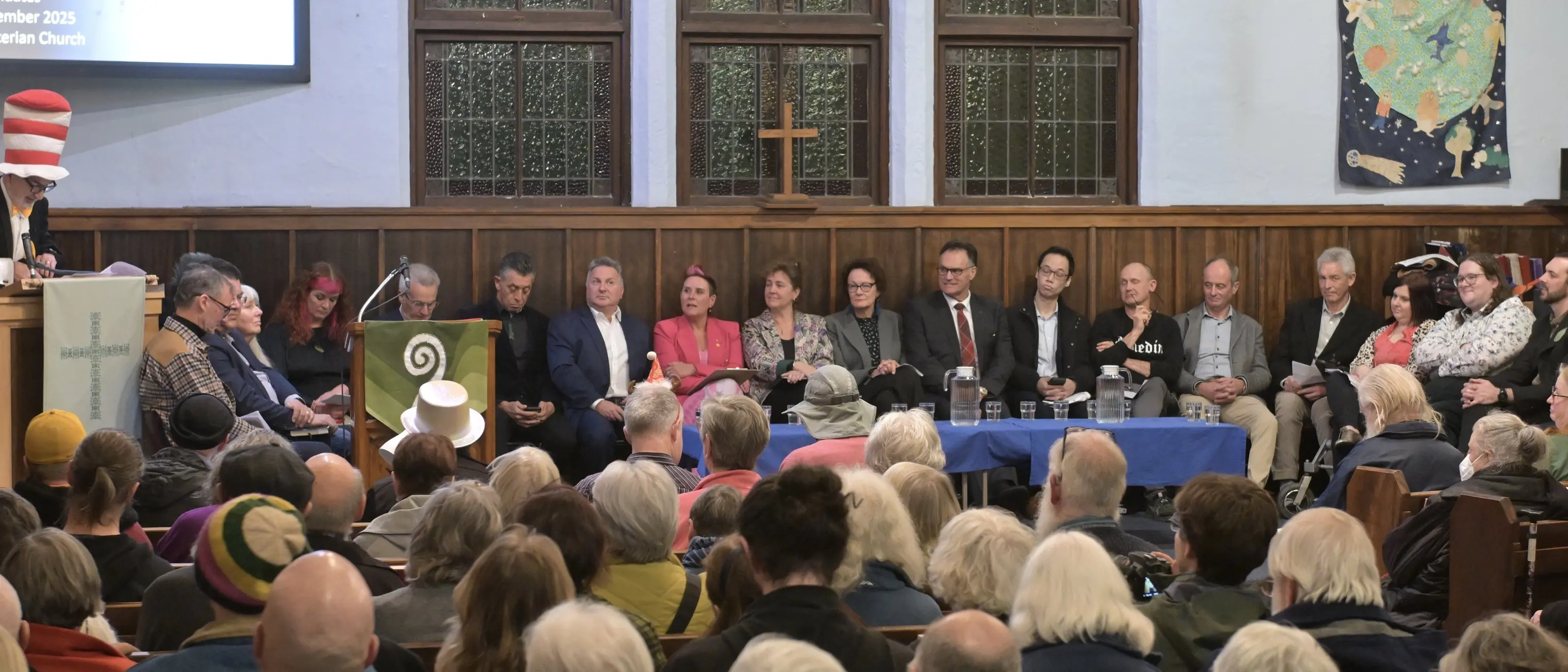
It is hard to keep the politics out of politics. That would be the lesson from the last few weeks of the local body elections in Dunedin.
The local body elections are a niche interest. Like religion or rugby union, they once occupied our attention a lot more.
But in the age of global social media, most people have moved on to scrolling helplessly through real-time coverage of the collapse of human civilisation. Against this backdrop, getting involved in civic governance is not appealing.
Most local people pay only a small amount of attention to local elections. Many pay no attention. The majority of the under 40s, I suspect, will not end up voting.
Those who do vote often don’t understand how the voting system works, or don’t really know who the candidates are. Which is not always the fault of the voters. If you read the candidate statements, you can go away wondering what they think about anything.
It’s a problem we have as a nation and as a community. The situation is quietly supported by the people who own New Zealand.
Democracy gets in the way of smoothly functioning markets and profit. If people are turned off and tuned out, it makes things a lot simpler.
I always tell myself it’s good when people put themselves forward. Standing for public office takes time and energy, and you often face a barrage of criticism from people on the sidelines.
However, I’m finding it harder to be positive when some candidates display a lack of insight into the process they are entering.
Leading candidates have been at pains to describe themselves as "non-political".
I scratch my head when these cliches do the rounds. Especially when some claim the ticket they belong to is about successful, go-ahead people who just want what is best for Dunedin. No politics here.
Of course, this doesn’t work. One example is the social media posts of one high-profile candidate which led to feathers flying recently.
She harshly criticised a protest picket by UNITE Union outside the local McDonald’s, implying that workers should be grateful they had not been automated out of a job.
Surprisingly, she was an ex-member of the Labour Party, which says something about the type of people Labour attracts these days. She presumably didn’t realise that the Labour Party was founded to get rid of capitalism.
Her views generated some frank responses, and she tried to walk them back. Hard to do. One old saying about politics is if you are explaining, you are losing.
A mayoral candidate on the same ticket leapt to her defence in a mistaken display of loyalty. Others on her ticket distanced themselves from her views.
It was messy. Several of the candidates on this high-profile "best people for the job" ticket have now abandoned ship or been pushed overboard. Politics got involved.
This should not be surprising. Voters often go on about how we just need some quality people to get in there and "clean things up".
The trouble is when aspiring politicians start to believe it is this simple. They soon find themselves wallowing in the tar pit of politics and competing agendas.
There is a lesson here. Politics is not the same as being a manager or business owner.
No matter how much you claim or even believe you are free of "politics" or "ideology", you are not.
Saying you are about "putting Dunedin first" is an empty slogan that soon becomes unstuck when the pressure goes on.
Politics is about politics. It is about interests and power.
Dunedin is a city, within which there are competing views about what people want. It seems strange to have to point this out, but that is where we have ended up.
People have different interests. The interests of a fast-food franchise owner and a 20-year-old burger flipper may coincide sometimes, but in other cases are opposed (such as raising pay rates).
Likewise, the interests of developers and heritage advocates are not the same and sometimes are completely incompatible.
Many candidates come from conventional professional or business backgrounds. They have the confidence and resources to put themselves forward.
When they say they don’t want to get "politics" involved, what they are saying is they support the status quo, and hold conventional middle-class views which they take for granted.
These they describe as "practical" or "pragmatic" when often they are simply one-dimensional and conformist.
They either don’t understand we all have an ideology, or a set of values, assumptions and biases that guide our outlook, or they are straight out lying.
In either case, this is a concern.
I suspect most of the candidates in our local elections belong to the former camp. They are probably well meaning by their own lights, but simply have not thought deeply about politics, and don’t understand that they are political animals.
Business experience and skills are useful, like many other skills, but they are not enough in well-rounded individual, or for a council as a whole.
I draw a parallel with New Zealand’s Prime Minister Christopher Luxon.
He came straight into politics from a background in big business. He had got accustomed to the hierarchical and deferential world of corporate bureaucracy. He sees himself as a CEO of New Zealand Ltd.
Unfortunately, electoral politics is a different game. It has different players, different goals, and takes place in a fairly non-deferential environment.
It has been amusing to see CEO Luxon start to lose his temper and snap at journalists. He is obviously uncomfortable with challenge and conflict, and having upstarts grill his limited ideas.
We do have other candidates in Dunedin who wear their views on their sleeves, such as Green or Labour-affiliated candidates. This is good. You know where they are coming from.
On the other side of the political spectrum, we have candidates like Lee Vandervis. He is controversial but he has the undeniable advantage of being loud and proud about what his views are.
This is a good thing and should be encouraged. Once again, you know what you are getting.
We have some way to go in our local elections, and I’d guess we may see a few more wheels fall off before the results are in.
You can’t take the politics out of politics.
• Victor Billot is a writer, unionist and former Alliance general election candidate.