
PHOTO
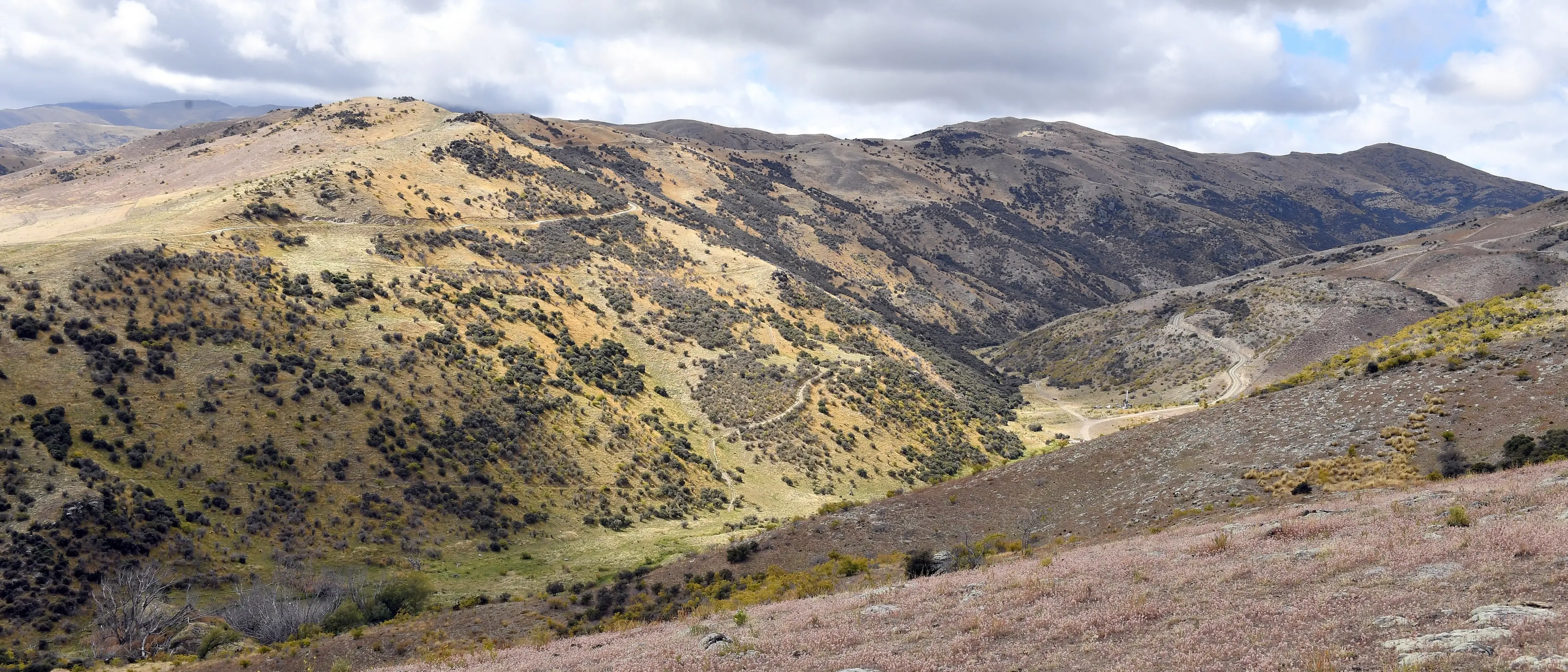
When nothing really means something
‘‘Otago is empty’’ is a dangerous piece of rhetoric and especially revealing in the context of Australasia’s colonial history.
It echoes the doctrine of Terra Nullius, the ‘‘land belonging to no one’’ - which was used to justify large-scale acquisition and dispossession.
This logic was used to underpin the British settlement in Australia, where indigenous presence was wilfully ignored until it was legally challenged and overturned in the Mabo decision in 1992.
New Zealand has its own versions of this story. Following the 1860s influx of European settlers, a series of laws - including the New Zealand Settlements Act, the Native Land Court Acts, and the Public Works Act (still in force today) - enabled the systematic transfer of Māori land into Crown and private ownership.
Another tool was the ‘‘Waste Land’’ doctrine, which deemed Māori land ‘‘unused’’ if it did not conform to European agricultural practices.
Land was thus reclassified as empty and made available for Crown appropriation/ possession. Armed with these frameworks, organisations like the New Zealand Company facilitated the large-scale division of land for farming, logging and mining.
In this light, describing Otago as empty is not harmless shorthand - it carries a legacy of dispossession.
Then, as now, such language risks signalling that ‘‘anything goes’’.
Leadership requires more care. Invoking emptiness is not neutral; it is a red flag for repeating patterns of venal corporate exploitation.
J Davidson
Purakaunui
Speaking rights
I am a candidate in the upcoming Dunedin City Council by-election and was disappointed and not impressed that the Otago University Students Association did not include all candidates in its candidates forum at the university this week.
This only gave students a one-sided view of particular people, not the breadth of knowledge and experience of candidates to choose from.
I have over 20+ years experience working at council, as well as 20 years on my local community board, so I understand governance and how council works, which are important factors to being a councillor.
Being Otago alumni obviously counts for nothing.
Ange McErlane
Dunedin
Thank you for coming, and hurry back soon
It is often human nature to take for granted the things we encounter daily, but in doing so, one risks forgetting what makes a place so special.
For three years, I have had the privilege of living and working in Dunedin.
In that time I have mentored 200 international students who arrive each semester to live and study in your remarkable city.
As programme director for an American college, I have been privileged to work alongside, and learn from, many inspiring local individuals and community groups.
My heartfelt thanks go to the University of Otago, especially the International Office, UniFlats, and the chemistry department, my lovely neighbours, Shelley Porter, Adam Williams and Dr Francesc March de Ribot, who helped orient me to my adopted city; the amazing Untamed NZ Tour Company, Karitane Māori Tours, and Monarch Cruises who showed us the beauty of your region.
Also, the Otago Tramping and Mountaineering Club (OTMC), the Dunedin Woodturners Guild, Upside Pilates, Moana Pool, and Crofters Yarn who kept me healthy and engaged.
For me, Dunedin’s greatest strengths lie in its welcoming spirit, its shared social fabric, and the everyday kindnesses shown to visitors by its residents.
Being a member of Dunedin’s vibrant community has been one of the great highlights of my time in New Zealand, as it has been for my students.
I leave with deep gratitude for the people and experiences that have made life here so meaningful.
He aha te mea nui o te ao? He tāngata, he tāngata, he tāngata!
Amy Witter
Professor of Chemistry, Dickinson College, and Director of Dickinson in Otago Programme.
Sugar and salt, the US and Iran
Dave Tackney in his response to Robert Patman (15.4.26) gets liberals and socialists mixed up. Liberalism is about individual rights and liberty, and private property. Socialism advocates collective or state ownership over the means of production. These two ideologies are as diametrically opposed as sugar and salt.
Mr Tackney also seems to believe that Trump and the US can do no wrong. None of the three parties to the ongoing Iran war are blameless.
Iran violently suppresses dissent and calls for the destruction of Israel. They have also supported Hamas, Hezbollah and the Houthis as part of their undeclared conflict against Israel and the United States.
While the Hamas attack on October 7 2023 was a war crime that should be condemned, the Israeli response has been heavy-handed and disproportionate.
The US conflict with Iran dates back to the 1979 Islamic Revolution, which itself has its roots in the 1953 Anglo-American sponsored coup against Prime Minister Mossadegh, who wanted to nationalise Iranian oil.
President Trump has embroiled the US in yet another foreign war.
In 2018, he unilaterally tore up the Obama administration’s 2015 JCPOA nuclear deal with Iran, an action that has only fuelled distrust between Tehran and Washington.
By choosing war over diplomacy to advance US foreign policy goals, Trump is following in the footsteps of Vladimir Putin, who invaded Ukraine under similar pretexts.
Trump supporters like Mr Tackney need to consider how bombing Iran would achieve the stated American and Israeli goals of regime change.
The Iranian regime may be bad but the high civilian death toll and destruction of infrastructure like schools and universities would reinforce the Iranian state propaganda narrative of America being the ‘‘Great Satan’’ and Israel the ‘‘Little Satan.’’
Andrew Lim
Shiel Hill
[Abridged — length.]
Address Letters to the Editor to: Otago Daily Times, PO Box 517, 52-56 Lower Stuart St, Dunedin. Email: letters@odt.co.nz